Best Gummy Manufacturers: How to Compare and Choose
Sourcing a gummy manufacturer is not a price list comparison. It is a check on dosage capacity, pectin and gelatin lines, certifications, and whether a pilot run is possible before you commit to 5,000 units.

Overview
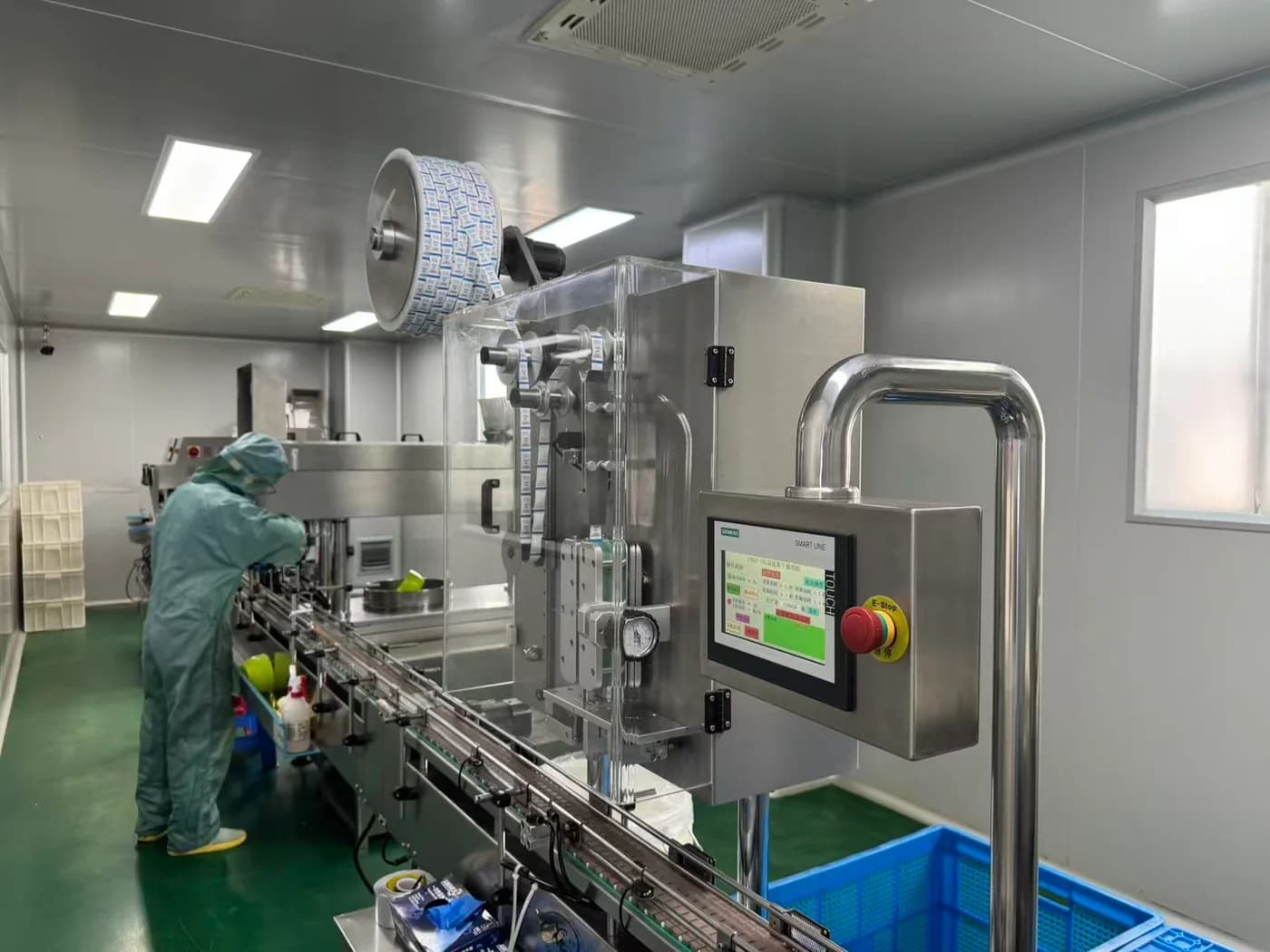
This page sets out the criteria that separate capable gummy manufacturers from brokers and repackagers. It covers MOQ structures, deposit and fill weights, cooking and depositing capacity, allergen controls, and the certifications buyers in the US, EU, UK and Middle East actually need. EUPHM is a GMP-certified contract manufacturer in Guangdong, China, running pectin, gelatin and starch-moulded gummy lines. Use the comparison points below as a sourcing checklist, then request samples against your own formula.
| MOQ | 1,000 units per SKU for retail bottling |
|---|---|
| Sample lead time | 7-10 working days for stock or custom formula samples |
| Mass production | 20-35 working days after sample approval and deposit |
| Gummy formats | Pectin, gelatin, starch-moulded; 2-5 g per piece typical |
| Certifications | GMP, ISO 9001, ISO 22000, HACCP, NSF/ANSI 455-2, halal, FDA-registered |
| Line capacity | Depositing lines running 1.2-2.5 tonnes per shift, 2 shifts per day |
What a Gummy Line Can Actually Do
Gummy manufacturing is a depositing process, not a blending process. A starch-moulded line cooks a base, deposits it into moulds, cures for 24-72 hours, then demoulds, oils and polishes. Pectin lines run at lower temperatures and set faster. Gelatin lines give a firmer chew but need strict temperature control. Ask any manufacturer which lines they run, how many depositors they have, and their typical cure time. A plant with two depositors and one curing room will have tighter scheduling than a plant with six.
Capacity numbers matter more than plant floor size. A line depositing 1.2 tonnes per shift at 2.5 g per piece produces roughly 480,000 gummies per shift. Over two shifts and 25 working days, that is a theoretical 24 million pieces per month, but real output is lower once changeovers, cleaning and QC holds are counted. Ask for a realistic monthly figure for your piece weight and formula, not a headline number. EUPHM runs pectin, gelatin and starch-moulded lines with a combined realistic output of 18-22 million gummies per month across active SKUs.
Formulation, Actives and Taste
The active load determines whether a gummy is even possible. Vitamin C at 250 mg per piece is workable. A 1,000 mg fish oil dose is not. Many actives taste bitter, chalky or metallic, and the pectin or gelatin base has to mask them. Ask the manufacturer for the maximum active load per piece for your ingredient, and whether they have run it before. Overloading causes syneresis, weeping or a rubbery texture. For probiotics, check whether the strain survives the cook temperature, or whether the manufacturer uses a post-deposit addition step.
Sweetener systems are a commercial decision as much as a technical one. Cane sugar and glucose syrup give the cleanest taste and lowest cost, but add 2-3 g of sugar per piece. Maltitol, xylitol, allulose and stevia blends reduce sugar but change texture and can cause laxative effects at high doses. Sugar-free gummies typically need a higher pectin percentage and a longer cure. Ask for a sensory panel result, not a single taster's opinion. Request a 30-piece sample of each candidate formula and run your own panel before committing to 5,000 units.
Quality, Compliance and Shipping
Gummies are a high-risk category for microbial growth because of their water activity and sugar content. A GMP-certified plant will hold water activity below 0.65, run environmental monitoring, and test finished product for total plate count, yeast and mould, and pathogens. Ask for a certificate of analysis per batch, not per product. For halal and the gelatin source is the deciding factor: bovine gelatin needs a halal-certified supply chain, while fish or pectin bases avoid the question. Organic claims require USDA organic or EU organic certification on the finished product, not just the ingredient.
Shipping gummies is a temperature and moisture problem. They soften above 30°C and absorb moisture in humid conditions. For the Middle East and US summer, use foil-lined pouches or bottles with a desiccant, and ship in reefers or with temperature-controlled LCL. Air freight is faster but costs 4-6 times more per kg than sea. For a 5,000-unit order at 3 g per piece, that is 15 kg of product plus packaging, which is air-freightable. For 50,000 units, sea freight in a 20ft container is the only economic route. Build 5-7 days of buffer into your launch date.
Quality Control and Batch Documentation at Gummy Manufacturers
At a capable gummy manufacturer, every raw material batch is quarantined until identity testing confirms the certificate of analysis. Actives such as vitamins, minerals and botanical extracts are tested for potency by HPLC or ICP-MS, while gelatin and pectin are checked for bloom strength and viscosity. Microbial testing covers total aerobic count, yeast and mould, E. coli and Salmonella, with results available within five to seven days. Heavy metals are screened against USP <232> or EU 2023/915 limits, and finished gummies undergo disintegration testing to confirm they break down within 30 to 60 minutes depending on the matrix.
Batch records are compiled in real time and include dispensing weights, cooking temperatures, deposit weights, drying room conditions and line clearance checks. A certificate of analysis for each finished lot lists the tests performed, specification limits, results and the release decision. Retention samples of every batch are held for the product shelf life plus six months, stored under labelled conditions. Stability protocols typically run at 25°C/60% RH and 40°C/75% RH for three and six months, with accelerated data used to support a 24-month expiry where the formula allows.
Buyers comparing gummy manufacturers should ask for a sample COA and a blank batch record template before placing a deposit. The COA should reference the finished product specification, not just the raw materials, and should be signed by a qualified person. If a manufacturer cannot show retention samples or a stability summary for a similar formula, treat the quotation as indicative rather than production-ready. EUPHM provides COA, MSDS and stability summaries with every commercial batch, and can supply free-sale certificates for registration in the destination market.
Packaging, Labelling and Retail Readiness
Gummy manufacturers typically offer retail bottles (60, 90, 120 and 150 count), blister packs, stick packs and single-serve sachets. Bottles are usually HDPE with induction seals and child-resistant caps where required, while stick packs suit daily-dose formats and lower plastic use. Carton specifications should be agreed early: typical export cartons hold 24 to 48 bottles, with pallet configurations of 48 to 60 cartons per layer and a maximum height of 1.8 metres. Shrink wrap and corner boards protect against humidity during sea freight, which matters for pectin gummies in tropical routes.
For the US market, the label must carry a supplement facts panel, serving size, amount per serving, percent daily value where applicable, other ingredients, allergen statements, and the manufacturer or distributor name and address. Lot code and best-by date must be printed or laser-coded on the bottle and the carton, with the same code traceable to the batch record. Amazon sellers need the FNSKU applied over the original barcode or printed directly, and the carton must meet the marketplace's prep requirements, including poly-bagging and suffocation warnings where relevant.
Retail readiness also covers artwork proofing, dieline checks and pre-production samples. A gummy manufacturer should provide a digital proof and a physical sample of the printed label on the actual bottle before mass production. Allow five to seven working days for artwork approval and three to five days for label printing. If you are selling into the EU, the label needs the food business operator address, nutrition declaration, and any required allergen warnings. Confirm who owns the artwork files and who is responsible for regulatory review in each destination market.
MOQ, Lead Times and Delivery from Gummy Manufacturers
Sample timelines at most gummy manufacturers run seven to ten working days for stock formulas and ten to fifteen working days for custom development, including flavour and texture trials. Once the sample is approved and the deposit received, mass production typically takes 20 to 35 working days depending on line availability and packaging complexity. Chinese New Year and October golden week add two to three weeks of delay, so plan purchase orders around those periods. A pilot run of 1,000 units can usually be scheduled within four to six weeks of formula sign-off.
Delivery terms are usually quoted EXW, FOB Shenzhen or Hong Kong, or DDP to a named warehouse. Air freight suits pilot runs and urgent replenishment, with transit times of five to eight days to the US or EU, while sea freight takes 25 to 40 days door to door and is cost-effective above 500 kg. Gummy manufacturers should provide a packing list, commercial invoice, COA, MSDS and, where required, a free-sale certificate and phytosanitary certificate for botanical ingredients. Confirm Incoterms and insurance responsibility in writing before production starts.
Payment terms are commonly 30% deposit and 70% before shipment, with balance against a copy of the bill of lading for established customers. Ask for the shipping schedule and container loading photos before the balance is released. For DDP shipments, confirm who clears customs and pays duty, and whether the manufacturer has a registered importer of record. Lead times should be stated in the proforma invoice with a clear start date, since production only begins after artwork approval, deposit clearance and packaging materials arrival at the factory.
Packaging and Format Choices
Pectin gummies
Vegan, heat-stable, firm bite. Best for fruit-forward flavours and warm climates. Cure time 24-48 hours. Slightly higher cost per kg than gelatin.
Gelatin gummies
Classic chew, highest clarity, lowest cost. Not vegan. Bovine or porcine source affects halal eligibility.
Starch-moulded gummies
Gives a softer, jelly-like texture. Good for high-dose actives and sugar-free systems. Longer cure, 48-72 hours.
Sugar-free gummies
Maltitol, allulose or stevia base. Lower sugar claim, but texture and aftertaste vary. Requires higher pectin and longer cure.
From Enquiry to Delivery
- 01
Check the certifications
GMP, ISO 9001, ISO 22000, HACCP, NSF/ANSI 455-2 and halal certification; FDA facility registration for US-bound shipments.
- 02
Request a sample
Order 30-50 pieces of your target formula. Test taste, texture, active load and stability at 30°C and 65% humidity for 4 weeks.
- 03
Confirm MOQ and pricing
Get MOQ per SKU, per flavour and per bottle size. Confirm whether the price includes bottle, label, cap and desiccant, or is bulk only.
- 04
Audit the batch records
Ask for a redacted batch record from a recent gummy run. Look for active verification, water activity, and finished-product micro results.
- 05
Agree the timeline
Lock sample approval, deposit, production slot and shipping date in writing. Add 5-7 days of buffer for QC release and freight booking.
- 06
Plan the shipping mode
Choose air for under 100 kg, sea for over 500 kg. Specify foil-lined packaging and desiccant for humid destinations.
Why EUPHM
Pilot runs from 1,000 units
Test a formula at low volume before committing to a 5,000-unit retail run. Same line, same process.
Pectin, gelatin and starch lines
One supplier covers vegan, halal and sugar-free formats, so you can scale a range without changing plants.
7-10 day samples
Stock or custom formula samples ship in 7-10 working days, with a certificate of analysis per sample batch.
Questions buyers ask.
What is the MOQ for custom gummy manufacturing?+
For retail bottling, expect 1,000 units per SKU. Pilot runs can start at 1,000 units, but the per-unit cost is 20-40% higher because of changeover and cleaning. If you need three flavours, that is three MOQs, not one. Ask whether the manufacturer will combine flavours into a single production slot to reduce the minimum.
How long does gummy production take?+
Samples take 7-10 working days. Mass production runs 20-35 working days after sample approval and deposit, depending on cure time and line availability. Pectin cures faster than starch-moulded. Add 5-7 days for QC release and freight booking. Total from deposit to delivery is typically 35-50 days.
Can you make vegan or halal gummies?+
Yes. Pectin and starch-moulded bases are vegan by default. For halal, use a pectin base or a halal-certified bovine gelatin supply chain. follows the same logic. Certificates are issued against the specific ingredient supplier, so check the certificate covers the gelatin source, not just the finished plant.
What certifications should a gummy manufacturer hold?+
At minimum GMP, ISO 22000 and HACCP. For organic claims, the finished product needs USDA organic or EU organic certification. For the Middle East, halal certification is often required at the ingredient level. Ask for certificates with expiry dates and verify the scope covers gummy production, not just powder blending.
How do I compare gummy manufacturers on price?+
Compare on a like-for-like basis: same piece weight, same active load, same bottle size, same packaging. A low unit price often excludes bottle, label, cap and desiccant. Ask for a full landed cost including freight, duties and packaging. For a 3 g gummy at 5,000 units, packaging can be 30-50% of the total cost.
What testing is included in a gummy batch certificate of analysis?+
A finished-product COA from a gummy manufacturer typically covers appearance, deposit weight, pH or water activity, microbial limits (total aerobic count, yeast and mould, E. coli, Salmonella), heavy metals, and potency for declared actives. Disintegration and, where relevant, dissolution may also be included. The COA should list specification limits, results and a release decision, and be traceable to the batch record and retention samples.
Can gummy manufacturers support Amazon FNSKU labelling and retail prep?+
Yes, most experienced gummy manufacturers can apply FNSKU labels over the original barcode or print them directly, and can poly-bag bottles with suffocation warnings where required. Confirm carton dimensions, weight limits and pallet configuration against the marketplace's prep requirements. Ask for a pre-production sample with the final label and FNSKU applied so you can check scanning and placement before mass production begins.
What documents should accompany a gummy shipment for customs clearance?+
A typical gummy shipment includes a commercial invoice, packing list, bill of lading or air waybill, certificate of analysis, MSDS and, where applicable, a free-sale certificate and phytosanitary certificate for botanical ingredients. Some destinations also require a health certificate or certificate of origin. Confirm the document list with your customs broker before production, and check that lot codes on the documents match the cartons and bottles.
Have a product in mind?
Send us the brief and we will come back with a formulation direction, indicative price and a realistic lead time — usually within one working day.