Best Vitamin Manufacturers: A Buyer's Comparison Guide
Comparing vitamin manufacturers means checking line capacity, MOQ, fill weights, certifications and lead times. This guide shows what separates capable suppliers from resellers, so you can shortlist with confidence.
Overview
The phrase 'best vitamin manufacturers' means different things to a startup ordering 1,000 bottles and a retailer ordering 300,000. What stays constant is the need for evidence: GMP certification, ISO 22000, HACCP, batch records, and a plant that can run tablets, capsules, softgels and powders on the same site. This page breaks down the criteria that matter when you compare contract manufacturers.
| MOQ (retail bottling) | 1,000 units per SKU |
|---|---|
| Pilot run MOQ | From 500 units for formulation trials |
| Sample lead time | 7–10 working days |
| Mass production | 20–35 working days after PO |
| Certifications | GMP, ISO 9001, ISO 22000, HACCP, NSF/ANSI 455-2, halal, FDA-registered |
| Dosage forms | Tablets, capsules, softgels, powders, gummies |
Manufacturing Capability: What to Verify
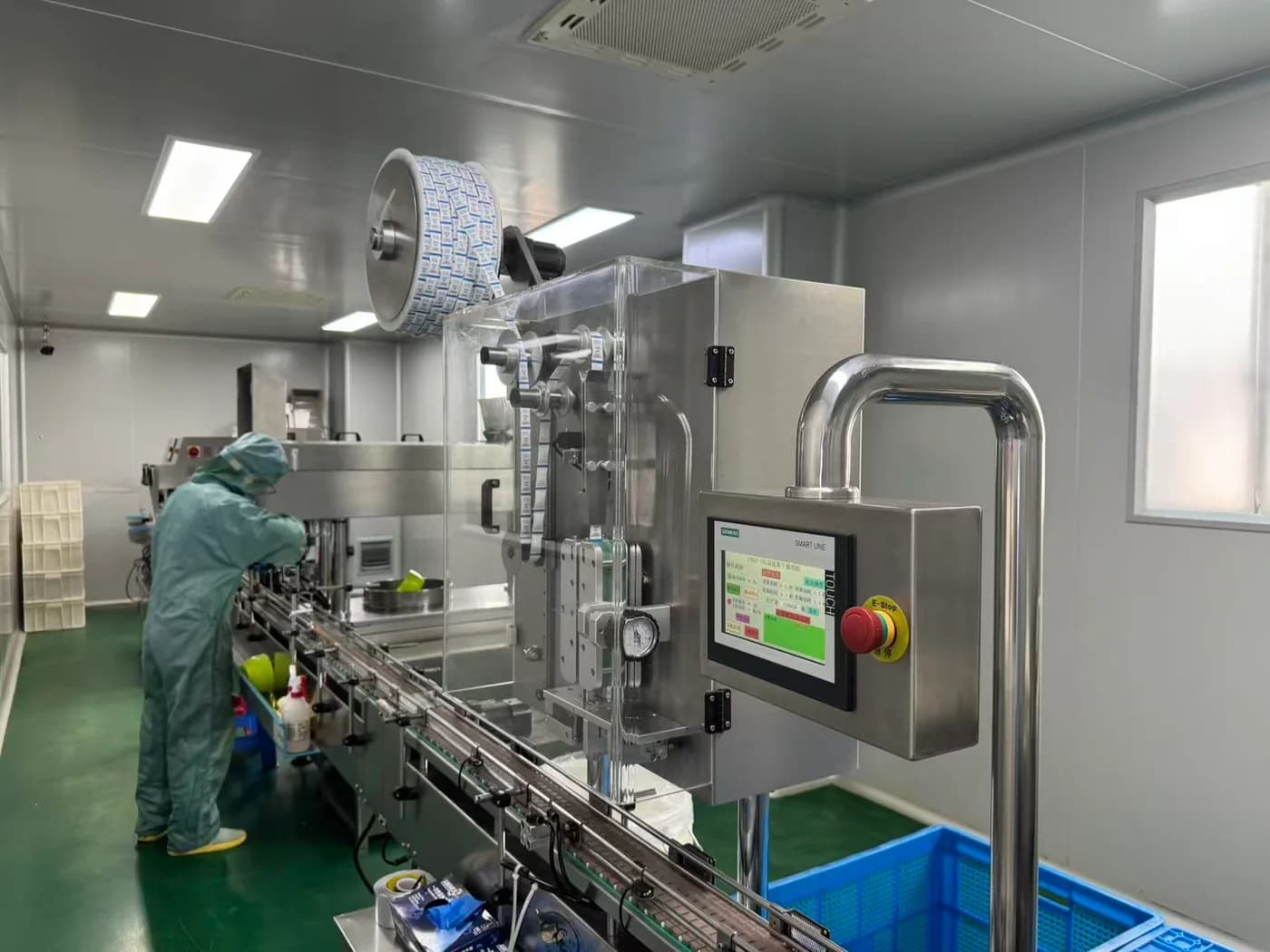
A contract manufacturer's real capacity shows up in two numbers: how many units per shift and how many SKUs run in parallel. A plant with 8 tablet presses and 6 capsule lines can schedule a 50,000-unit order without pushing your date. Ask for monthly output by dosage form, not a single headline figure. If a supplier cannot state tabletting capacity in millions of tablets per month, you are likely talking to a trading company.
Fill weight control matters more than press count. Vitamin C at 1,000 mg and a 500 mg blend behave differently on the same press. Request the weight variation range the plant holds in routine production, typically ±3% to ±5% for tablets and ±2% to ±4% for capsules. A manufacturer that tracks this per batch will flag drift before your retail batch fails a label claim.
Formulation and Ingredient Sourcing
Vitamin premixes vary widely in cost and stability. Ascorbic acid, sodium ascorbate and ascorbyl palmitate all deliver vitamin C, but they behave differently in a tablet, a gummy and a liquid. A capable manufacturer will ask about your target shelf life and packaging before quoting, because overage percentages depend on both. Typical overage for a 24-month shelf life runs 10–30% on sensitive vitamins such as A, D and B12.
Ingredient documentation should arrive before the first sample. Ask for certificates of analysis for each active, allergen statements, and country-of-origin declarations. For halal or organic claims, the raw material certificates must match the finished-product certification. If a supplier promises organic without a or EU organic certificate for the specific ingredient, treat the claim as unverified.
Quality Systems and Compliance Checks
GMP, ISO 22000 and HACCP are the baseline, not the differentiator. What differentiates is how the plant handles deviations, retests and stability. Ask how many batches were rejected or reworked in the last 12 months, and how they document it. A manufacturer with a functioning CAPA system can answer that in a sentence. One without will answer with a brochure.
For US-bound products, the facility should be FDA-registered and able to provide the registration number. For EU and UK buyers, check whether the plant holds a valid food business registration and can support novel food or health claim reviews. For Middle East shipments, halal certification must cover the finished product, not just the gelatin capsule shell. Request the certificate scope, not the logo.
Quality Control and Batch Documentation at Vitamin Manufacturers
Every batch of vitamins should pass a defined panel of tests before release. At minimum, expect identity testing by FTIR or HPLC to confirm the active ingredient, potency assay against the label claim (typically ±5% at release), microbial limits (total plate count, yeast and mould, E. coli, Salmonella), heavy metals (lead, arsenic, cadmium, mercury) and disintegration or dissolution for tablets and capsules. Some manufacturers also test residual solvents, pesticide residues and allergen cross-contact. Ask for the testing frequency: finished-product testing on every batch is the baseline, not a periodic check.
A certificate of analysis (COA) should list the product name, lot number, manufacturing date, expiry date, tests performed, specifications, results and the analyst's signature. It should reference the method used (USP, EP or in-house validated). For export orders, a COA per lot is standard; some buyers also request a batch record summary showing blending weights, machine settings and in-process checks. Retention samples are kept for at least the shelf life plus one year, typically two years for vitamins, so a future query can be traced back to the physical batch.
Stability protocol matters as much as the release test. A real-time stability study at 25°C/60% RH and 30°C/65% RH for the claimed shelf life is the reference. Accelerated conditions at 40°C/75% RH for three to six months give early signals, but they do not replace real-time data for a 24-month claim. Ask whether the manufacturer runs stability on the finished pack (bottle, blister) rather than bulk powder, because moisture and light exposure change the result. For gummies and softgels, check gel strength and fill weight over time.
Documentation should be retrievable, not just promised. Request a sample COA and a redacted batch record before you place a purchase order. Confirm who signs off on deviations and how out-of-specification results are handled: a proper investigation, root cause and corrective action, not a re-test until it passes. If the manufacturer cannot show a deviation log or a change-control procedure, that is a signal about the quality system behind the certificate.
Packaging, Labelling and Retail Readiness
Packaging format drives cost and lead time. High-density polyethylene (HDPE) bottles with induction seals are the default for tablets and capsules, in 60, 90, 120 and 180 counts. Blister packs suit pharmacy and travel retail but add tooling cost and a longer run time. Stick packs and sachets work for powders and effervescents, typically 5 g to 10 g per stick, filled on vertical form-fill-seal lines. Gummies usually go into PET jars with a desiccant or into blister. Confirm the bottle weight, cap type (child-resistant where required) and whether a desiccant is included.
For the US market, the dietary supplement label must carry a supplement facts panel with serving size, amount per serving and % daily value where established, plus the net quantity, ingredient list, allergen statement, and the manufacturer or distributor name and address. Structure-function claims need the standard disclaimer. For the EU, the nutrition declaration and the novel food or health claim rules differ. The manufacturer should supply a dieline or artwork template with the correct dimensions and bleed, and should run a pre-press proof before printing. Ask who owns the artwork files and who checks the final print against the approved proof.
Lot and expiry coding must be legible and permanent: inkjet or laser coding on the bottle, and the same lot on the carton and shipper. Expiry is usually set at 24 months for stable vitamins, 18 months for gummies. Carton specs matter for retail and for marketplaces: standard corrugated shippers with a defined units-per-carton count, and pallet configurations that fit a 1200 x 800 mm or 48 x 40 inch pallet. For Amazon, the unit needs an FNSKU label applied over the barcode or a printed FNSKU on the artwork, plus poly-bagging for certain categories. Confirm who applies the FNSKU and who pays for it.
Retail readiness also means compliance documents travel with the goods. Ask for a packaging specification sheet, a label approval record and a certificate of conformity where the buyer's compliance team requires it. If you sell into a retailer that audits suppliers, the manufacturer should be able to support a factory audit with a quality manual, an organisational chart and records of calibration and pest control. These are operational details that separate a vitamin manufacturer who can supply a retailer from one who can only supply a wholesaler.
MOQ, Lead Times and Delivery from Vitamin Manufacturers
The sample timeline usually runs 7 to 10 working days for a stock formula in a standard bottle, and 15 to 20 working days if a custom flavour, colour or dosage form is involved. Samples are often free or charged at cost plus freight. Ask whether the sample is from a pilot batch or a production batch, because a pilot sample does not prove the production line can hit the same fill weight. For a new formula, a pilot run of 500 to 1,000 units is a reasonable bridge before a full production order.
Mass production typically takes 20 to 35 working days after purchase order, artwork approval and receipt of deposit. The clock starts when all three are in place, not at the PO date. Tablets and capsules are faster; gummies and softgels need longer because of curing and drying. Add time for third-party testing if the buyer requires an external lab COA, usually 5 to 7 working days. Plan a buffer of two weeks for ocean freight and one week for air, and confirm the cut-off for the vessel or flight before you commit to a retail launch date.
Incoterms change who pays and who carries risk. EXW means the buyer collects from the factory; FOB means the manufacturer delivers to the named port and clears export; DDP means the manufacturer delivers to the buyer's door with duties paid. For first orders, FOB is common because it keeps control of freight. DDP suits buyers without a freight forwarder but usually carries a higher unit price. Air freight is economic for samples and for high-value, low-weight orders; sea freight for full containers. Ask for a quote at both EXW and FOB so you can compare like with like.
Documents provided with shipment should include the commercial invoice, packing list, bill of lading or air waybill, COA per lot, material safety data sheet (MSDS) where relevant, and a free-sale certificate if the destination customs authority asks for one. For plant-derived ingredients, a phytosanitary certificate may be required by the importing country. Confirm the documents list in the proforma invoice before you pay, because missing a certificate at destination can hold a container for weeks. A manufacturer who supplies these as standard is easier to scale with than one who supplies them on request.
Manufacturing Options to Compare
Full-service contract manufacturer
Owns formulation, blending, tabletting, coating, bottling and labelling. Best for brands wanting one accountable partner and consistent lead times from 20–35 working days.
Specialist dosage-form plant
Focuses on one form, such as gummies or softgels. Strong quality in that niche, but you may need a second supplier for other SKUs in your range.
Private-label supplier
Offers a catalogue of ready formulas with your label. Fastest route to market, but limited differentiation and often higher per-unit cost at low volumes.
Broker or trading company
Coordinates third-party plants. Useful for small pilot runs, but you lose visibility on batch records, change control and audit access.
From Enquiry to Delivery
- 01
Define your specification
Write the dosage form, fill weight, serving size, target shelf life and packaging before contacting anyone. Suppliers quote more accurately and you compare like for like.
- 02
Request certificates first
GMP, ISO 9001, ISO 22000, HACCP, NSF/ANSI 455-2 and halal certification; FDA facility registration for US-bound shipments.
- 03
Order samples
A 7–10 working day sample turnaround is standard. Evaluate weight variation, dissolution, taste and packaging compatibility against your specification.
- 04
Audit or video-review the plant
On-site audits are ideal. If travel is not possible, request a live video walkthrough of blending, tabletting and packaging areas, plus the QC lab.
- 05
Confirm lead times in writing
Get mass production timelines in the proforma invoice. 20–35 working days is realistic for standard retail bottling after artwork approval.
- 06
Run a pilot batch
Place a small order before a full launch. Pilot runs from 500 units reveal how the supplier handles documentation, labelling checks and shipping coordination.
Why EUPHM
Predictable lead times
A plant with in-house tabletting, coating and bottling avoids third-party queues. That is how 20–35 working day production windows hold.
Documentation you can defend
Batch records, COAs and stability data support retail audits and marketplace compliance checks in the US, EU, UK and Middle East.
Scalable MOQ
Pilot runs from 500 units and retail MOQs of 1,000 units let you test a SKU before committing to a full container.
Questions buyers ask.
What is the typical MOQ for vitamin manufacturing?+
For retail bottling, expect 1,000 units per SKU. Pilot runs can start lower, often from 500 units, but per-unit cost is higher. Some suppliers waive the MOQ if you accept a stock bottle and label. Always confirm whether the MOQ applies per SKU or per order.
How long does vitamin production take?+
Samples take 7–10 working days. Mass production runs 20–35 working days after purchase order and artwork approval. Add 2–4 weeks for ocean freight to the US or EU. If a supplier quotes under 15 working days for a new formula, ask what is being skipped in QC.
Which certifications should a vitamin manufacturer hold?+
At minimum GMP, ISO 22000 and HACCP. If you sell in the Middle East, halal certification is essential. For organic claims, the plant needs USDA organic or EU organic certification covering the finished product. vegan certificates matter for specific consumer segments. Verify scope, not just logos.
Can I get a custom vitamin formula?+
Yes. Most contract manufacturers offer custom formulation, including dosage adjustment, flavour systems and excipient changes. Expect to provide a target label claim, serving size and shelf life. Formulation development typically adds 5–10 working days before sampling, and stability testing may extend the timeline.
How do I compare quotes from different manufacturers?+
Normalise the quotes: same fill weight, same packaging, same certification requirements, same Incoterm. Ask for the per-unit price at 5,000, 25,000 and 100,000 units. A low quote at 5,000 units often hides higher setup fees or a shorter shelf life. Compare total landed cost, not ex-works price alone.
Can you provide a certificate of analysis for each batch?+
Yes. A COA is issued per lot and lists identity, potency, microbials, heavy metals and disintegration results against specification, with the method referenced. Ask for a sample COA before ordering so you can check the format matches your compliance team's expectations. Retention samples are kept for the shelf life plus one year so a future query can be traced to the physical batch.
What label artwork files do you need and who approves the final print?+
We need a print-ready PDF or AI file at the correct dieline size with 3 mm bleed, plus a colour reference if matching is critical. We supply the dieline and run a pre-press proof. The buyer approves the proof in writing before printing. The buyer owns the artwork; we keep a controlled copy of the approved version for the batch record.
Which Incoterms do you quote and what documents come with the shipment?+
We quote EXW and FOB as standard and can quote DDP on request. Each shipment includes commercial invoice, packing list, bill of lading or air waybill, COA per lot, MSDS where relevant, and a free-sale certificate if the destination requires one. A phytosanitary certificate is added for plant-derived ingredients when the importing country asks for it.
Have a product in mind?
Send us the brief and we will come back with a formulation direction, indicative price and a realistic lead time — usually within one working day.