Best Supplement Manufacturers in Chicago: What Buyers Should Compare
Chicago brands often source from local contract manufacturers, but capacity, MOQs and certifications vary widely. This guide compares what matters when vetting supplement manufacturers in Chicago and how a GMP-certified overseas partner can fill gaps.
Overview
Chicago sits at the centre of US supplement distribution, with access to major freight corridors and a dense retail network. That makes it a natural base for brand owners sourcing manufacturing partners. But the best supplement manufacturers in Chicago are not defined by zip code alone. Buyers should compare MOQs, fill weights, lead times, certification scope and line capacity. This page outlines those parameters and explains when a GMP-certified contract manufacturer abroad, such as EUPHM in Guangdong, makes commercial sense for US brands.
Manufacturing Capability in Chicago vs. Overseas
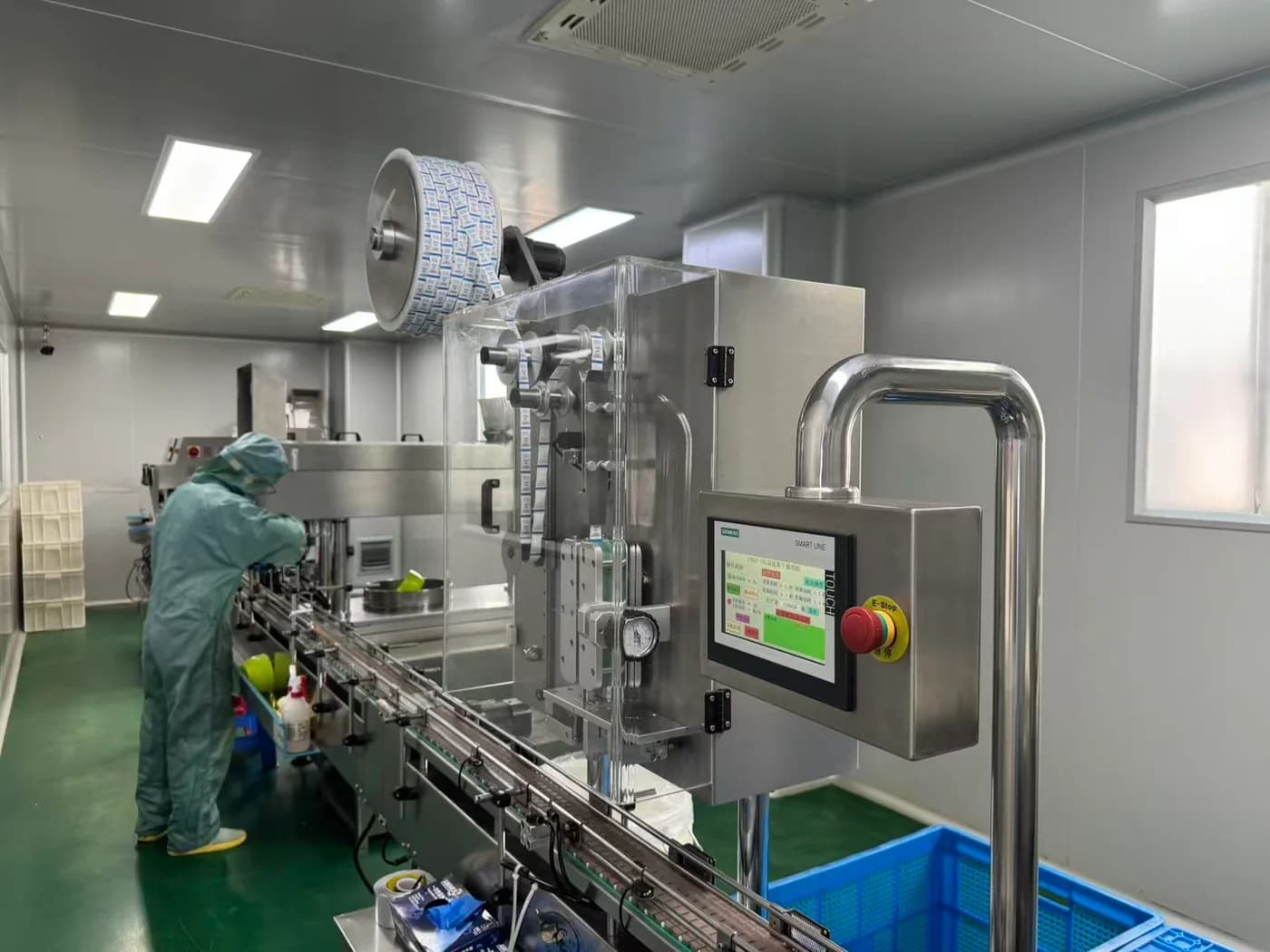
Chicago-area contract manufacturers typically run capsule, tablet and powder lines with MOQs starting around 5,000 units per SKU for retail bottling. Local production can shorten freight times, but capacity is often booked 8–12 weeks out during peak season. For brands launching multiple SKUs, that can delay shelf dates. Overseas partners with dedicated lines, such as EUPHM, offer MOQs from 1,000 units and production slots in 20–35 working days, which can be faster for repeat orders.
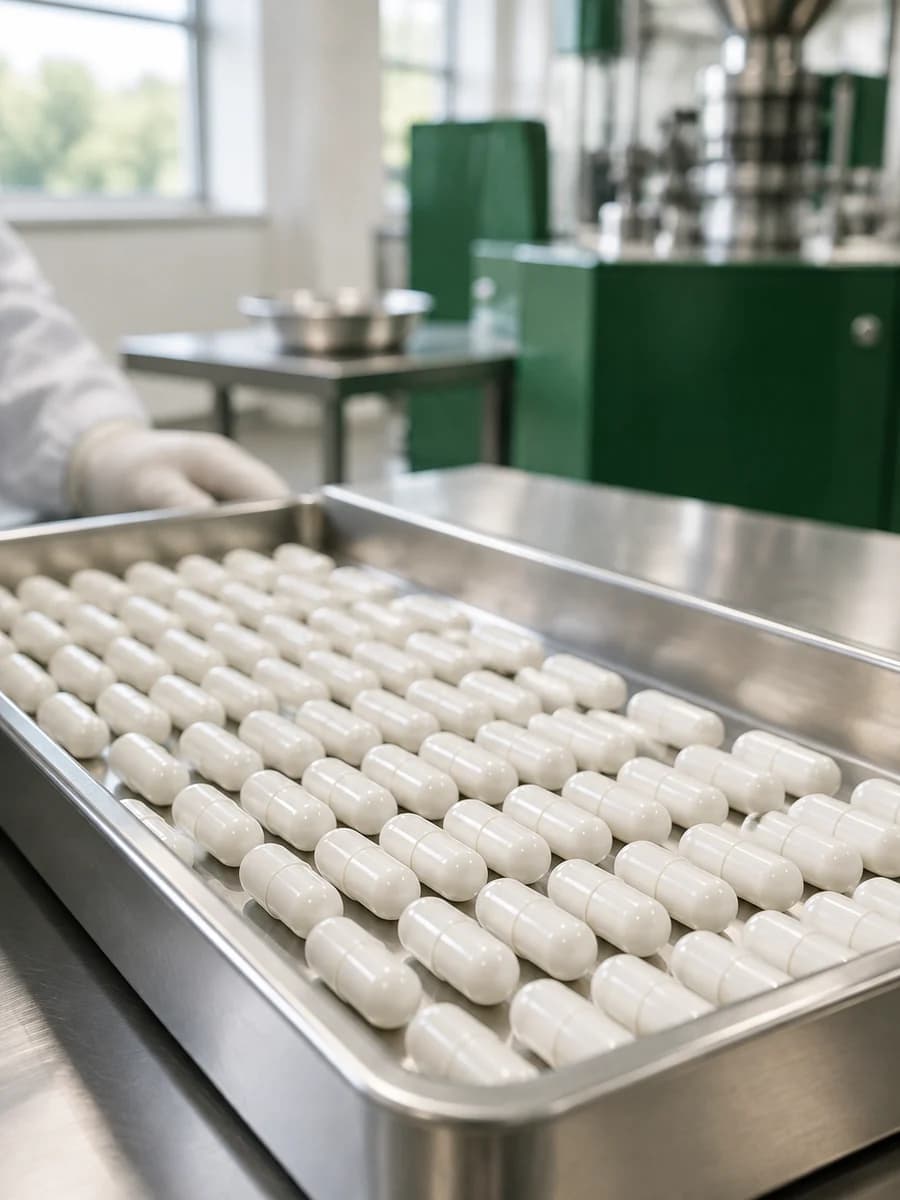
Line capacity matters when you scale. A Chicago manufacturer might run 500,000 capsules per day on a single shift. EUPHM operates lines capable of 2 million capsules and 1.5 million tablets daily, with separate suites for powders and softgels. That capacity supports national retail rollouts without splitting production across multiple vendors. For brands with steady demand, the decision often comes down to total landed cost and lead time reliability, not geography alone.
Formulation and Ingredient Sourcing Details
Ingredient sourcing is where Chicago manufacturers and overseas partners diverge. Local suppliers often rely on domestic botanical and vitamin suppliers, which can mean higher per-kg costs but shorter replenishment cycles. Overseas plants typically source from global ingredient networks, with certificates of analysis for each lot. EUPHM maintains qualified supplier lists for vitamins, minerals, amino acids, botanicals and probiotics, and can provide allergen statements and country-of-origin documentation.
Formulation support varies. Some Chicago manufacturers only run customer-supplied formulas; others offer in-house R&D. If you need a custom blend, ask about excipient compatibility, flowability and stability testing. For capsules, common fill weights range from 300 mg to 1,200 mg. Tablets run 250 mg to 1,500 mg. Powders can be filled from 5 g to 500 g per serving. These parameters determine which manufacturer can execute your concept without reformulation.
Quality, Compliance and Logistics
Quality systems are non-negotiable. Any credible supplement manufacturer should hold GMP certification and ideally ISO 22000 and HACCP. For halal or organic claims, additional certifications are required. EUPHM holds GMP, ISO 22000 and HACCP, and can arrange halal or vegan certification depending on the SKU. The facility is FDA-registered. That means it can manufacture dietary supplements for the US market, but it is not FDA-approved, as the FDA does not approve supplement facilities.
Logistics from Chicago to overseas plants adds 25–40 days by sea, or 5–8 days by air. For brands with tight retail windows, air freight on the first order and sea freight on replenishment is common. Chicago-based 3PLs can receive containers and distribute to retailers across the Midwest and East Coast. When comparing the best supplement manufacturers in Chicago, include landed cost, not just unit price. Duties, freight and warehousing often change the ranking.
Quality Control and Batch Documentation at Chicago-Area Supplement Manufacturers
Buyers comparing supplement manufacturers in Chicago should ask for the batch testing protocol before requesting a quote. A typical GMP facility tests every lot for identity (FTIR or HPLC against a reference standard), potency (assay within 90–110% of label claim), microbials (total aerobic count, yeast and mould, E. coli and Salmonella absent), heavy metals (lead, arsenic, cadmium, mercury against USP <232> limits) and disintegration (USP <701> for tablets, <711> for capsules). Finished-product testing occurs after blending and again after packaging, with in-process checks at 30-minute intervals on fill weight and hardness.
The certificate of analysis (COA) should list the product name, lot number, manufacturing date, expiry date, test parameters, specification limits, results and the analyst's signature. A COA that states only 'pass' without numerical results is not adequate for retail or Amazon compliance. Ask whether the manufacturer retains samples for the full shelf life plus six months; a 24-month expiry product therefore requires retention of at least 30 months. Stability testing normally follows ICH Q1A(R2) conditions: 25°C/60% RH for long-term and 40°C/75% RH for accelerated, with time points at 0, 3, 6, 9, 12, 18 and 24 months.
For overseas supply, confirm that the COA is issued per batch and not per product family. EUPHM issues a batch-specific COA with every shipment and retains samples for 36 months. Buyers should also request the microbiological testing laboratory's accreditation scope, since a GMP certificate does not automatically cover third-party lab methods. If a Chicago manufacturer subcontracts testing, the buyer should know which laboratory performs the work and whether it is ISO 17025 accredited.
Packaging, Labelling and Retail Readiness
Packaging format affects both unit cost and retail channel. Chicago-area manufacturers typically offer high-density polyethylene (HDPE) bottles from 60 cc to 500 cc, blister packs for pharmacy and club stores, stick packs for powder supplements and sachets for single-serve doses. Bottle filling lines usually run at 60–120 bottles per minute, with induction sealing and child-resistant closures available. Buyers should confirm whether the manufacturer stocks bottles or requires a custom mould, since custom tooling adds 15–25 working days and a one-time mould cost of USD 3,000–8,000.
For US retail, the label must include the statement of identity, net quantity of contents, supplement facts panel, ingredient list, allergen declaration, directions for use and the manufacturer or distributor address. The FDA does not pre-approve labels, but the facility must hold a current registration and comply with 21 CFR 111. Lot and expiry coding should be printed or laser-etched on the bottle and outer carton; inkjet coding that smudges in transit is a common cause of retail rejection. Amazon sellers additionally need an FNSKU label applied over the UPC barcode or printed on the carton, and the carton must meet the marketplace's shipment packaging requirements.
Carton and pallet specifications should be agreed in writing before production. A standard export carton for 60-count bottles holds 24 units, with a gross weight of 8–10 kg; pallets are typically 1,200 x 1,000 mm or 1,200 x 800 mm, stretch-wrapped and corner-boarded. For Chicago distribution, buyers should confirm whether the manufacturer can print the carton markings required by retailers such as Walmart or Costco, including item number, case pack and expiration date in the GS1-128 format. EUPHM provides artwork proofing and barcode verification before mass production.
MOQ, Lead Times and Delivery
Sample timelines vary by format. For a capsule or tablet using a stock formula, a Chicago manufacturer may provide samples in 7–10 working days; a custom formula with new flavour or colour requires 15–20 working days for development and stability initiation. Overseas manufacturers such as EUPHM typically quote 10–15 working days for samples, including courier transit of 3–5 days to Chicago. Buyers should request a sample agreement that states the sample is representative of production and includes the batch number and COA.
Mass production lead time depends on packaging and testing. After purchase order and artwork approval, a typical window is 20–35 working days for capsules and tablets, and 25–40 working days for powders in stick packs. Bottling adds 3–5 working days; custom labelling adds 5–7 working days if the labels are supplied by the buyer. Buyers should build in 5 working days for pre-shipment inspection and document review. Air freight from Guangdong to Chicago O'Hare takes 5–8 days door-to-door, while sea freight to the Port of Chicago via Los Angeles or Long Beach takes 30–40 days including customs clearance.
Incoterms should be stated explicitly. EXW leaves all export clearance and freight to the buyer; FOB is common for sea shipments from Shenzhen or Hong Kong; DDP is increasingly requested by Amazon sellers who want the manufacturer to handle import duties and final delivery to a fulfilment centre. Documents provided with each shipment should include the commercial invoice, packing list, bill of lading or air waybill, batch-specific COA, material safety data sheet (MSDS) where applicable, free-sale certificate and, for plant-based ingredients, a phytosanitary certificate. EUPHM issues these documents as standard and can arrange DDP delivery to Chicago-area warehouses.
What We Can Build
Local Chicago manufacturers
Shorter freight, but higher MOQs and limited peak-season capacity. Best for brands needing small runs and local oversight.
Overseas GMP plants
Lower MOQs from 1,000 units, faster scaling and global ingredient access. Best for cost-sensitive or high-volume brands.
Private Label vs. Custom
Private label uses stock formulas with your label. Custom formulation adds 10–15 working days for R&D and stability checks.
Pilot runs
Small batches of 500–1,000 units for market testing. Not all manufacturers offer pilot runs; confirm before requesting samples.
Production in Six Steps
- 01
Request certifications
GMP, ISO 9001, ISO 22000, HACCP, NSF/ANSI 455-2 and halal certification; FDA facility registration for US-bound shipments.
- 02
Confirm MOQ and pricing
Get MOQ per SKU, unit price at 1,000, 5,000 and 10,000 units, and tooling or setup fees. Compare total landed cost.
- 03
Order samples
Request samples of your formula or closest stock formula. Sample lead time is typically 7–10 working days. Evaluate flowability, taste and capsule integrity.
- 04
Review lead times
Ask for production lead time after PO. Standard is 20–35 working days. Confirm if artwork approval or ingredient sourcing adds time.
- 05
Audit quality systems
Request a quality manual, batch record sample and third-party test reports. Check for heavy metals, microbial and potency testing.
- 06
Plan logistics
Decide sea vs. air freight. Confirm Incoterms, duties and warehousing. Chicago 3PLs can receive and distribute containers.
Why EUPHM
Lower moqs
Start at 1,000 units per SKU, with pilot runs under 1,000 units. Reduces inventory risk for new launches.
Faster scaling
Line capacity up to 2 million capsules daily supports national retail rollouts without splitting production.
Certification coverage
GMP, ISO 9001, ISO 22000, HACCP, NSF/ANSI 455-2 and halal certification; FDA facility registration for US-bound shipments.
Questions buyers ask.
What is the MOQ for supplement manufacturing in Chicago?+
Chicago-area contract manufacturers typically set MOQs at 5,000 units per SKU for retail bottling. Some offer pilot runs from 1,000 units. Overseas GMP plants can start at 1,000 units. Always confirm whether MOQ applies per SKU or per order, and whether setup fees apply.
How long does production take for a supplement order?+
After PO and artwork approval, mass production takes 20–35 working days. Sample lead time is 7–10 working days. Add 25–40 days for sea freight from Asia to Chicago, or 5–8 days by air. Peak season can add 1–2 weeks.
Do I need FDA approval to sell supplements in the US?+
No. The FDA does not approve dietary supplement facilities or products. Manufacturers must register with the FDA and follow GMP regulations. Look for an FDA-registered facility with GMP, ISO 22000 and HACCP certifications. Third-party test reports confirm potency and purity.
Can a manufacturer handle halal certifications?+
Yes, but not all do. Ask for current certificates. Halal require dedicated ingredient sourcing and, in some cases, separate production runs. requires certified organic ingredients and facility certification. Vegan claims need no animal-derived excipients. Confirm scope before ordering.
What fill weights can be produced for capsules and tablets?+
Capsules typically range from 300 mg to 1,200 mg. Tablets range from 250 mg to 1,500 mg. Powders can be filled from 5 g to 500 g per serving. These ranges depend on the formula and equipment. Request a sample to confirm flowability and stability.
What is the difference between a GMP certificate and an FDA registration for a supplement manufacturer?+
FDA registration is a facility listing requirement under the Bioterrorism Act and does not indicate GMP compliance. A GMP certificate is issued after an audit against 21 CFR 111 or an equivalent standard such as NSF/ANSI 173. Buyers should verify both: the registration number and the certifying body's scope. A Chicago manufacturer may hold GMP certification for capsules but not for powders, so the scope must match the product format.
Can a manufacturer guarantee the same formula and fill weight across repeat orders?+
Consistency depends on the master batch record and ingredient sourcing. A reputable manufacturer locks the formula, supplier and fill weight in a specification sheet and tests each batch against it. Minor variation in excipient particle size can change flow and fill weight by 2–3%, so buyers should accept a tolerance range rather than an absolute figure. Ask for the specification sheet and the last three COAs to compare results before committing to a repeat order.
How should a buyer handle customs clearance for supplement shipments into Chicago?+
US Customs and Border Protection requires an importer of record, a commercial invoice, packing list and, for some ingredients, an FDA prior notice. Dietary supplements are not subject to FDA approval, but the importer must ensure the facility is registered and the labels comply with 21 CFR 101. A customs broker is normally appointed before the first shipment. Under DDP terms the manufacturer arranges clearance, but the buyer remains responsible for label compliance and should retain the COA and free-sale certificate.
Have a product in mind?
Send us the brief and we will come back with a formulation direction, indicative price and a realistic lead time — usually within one working day.