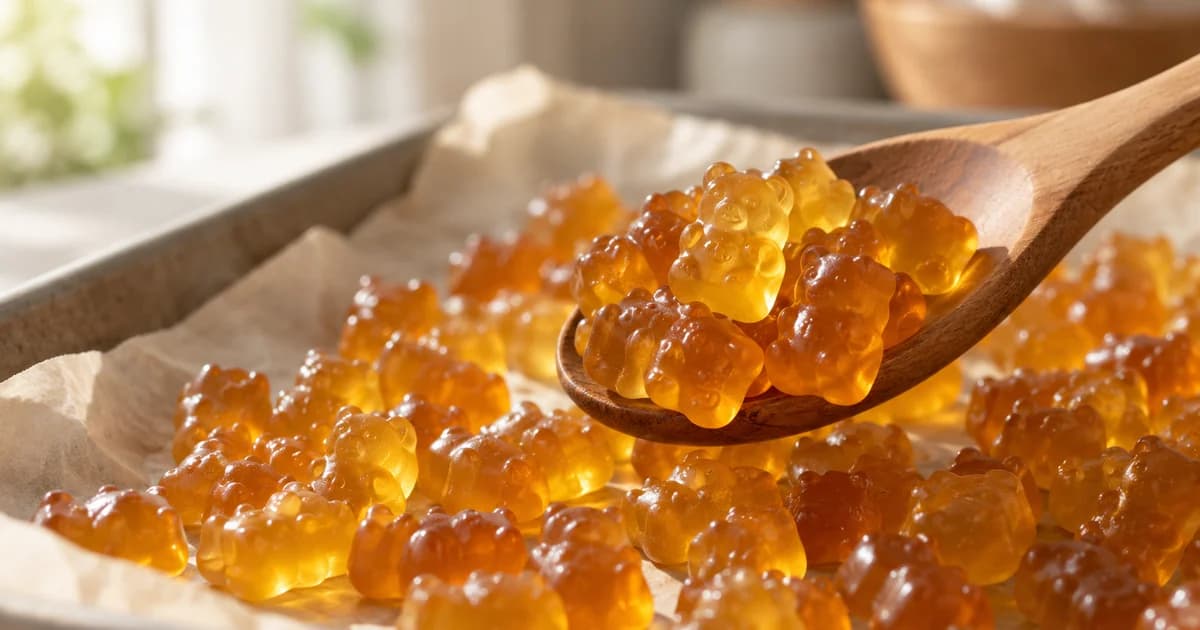
How Gummies Are Made: A Contract Manufacturer's Guide
Gummy manufacturing turns a sugar-and-hydrocolloid syrup into a stable, shelf-ready dose. The process has six repeatable stages: batch preparation, cooking, depositing, curing, coating and packing. Each stage has tolerances that affect texture, potency and shelf life.
Overview
This resource explains how gummies are made at commercial scale, written for brand owners and procurement managers evaluating a supplement manufacturing partner. It covers the two main gelling systems, the equipment used, typical fill weights, and the quality checks that sit behind every batch. If you are sourcing gummy production in China, use this as a checklist against any supplier's stated process. For adjacent formats, see our /resources/gummies hub.
- Minimum order quantity
- 1,000 units per SKU for retail bottling; lower for pilot runs
- Sample lead time
- 7–10 working days
- Mass production lead time
- 20–35 working days after approved sample
- Typical fill weight
- 2.0 g–5.0 g per gummy, ±5% target
- Line capacity
- Up to 1.2 million gummies per day across depositing lines
- Certifications
- GMP, ISO 9001, ISO 22000, HACCP, NSF/ANSI 455-2, halal, FDA-registered
Gummy Production Capability and Equipment
Commercial gummy production runs on a starch mogul or a depositing line. Starch moguls cast syrup into starch trays, which is slower but handles high-pectin and high-dose formulas. Depositing lines use a servo-driven nozzle head to fill moulds at 2.0 g to 5.0 g per gummy, then move trays into a curing tunnel. A single line can output 1.2 million gummies per day. EUPHM runs both configurations, which matters when your formula needs a specific texture or a larger active load.
Moulds are either metal or starch-based. Metal moulds give sharper edges and faster demoulding, but they limit shape complexity. Starch moulds allow deeper cavities and better control for sugar-free or low-moisture recipes. Changeover between SKUs takes 4–6 hours, including cleaning and first-article checks. For orders above 500,000 units, dedicated tooling is cost-effective. For smaller runs, shared tooling keeps MOQ at 1,000 units per SKU.
Formulation: Pectin, Gelatin and Active Loading
The gelling agent decides texture, melting point and vegetarian status. Gelatin gives a springy chew and melts at 35°C, which is why it dominates mainstream vitamins. Pectin sets with calcium ions and holds up better in warm climates, but it needs a higher solids content and precise pH control between 3.2 and 3.8. Starch-based gummies suit sugar-free recipes using maltitol or allulose. Each system changes the cooking temperature: gelatin batches cook to 80–85°C, pectin batches to 105–108°C.
Active ingredients are added after cooking, during the holding stage, to protect heat-sensitive vitamins. Vitamin C, B-complex and zinc slurries are dosed by weight at 25–40°C. Oil-based actives such as omega-3 or vitamin D3 need emulsification to avoid separation. Overages of 5–15% are common to meet label claim at end of shelf life. Flavour and colour are added last, then the batch is held under vacuum for 20–30 minutes to remove air bubbles before depositing.
Quality Control, Curing and Compliance
After depositing, gummies cure for 24–72 hours in a temperature-controlled room at 20–25°C and 30–40% relative humidity. Curing removes surface moisture and sets the final chew. In-process checks include Brix, pH, weight per gummy and texture. A batch fails if weight deviates by more than ±5% or if the texture is outside the approved range. Finished gummies are coated with oil or wax to stop sticking, then packed into bottles or sachets.
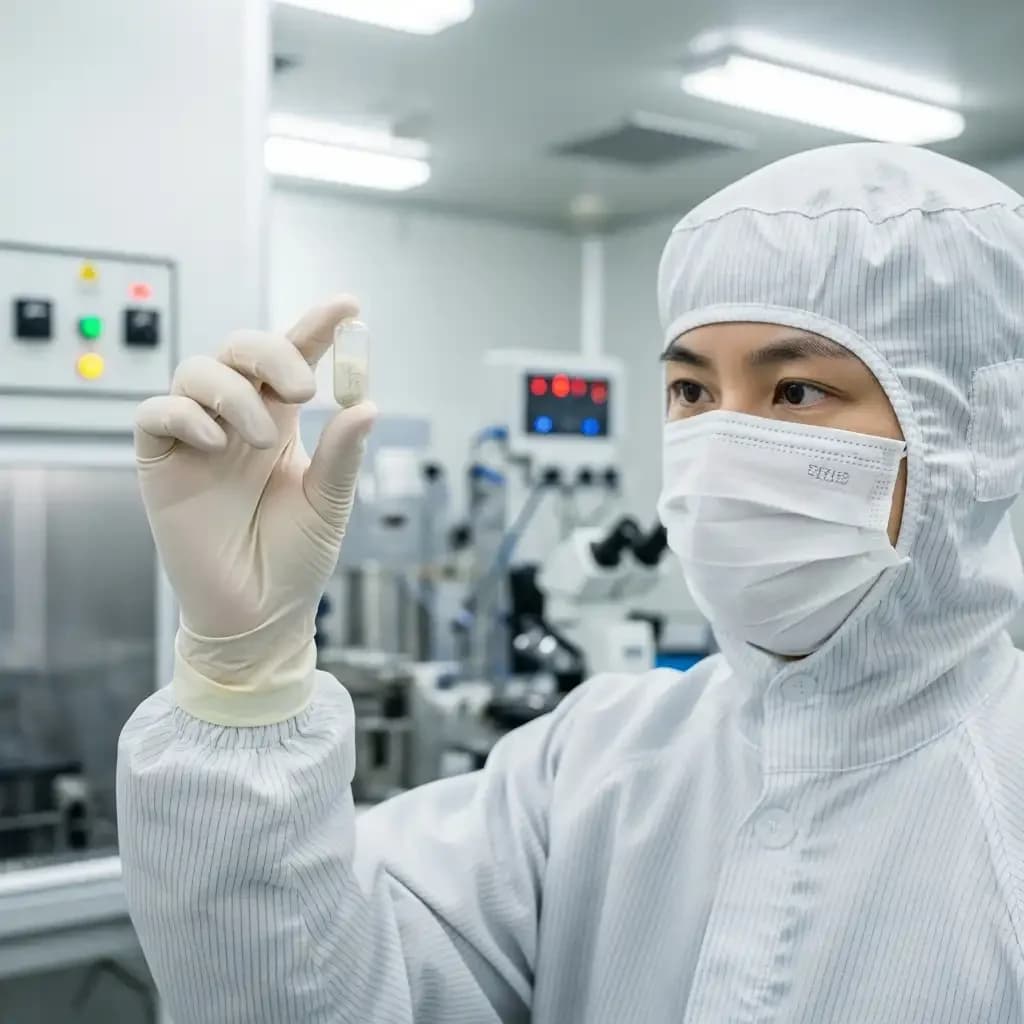
Compliance starts with the facility. A GMP-certified, ISO 22000 and HACCP site documents every batch, from raw material COAs to finished product micro tests. Third-party lab testing covers potency, heavy metals and microbial limits. For halal or vegan claims, the relevant certification must be in place before production, not after. EUPHM holds these certifications and can supply documentation for your regulatory filing in the US, EU, UK or Middle East.
Quality Control and Batch Documentation
Every commercial gummy batch is tested against a written specification before release. Identity and potency testing confirms that actives such as vitamin C, D3 or melatonin fall within 90–110% of label claim at the time of manufacture. Microbial testing covers total aerobic count, yeast and mould, E. coli and Salmonella, with typical limits of under 1,000 cfu/g for total aerobes. Heavy metals are screened by ICP-MS for lead, arsenic, cadmium and mercury, and disintegration testing follows the USP <2040> method to confirm the gummy breaks down within the required time.
Testing is staged rather than carried out only at the end. Incoming raw materials are quarantined until identity is confirmed by FTIR or HPLC. In-process checks monitor depositing weight, Brix and pH at intervals of 30 to 60 minutes. Finished-product testing happens after curing, typically 48 to 72 hours post-depositing, because potency and texture stabilise only once the gel matrix has set. A batch is not released until the quality team signs the certificate of analysis against the approved specification.
The certificate of analysis (COA) issued with each lot should list the product name, lot number, manufacture and expiry dates, the tests performed, the specification limits, the results and the method used. It should be signed by an authorised quality representative. Buyers sourcing gummy production in China should request a COA for the actual production lot, not a generic template, and confirm that the lot number matches the cartons and bottles shipped.
Retention samples are held for the shelf life plus 12 months, typically two full retail units per lot, stored under labelled conditions. Stability follows a protocol of accelerated testing at 40°C and 75% relative humidity for six months, plus real-time testing at 25°C and 60% relative humidity for the declared shelf life. Vitamin potency, colour, texture and microbial status are checked at 0, 3, 6, 12, 18 and 24 months, which supports the expiry date printed on the label.
Packaging, Labelling and Retail Readiness
Gummies are packed in HDPE bottles with induction seals, in blister packs, in stick packs or in single-serve sachets. Bottle sizes commonly run from 60 to 180 counts, with 60 and 90 count the most requested for retail. Blisters suit pharmacy channels and travel formats, while stick packs and sachets suit sample programmes and subscription boxes. Desiccant is added where humidity control matters, and bottles are induction-sealed and shrink-banded for tamper evidence.
For the US market, the label must carry a Supplement Facts panel with serving size, active quantities and % Daily Value where established, plus the ingredient list, allergen statement, net quantity, directions and the manufacturer or distributor address. Lot number and expiry date are printed by inkjet or laser on the bottle and the carton, and must match the COA. For the EU, the nutrition declaration and health-claim wording follow Regulation 1169/2011 and the applicable claims register.
Carton specifications are agreed before production. A typical shipper holds 12 to 24 retail bottles, with gross weight and carton dimensions stated on the packing list. Pallets are built to 1,200 by 1,000 mm or 1,200 by 800 mm depending on destination, with stretch wrap and corner boards. Amazon sellers should confirm FNSKU labelling, poly-bagging where required and carton weight limits before the run, because rework after production adds cost and delay.
Retail readiness also covers artwork approval and barcode verification. GS1 barcodes are checked for print quality, and a pre-production proof is signed off before plates or digital files are finalised. Buyers should confirm who owns the artwork files, how label revisions are version-controlled and what happens if a label error is found after packing. A written packaging specification, signed by both parties, prevents most disputes at the point of shipment.
MOQ, Lead Times and Delivery
Sample development typically takes 7 to 10 working days from receipt of the brief and signed formulation. The sample stage covers flavour, texture, colour and active loading, and most projects need one or two rounds of adjustment. Once the sample is approved in writing, mass production runs 20 to 35 working days depending on line scheduling, packaging complexity and whether labels and cartons are supplied by the buyer or produced locally.
Shipping method depends on volume and urgency. Air freight moves 100 to 500 kg in 5 to 10 days door to door and suits launch quantities; sea freight is economical above roughly 500 kg and takes 25 to 40 days to Europe or North America, plus customs clearance. Gummies are temperature-sensitive, so summer shipments may need insulated packaging or a temperature-controlled container, which should be quoted separately.
Incoterms are agreed in the quotation. EXW places collection at the factory, FOB places cost and risk at the named Chinese port, and DDP places delivered duty paid at the buyer's address. DDP is convenient for smaller buyers but carries higher unit cost and less visibility of the import charges. Buyers should confirm who is the importer of record and who bears duty, VAT and customs clearance.
The document pack issued with each shipment includes the commercial invoice, packing list, bill of lading or airway bill, COA, MSDS where applicable, and a free-sale certificate. For plant-derived ingredients, a phytosanitary certificate or certificate of origin may be requested. Buyers should check the documents against the purchase order before the container leaves, because corrections after departure are slow and can hold up clearance at destination.
Manufacturing Options to Compare
Gelatin
Springy texture, melts at 35°C. Suits standard vitamins and minerals. Not vegetarian. Requires 80–85°C cooking.
Pectin
Plant-based, heat-stable. Better for warm climates and vegan labels. Needs pH 3.2–3.8 and higher solids.
Starch / modified starch
Used for sugar-free and low-moisture recipes. Slower curing but good dimensional stability.
Carrageenan or agar
Alternative vegan gelling agents. Firmer bite, less elastic. Often blended with pectin for texture.
How a Project Runs
- 01
Batch preparation
Weigh and dissolve sugar, glucose syrup, water and gelling agent. Add buffers and acids to target pH.
- 02
Cooking
Heat to 80–108°C depending on base. Vacuum removes water to reach target Brix, usually 75–80.
- 03
Active addition
Cool to 25–40°C, then add vitamins, minerals, flavours and colours. Mix under vacuum to remove air.
- 04
Depositing
Fill moulds to 2.0–5.0 g per gummy. Servo nozzles control weight within ±5%.
- 05
Curing
Hold at 20–25°C and 30–40% RH for 24–72 hours. Sets texture and reduces surface moisture.
- 06
Coating and packing
Apply oil or wax, then bottle or sachet. Metal detection and checkweighing before cartoning.
Why EUPHM
Repeatable potency
In-process checks and overages keep label claim within specification through shelf life.
Flexible MOQ
Pilot runs below 1,000 units test the market before scaling to 500,000 units.
Certified compliance
GMP, ISO 9001, ISO 22000, HACCP, NSF/ANSI 455-2 and halal certification; FDA facility registration for US-bound shipments.
Questions buyers ask.
What is the minimum order quantity for gummy manufacturing?+
For retail bottling, MOQ is 1,000 units per SKU. Pilot runs can go lower, often 1,000 units, but tooling and setup costs are amortised across fewer units. If you need a new shape, dedicated mould tooling adds 15–20 working days and a one-time cost.
How long does sample development take?+
Sample lead time is 7–10 working days from approved formula. This includes lab-scale batch, curing, and courier dispatch. You receive samples with a specification sheet covering weight, texture, pH and potency. Revisions add 5–7 working days per round.
What is the difference between pectin and gelatin gummies?+
Gelatin gives a springy, elastic chew and melts at body temperature. Pectin is plant-based, firmer, and more heat-stable, which suits vegan labels and warm climates. Pectin requires tighter pH control and a higher cooking temperature. Neither is better; the choice depends on your target texture and certification needs.
How do you ensure vitamin potency in gummies?+
Actives are added after cooking to avoid heat degradation. We use 5–15% overages based on stability data, then test finished product at release and at accelerated conditions. Potency is confirmed by HPLC or ICP-MS. Every batch ships with a certificate of analysis.
What certifications should a gummy manufacturer hold?+
At minimum, GMP, ISO 22000 and HACCP. For specific claims, you need halal or vegan certification from a recognised body. These must be in place before production. Ask for certificates and audit reports before placing a purchase order.
What is the shelf life of a gummy supplement and how is it determined?+
Shelf life is typically 18 to 24 months from the date of manufacture, depending on the actives and the packaging format. It is supported by accelerated stability testing at 40°C and 75% relative humidity for six months, plus real-time data at 25°C and 60% relative humidity. Potency, colour, texture and microbial status are checked at defined intervals, and the expiry date printed on the label must not exceed the validated shelf life.
Can you produce sugar-free or vegan gummies, and what changes on the label?+
Yes. Sugar-free gummies typically use maltitol, xylitol or erythritol with a pectin or modified-starch gel, and vegan gummies use pectin or starch rather than gelatin. The label must reflect the changed ingredient list and nutrition declaration, including polyols and any allergen statement. Buyers should confirm the gelling system and sweetener before artwork approval, because these choices affect texture, taste and the claims that can legally be made.
How are gummies transported in hot weather without quality loss?+
Gummies soften above roughly 30°C, so summer shipments may use insulated liners, gel packs or a temperature-controlled container. The choice depends on route, transit time and product formulation. Buyers should request a hot-weather shipping plan in the quotation and confirm who bears the cost of insulation. Sea freight in a standard container across equatorial routes carries the highest risk and should be assessed case by case.
Xu Wei writes the manufacturing, quality and regulatory guides on EUPHM. He works directly with the plant's production and QA teams to document how each dosage form is made, tested and released, so every claim on the site can be traced back to a batch record or a certificate on file.
More guides in this category.
See all →
Kids Vitamin Gummies Guide for Brand Owners
A practical guide to sourcing kids vitamin gummies: fill weights, actives, pectin versus gelatin bases, MOQs from 1,000 units, and 20–35 working day production windows. Built for founders and procurement teams placing a first or repeat order.
Read the guide →
Melatonin Gummies Guide for Brand Owners and Procurement Teams
Melatonin gummies are a fast-moving sleep supplement format, but they are harder to make than capsules. This guide covers realistic MOQs, fill weights, pectin versus gelatin bases, dosing, stability and the compliance documents buyers should request before placing a purchase order.
Read the guide →
Collagen Gummies Market Trends: What Buyers Need to Know
Collagen gummies are the fastest-growing delivery format in beauty-from-within. Retail buyers and brand owners now ask for 5g collagen per serving, halal certification, and clean-label pectin bases. This page covers demand data, formulation choices, and contract manufacturing parameters.
Read the guide →Have a product in mind?
Send us the brief and we will come back with a formulation direction, indicative price and a realistic lead time — usually within one working day.