How to Design a Custom Gummy: From Brief to Bottle
Designing a custom gummy starts with four decisions: base, actives, flavour, and format. Get those right and a 1,000-unit run is straightforward. Get them wrong and you pay for reformulation twice.
Overview
Most gummy projects fail at the brief stage, not the production stage. A brand owner sends a competitor's label and asks for 'the same, but better'. The contract manufacturer then has to reverse-engineer a base, guess at overage levels, and hope the actives survive 20–35 working days of production. This guide covers the decisions that actually determine cost, lead time and shelf life: pectin versus gelatin, active loading limits, sweetener systems, and the certifications your retail buyer will ask for. It sits alongside our /resources/gummies library, which covers formats, packaging and labelling in more depth.
Base, Texture and Format Decisions
The base determines texture, vegetarian status and how much active you can load. Gelatin gives a firm, springy chew and holds actives well, but rules out vegan claims. Pectin gives a softer, shorter bite and is fully plant-based; it needs a higher solids content and tighter pH control, typically 3.2–3.6. Starch-moulded gummies suit high-dose actives but have a chalkier mouthfeel. Most retail brands launching in the US or EU now choose pectin for the vegan label, accepting a slightly higher unit cost.
Format follows the base. A 2.0 g piece suits a single low-dose active such as 5 mg melatonin or 25 mg CBD. A 4.5 g piece can carry 500 mg of a bulky ingredient such as apple cider vinegar, though taste masking becomes the limiting factor. Dosing is usually 1–3 gummies per day, which sets your label serving size and your per-bottle count: 60, 90 or 120 pieces in a 200 ml or 250 ml PET or HDPE bottle.
Actives, Sweeteners and Taste Masking
Active loading is the hardest constraint. Water-soluble ingredients disperse cleanly. Oil-based actives such as omega-3, vitamin D3 or CBD need emulsification, and heat-sensitive vitamins need overage. Vitamin C at 250 mg per gummy will lose roughly 10–15% across a 24-month shelf life, so you formulate above label claim. Probiotics are more delicate: only spore-forming strains such as Bacillus coagulans reliably survive the cooking step, and you should expect 0.5–1 log loss during production.
Sweetener systems shape both taste and label. Sucrose and glucose syrup give the cleanest flavour but add 2–4 g of sugar per piece. Maltitol and sorbitol cut sugar to near zero but cause laxative effects above roughly 20 g per day. Allulose and erythritol with stevia or monk fruit now dominate sugar-free launches. Sourness comes from citric, malic or fumaric acid; bitterness from actives is usually masked with a fruit flavour blend plus a 0.1–0.3% salt or sucralose addition. Always taste a sample before approving the formula.
Compliance, Testing and Production Logistics
Compliance starts with the destination market. In the EU, gummies are usually sold as food supplements under Directive 2002/46/EC, so claims must sit on the EU Register. In the US, structure-function claims need the standard disclaimer. Halal certification requires a gelatin source acceptable to the certifying body, or a pectin base. Organic claims require USDA or EU organic certification of every ingredient above 5% of the formula, and the facility must hold the corresponding certificate.
Testing and logistics follow. Budget for finished-product tests: microbiological, heavy metals, and potency at 0, 12 and 24 months if you want a real shelf-life claim. Stability studies usually run 3–6 months accelerated. Packaging lead time sits outside production: bottles, caps and labels add 15–25 working days if sourced new. Air freight from Guangdong to the US or EU takes 5–8 days; sea freight 25–35 days. Build both into your launch date before you approve the formula.
Quality Control and Batch Documentation
Every custom gummy batch is tested against a written specification before release. Incoming raw materials are checked for identity and potency: pectin or gelatin bloom strength, sweetener assay, and active ingredient certificate of analysis from the supplier. In-process checks cover weight variation (target ±5%), texture, and colour. Finished-product testing includes active potency (usually by HPLC), microbial limits (total aerobic count, yeast and mould, E. coli, Salmonella), heavy metals (lead, cadmium, arsenic, mercury), and disintegration time. Disintegration is critical for gummies: pectin-based pieces typically dissolve in 30–45 minutes, gelatin in 15–25 minutes, and the test confirms the matrix releases actives as intended.
A certificate of analysis (COA) is issued for each batch and includes the batch number, production date, expiry date, test parameters, specification limits, results, and the analyst's signature. It also states the testing laboratory and method reference. Buyers receive the COA as a PDF within 3–5 working days of batch completion. Retention samples (at least two bottles per batch) are stored under controlled conditions (25°C/60% RH and 30°C/65% RH) for the full shelf life plus six months. These samples are available for third-party verification if a retail buyer requests it.
Stability testing follows a standard protocol: accelerated conditions at 40°C/75% RH for six months, with pull points at 0, 1, 2, 3, and 6 months. Real-time testing at 25°C/60% RH runs concurrently for 24–36 months, depending on the declared shelf life. Parameters tested include potency, microbial count, moisture, texture (hardness), and colour. A stability summary report is provided with the first production batch, and ongoing batches are monitored annually. This data supports the expiry date printed on the label and is often requested by retail chains and Amazon sellers.
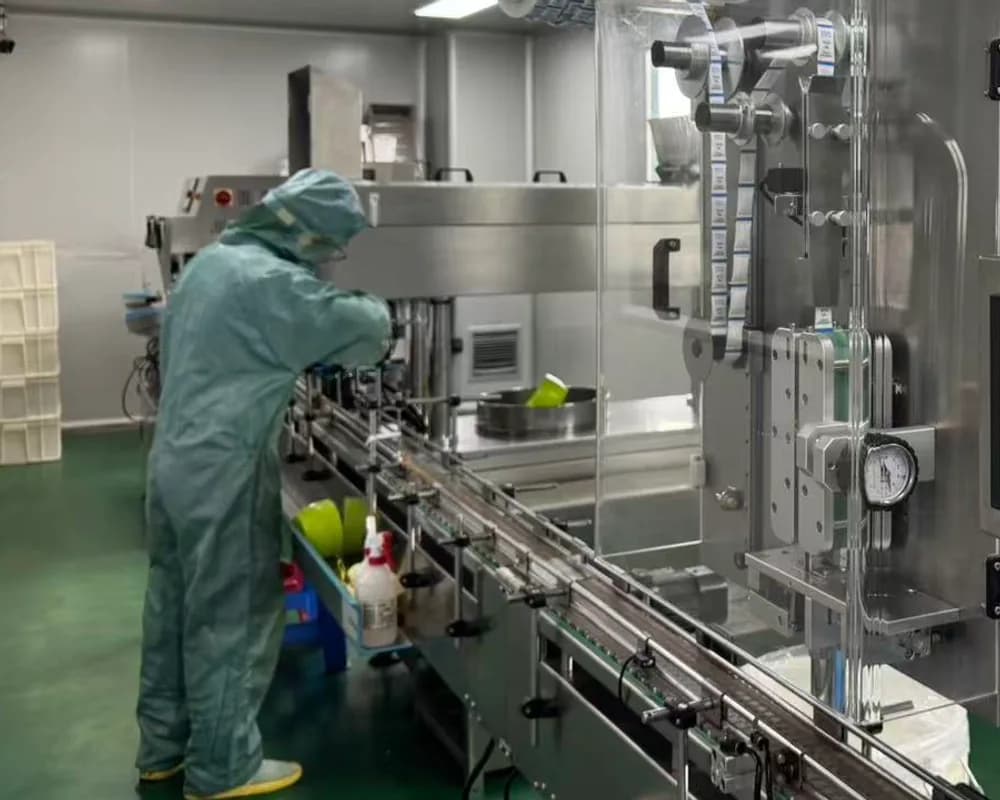
For custom gummy projects, the quality control plan is agreed before production. This includes defining critical control points (CCPs) for pasteurisation, water activity (target below 0.65 for shelf-stable gummies), and metal detection. The factory operates under GMP, ISO 22000, and HACCP, and can provide audit reports on request. If a buyer requires additional testing, such as allergen screening or specific pesticide residues, this is quoted separately and adds 5–7 working days to the lead time. All testing is performed in-house or by accredited third-party laboratories, and results are traceable to the batch.
Packaging, Labelling and Retail Readiness
Custom gummies can be packed in several formats: round or square bottles (typically 60, 90, 120, or 180 count), blister packs, stick packs, or single-serve sachets. Bottles are the most common for retail and use HDPE or PET with induction seals and child-resistant caps where required. Blisters suit pharmacy channels and sample packs. Stick packs and sachets are popular for on-the-go formats. The factory can supply stock bottles or work with buyer-supplied packaging. Typical bottle dimensions are 50–75 mm diameter and 100–150 mm height, with label areas sized accordingly. Carton specifications: 12–24 bottles per shipper, with pallet configurations of 48–60 cartons per layer, depending on bottle size.
For the US market, the label must include a supplement facts panel, serving size, active ingredients with quantities, other ingredients, and a manufacturer/distributor statement. The factory provides a label template and reviews buyer artwork for compliance with FDA 21 CFR 101.36. Lot and expiry coding are applied by inkjet or laser on the bottle and carton. Expiry dates are typically 18–24 months from production, supported by stability data. Barcodes (UPC or EAN) are printed or labelled as required. For Amazon FNSKU, the factory can apply the FNSKU label over the barcode or print it directly, provided the buyer supplies the label file.
Retail readiness includes carton marking: lot number, expiry date, quantity, and country of origin (China). Pallet specs follow standard GMA or EUR pallets, stretch-wrapped and labelled with SSCC if needed. The factory can provide packaging mock-ups for buyer approval before mass production. For EU markets, the label must include the address of the food business operator and a nutrition declaration. The factory assists with translations but final legal responsibility rests with the brand owner. Packaging lead time is typically 10–15 working days if using stock components; custom bottles or printed labels add 20–25 working days.
MOQ, Lead Times and Delivery
The minimum order quantity for custom gummies is 1,000 units per SKU for retail bottling, or from 500 units for a pilot run (hand-packed). Sample lead time is 7–10 working days after receipt of a complete brief and payment of the sample fee. Mass production takes 20–35 working days after sample approval, depending on the complexity of the formulation and packaging. This window includes raw material procurement, production, testing, and packing. If custom packaging is used, add the packaging lead time. The factory provides a production schedule with milestones and shares progress updates weekly.
Shipping options are air freight (5–10 days to major hubs) or sea freight (25–40 days to US/EU ports). Incoterms offered are EXW (factory), FOB (port of loading), and DDP (delivered duty paid) for select destinations. DDP is available for the US, UK, and EU, with all duties and taxes handled by the factory's freight partner. Air freight is typically used for pilot runs or urgent orders, while sea freight is more cost-effective for full containers (20ft or 40ft). The factory provides a packing list and commercial invoice for customs clearance.
Documentation provided with each shipment includes the certificate of analysis (COA), material safety data sheet (MSDS) if applicable, free-sale certificate, and phytosanitary certificate where relevant (for plant-derived ingredients). The factory also provides a certificate of origin and can legalise documents for certain markets at additional cost. For Amazon sellers, the factory can ship directly to Amazon fulfilment centres (FBA) with proper labelling. Lead times for documents are 2–3 working days after shipment. The factory recommends booking shipping space at least two weeks before production completion to avoid delays.
What We Can Build
Pectin gummies
Plant-based, vegan-friendly, soft bite. Best for fruit-forward flavours and clean-label launches. Requires pH 3.2–3.6 and higher solids. Unit cost is 5–10% above gelatin at the same volume.
Gelatin gummies
Firm, springy texture and strong active retention. Lower cost per unit. Not suitable for vegan or vegetarian claims. Halal versions need certified bovine or fish gelatin.
Starch-moulded gummies
Suits high-dose actives and 3–4 g pieces. Chalkier mouthfeel. Common for medicinal or functional formats where dose matters more than chew.
Sugar-free gummies
Allulose, erythritol or maltitol bases with stevia. Cuts sugar to under 0.5 g per piece. Watch polyol laxative thresholds and check the glycaemic claim with your regulatory advisor.
From Brief to Batch
- 01
Define the brief
Write down target market, serving size, actives and dose, sugar position, and certifications needed. This single page prevents most reformulation later.
- 02
Screen the formula
Check active compatibility with the base, pH and process temperature. Flag anything heat-sensitive or oil-based for emulsification.
- 03
Request samples
Sample lead time is 7–10 working days. Ask for two flavour variants and one texture variant so you can compare side by side.
- 04
Approve and test
Sign off the sample, then commission potency and microbiological testing plus a 3–6 month accelerated stability study.
- 05
Lock packaging
Confirm bottle size, cap, label artwork and carton. New tooling or custom shapes add 15–25 working days to the timeline.
- 06
Produce and ship
Mass production runs 20–35 working days after sample approval. Air freight is 5–8 days; sea freight 25–35 days to the US or EU.
Why EUPHM
Low pilot threshold
Pilot runs start from 500 units so you can test market response before committing to a 1,000 unit retail batch.
Certification coverage
GMP, ISO 9001, ISO 22000, HACCP, NSF/ANSI 455-2 and halal certification; FDA facility registration for US-bound shipments.
Formulation support
Overage calculations, taste masking and stability testing handled by the same team that runs the line, not a separate lab.
Questions buyers ask.
What is the minimum order quantity for a custom gummy?+
Retail bottling starts at 1,000 units per SKU. Pilot runs can go lower, from around 500 units, hand-packed for market testing. Unit cost at pilot scale is higher because setup and cleaning time is spread across fewer pieces.
How long does it take to make a custom gummy from scratch?+
Samples take 7–10 working days. After approval, mass production runs 20–35 working days. Add 15–25 working days if you need new bottle tooling or custom label printing. Air freight adds 5–8 days, sea freight 25–35 days.
Can you make vegan gummies?+
Yes. Pectin and starch-moulded bases are fully plant-based. Gelatin gummies are not vegan. If you need a vegan claim, choose pectin and confirm that colours, flavours and any coating agents are also plant-derived.
How much active ingredient can one gummy hold?+
A 2.0 g piece comfortably carries 5–50 mg of a potent active. A 4.5 g piece can hold 500 mg of a bulky ingredient such as apple cider vinegar or collagen. Above that, taste masking and texture become the limiting factors, not the base.
What certifications do you hold for gummy production?+
The facility is GMP-certified and holds ISO 22000 and HACCP. halal and vegan certifications are arranged per project depending on the formula and destination market. Certificates are issued to the brand, not shared across customers.
What is the shelf life of your custom gummies, and how is it determined?+
Shelf life is typically 18–24 months from the date of production, depending on the formulation and packaging. It is determined by real-time and accelerated stability studies. Accelerated testing at 40°C/75% RH for six months predicts a two-year shelf life if potency remains above 90% and microbial limits are met. The factory provides a stability summary report with the first batch. For gummies with sensitive actives, a shorter shelf life may be advised, and overage levels are adjusted accordingly.
Can you produce gummies with a sugar-free or low-sugar claim?+
Yes. Sugar-free gummies typically use maltitol, sorbitol, or erythritol combined with fibre or bulking agents. Low-sugar versions may use a reduced amount of sucrose or glucose syrup with high-intensity sweeteners such as stevia or sucralose. The texture and mouthfeel differ from full-sugar gummies, so a sample is recommended. Sugar-free claims require careful labelling, especially regarding laxative effects from polyols. The factory can advise on suitable recipes and provide nutritional analysis for the label.
What is your policy on overage of active ingredients?+
Overage is added to compensate for degradation during production and shelf life. Typical overage ranges from 5% to 20% above the label claim, depending on the stability of the active. For sensitive ingredients like probiotics or certain vitamins, overage may be higher. The factory provides a recommended overage based on stability data and production trials. The final label claim must be supported by the finished-product testing at release. Overages are declared in the specification and agreed with the buyer before production.
Xu Wei writes the manufacturing, quality and regulatory guides on EUPHM. He works directly with the plant's production and QA teams to document how each dosage form is made, tested and released, so every claim on the site can be traced back to a batch record or a certificate on file.
More guides in this category.
See all →
Kids Vitamin Gummies Guide for Brand Owners
A practical guide to sourcing kids vitamin gummies: fill weights, actives, pectin versus gelatin bases, MOQs from 1,000 units, and 20–35 working day production windows. Built for founders and procurement teams placing a first or repeat order.
Read the guide →
Melatonin Gummies Guide for Brand Owners and Procurement Teams
Melatonin gummies are a fast-moving sleep supplement format, but they are harder to make than capsules. This guide covers realistic MOQs, fill weights, pectin versus gelatin bases, dosing, stability and the compliance documents buyers should request before placing a purchase order.
Read the guide →
Collagen Gummies Market Trends: What Buyers Need to Know
Collagen gummies are the fastest-growing delivery format in beauty-from-within. Retail buyers and brand owners now ask for 5g collagen per serving, halal certification, and clean-label pectin bases. This page covers demand data, formulation choices, and contract manufacturing parameters.
Read the guide →Have a product in mind?
Send us the brief and we will come back with a formulation direction, indicative price and a realistic lead time — usually within one working day.