Non-GMO Softgel Manufacturer for Global Supplement Brands
EUPHM produces non-GMO softgels in a GMP-certified facility in Guangdong, China. We source identity-preserved oils and extracts, verify every lot, and run retail bottling from 1,000 units per SKU. Samples ship in 7-10 working days.
Overview
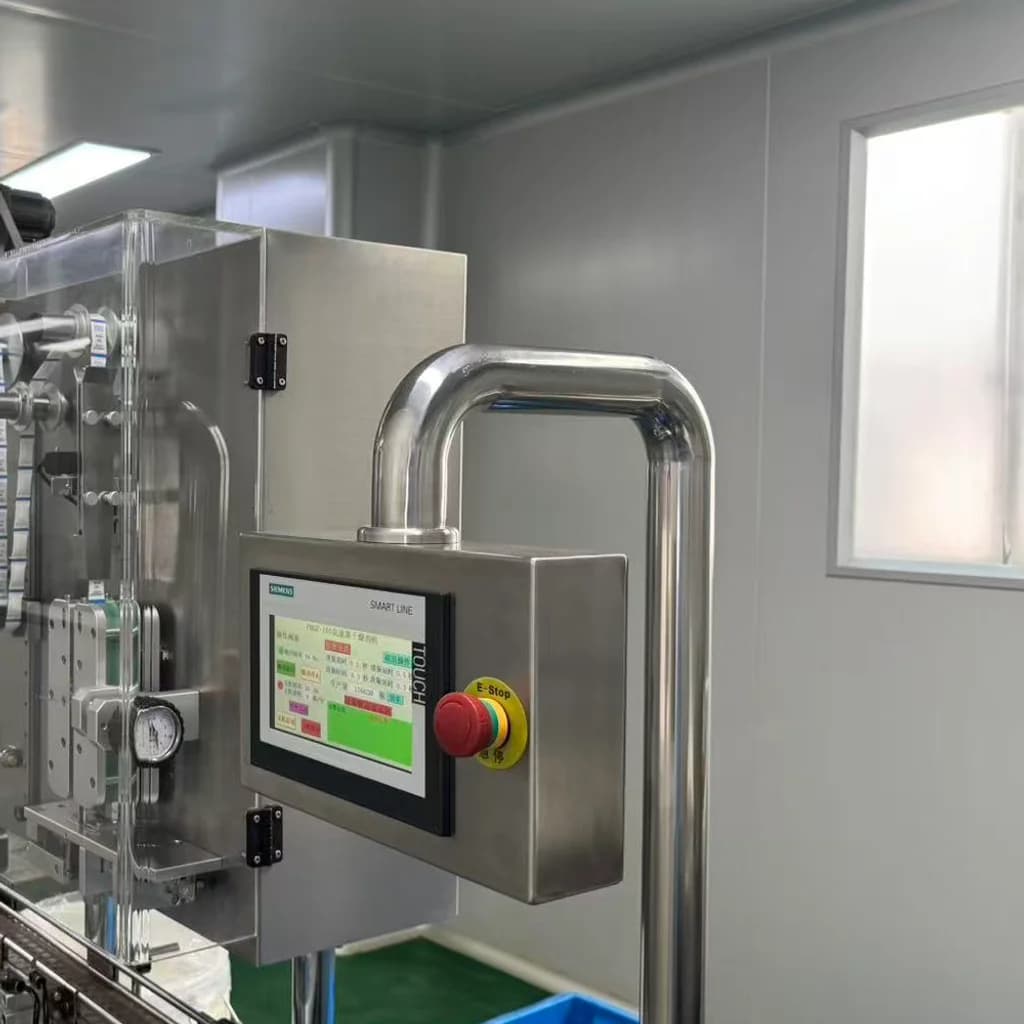
Sourcing a non-GMO softgel manufacturer means proving the claim, not just printing it. EUPHM handles the full chain: approved raw material suppliers, PCR testing for genetically modified material where relevant, and batch records that trace each input to its lot. The plant runs softgel encapsulation, drying, inspection and retail bottling under one roof, with GMP, ISO 22000 and HACCP certification. Brand owners in the US, EU, UK and Middle East use this setup to keep label claims defensible and timelines predictable.
| MOQ | 1,000 units per SKU for retail bottling; lower for pilot runs |
|---|---|
| Sample lead time | 7-10 working days |
| Mass production | 20-35 working days after sample approval |
| Softgel fill weights | 150 mg to 1,500 mg |
| Certifications | GMP, ISO 9001, ISO 22000, HACCP, NSF/ANSI 455-2, halal, FDA-registered |
| Line capacity | Up to 1.2 million softgels per day across encapsulation lines |
Softgel Capability and Format Range
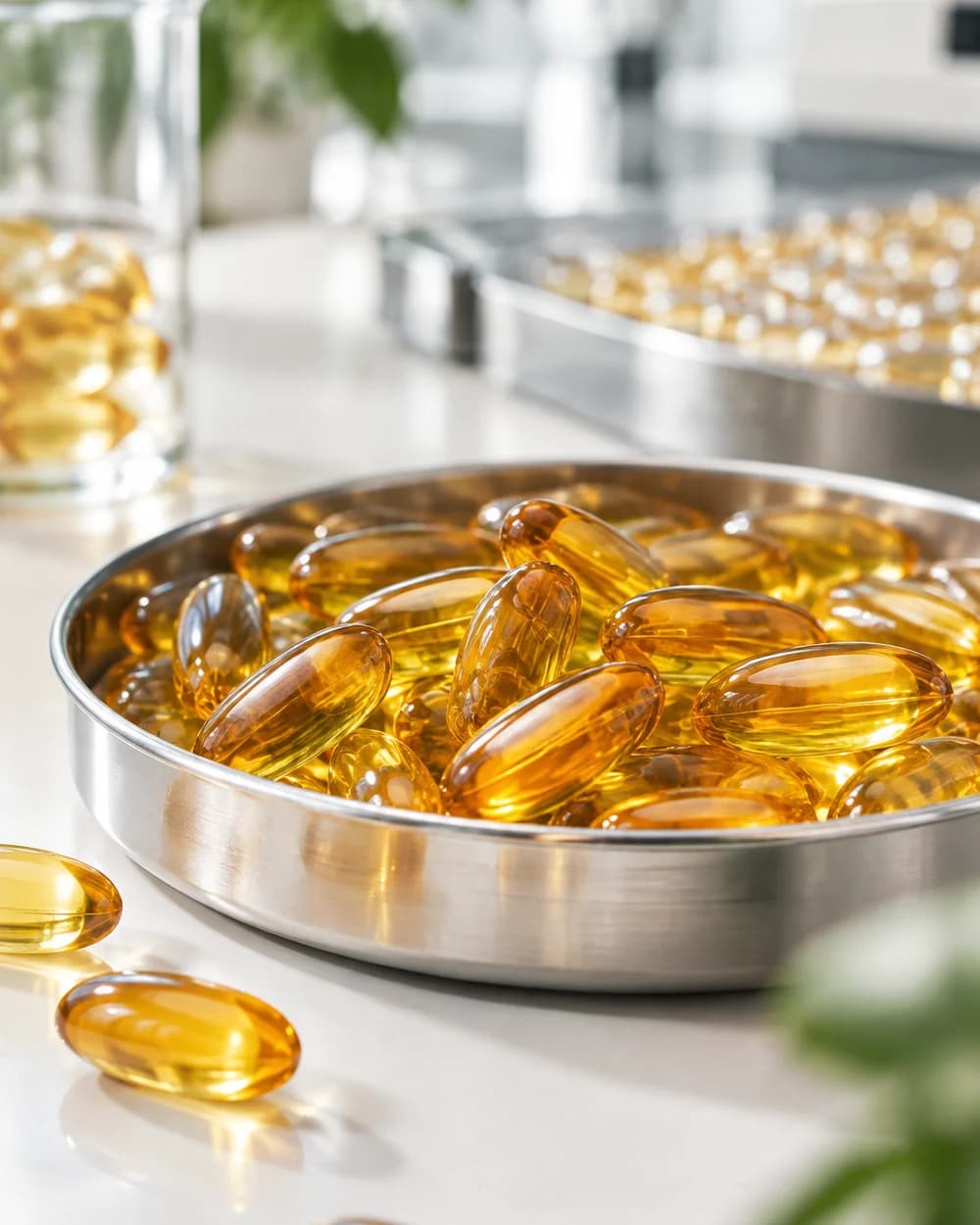
The plant runs rotary die encapsulation with fill weights from 150 mg to 1,500 mg. Standard shapes include oval, oblong, round and tube, in clear, amber, opaque white or custom Pantone-matched shells. Enteric and delayed-release shells are available for ingredients that need to bypass the stomach. We produce chewable and vegetarian softgels using modified starch or carrageenan bases, which matters if your label carries a vegan or vegetarian mark alongside the non-GMO claim. Tooling changes are handled in-house, so a custom shape does not add weeks to the schedule.
Batch sizes start at 1,000 units for retail bottling and scale to multi-million-unit runs. Pilot runs below MOQ are accepted for formulation testing and stability work. Drying and curing are temperature and humidity controlled, typically 48-96 hours depending on shell composition, which reduces leakage and sticking in transit. Each batch is weighed, inspected for fill accuracy and checked for seam integrity before bottling. That level of control is why brands use one supplier for both the softgel and the finished retail pack.
Non-GMO Ingredients and Fill Formulation
Non-GMO status depends on the fill, not the shell alone. We buy identity-preserved oils such as flaxseed, algal DHA, evening primrose and borage from suppliers who provide non-GMO statements and batch-level documentation. For soy lecithin, corn-derived carriers and vitamin E, we specify non-GMO grades and test incoming lots for genetically modified material using PCR where the risk is meaningful. Carriers, antioxidants and flow agents are screened the same way. If an ingredient cannot be verified, we say so before quoting rather than after.
Formulation work covers single-ingredient and multi-ingredient fills, including oil suspensions, pastes and emulsified systems. Common projects include omega-3, vitamin D3 with K2, CoQ10, curcumin, astaxanthin, lutein and prenatal blends. We can adjust viscosity, add natural antioxidants such as mixed tocopherols, and match a target fill weight to your label claim. Stability testing runs at accelerated and real-time conditions so you know the shelf life before you commit to packaging. Documentation supports non-GMO project verification and EU novel food dossiers where applicable.
Quality, Testing and Export Logistics
Quality control covers incoming materials, in-process checks and finished goods. Tests include identity, potency, heavy metals, microbial limits, peroxide value and, for non-GMO claims, PCR screening on designated lots. Batch records, certificates of analysis and non-GMO statements are issued per lot. The facility is GMP-certified and holds ISO 22000 and HACCP. Halal and vegan certification can be arranged depending on the ingredient list and your target market.
Export logistics are handled from Guangdong, with air and sea freight to the US, EU, UK and Middle East. We prepare commercial invoices, packing lists, certificates of origin and health certificates, and can support halal documentation for the relevant markets. Retail bottling includes induction sealing, child-resistant or standard caps, and label application. Typical transit is 3-7 days by air and 18-35 days by sea, depending on destination and customs. Lead times are quoted per SKU after artwork and formulation are locked.
Quality Control and Batch Documentation
Every non-GMO softgel batch is sampled at three points: incoming raw materials, in-process encapsulation, and finished goods. Identity testing by FTIR confirms each input against its reference spectrum. Potency assays by HPLC or GC quantify active markers, with acceptance at 95.0 to 105.0 percent of label claim. Microbial testing covers total aerobic count, yeast and mould, E. coli and Salmonella. Heavy metals are screened by ICP-MS against USP <232> limits. Disintegration testing follows USP <2040> at 37 degrees Celsius in simulated gastric fluid, with a typical result under 15 minutes for gelatin shells.
Certificates of analysis are issued per lot and list the product name, lot number, manufacturing date, expiry date, tests performed, specifications, results and the analyst and QA sign-off. Where a non-GMO claim is made, the COA references the supplier's non-GMO declaration and, where relevant, PCR test results for common GM markers such as the CaMV 35S promoter. Retention samples of every lot are held for the full shelf life plus 12 months in a controlled stability chamber at 25 degrees Celsius and 60 percent relative humidity, with accelerated conditions at 40 degrees Celsius and 75 percent relative humidity for six months.
Stability protocols follow ICH Q1A(R2) guidance. A minimum of three batches per product and packaging configuration enter the programme, with testing at 0, 3, 6, 9, 12, 18 and 24 months. Parameters include appearance, fill weight, potency, microbial limits, disintegration and, for softgels, shell integrity and moisture content. Results are compiled into a stability report that brand owners can use to support shelf-life claims on the label. Any out-of-specification result triggers a documented investigation with root-cause analysis before release.
Batch records are retained for five years and are available for audit by the brand owner or a nominated third party. The documentation package includes the master batch record, executed batch record, dispensing records, equipment cleaning logs, environmental monitoring data for the encapsulation room and the final release certificate. This level of traceability is what makes a non-GMO claim defensible when a retailer or regulator asks for evidence.
Packaging, Labelling and Retail Readiness
Softgels can be packed in HDPE bottles from 30 cc to 500 cc, in blister packs of 10 to 30 cavities, in stick packs and in sachets. Bottle lines run induction sealing, desiccant canisters and child-resistant closures where required. Blister material options include PVC/PVDC and aluminium-aluminium for moisture-sensitive fills. Stick packs are typically 5 to 10 grams and suit single-dose formats. Cartons are specified with artwork dielines, and pallet configurations are built to the buyer's warehouse or Amazon FBA requirements, with standard pallet dimensions of 1200 by 1000 millimetres and a maximum height of 1800 millimetres including the pallet.
Labels are prepared to meet FDA dietary supplement labelling requirements for the US market: statement of identity, net quantity of contents, supplement facts panel, ingredient list, allergen declaration, and the name and place of business of the manufacturer, packer or distributor. For the EU and UK, labels follow the respective food supplement regulations, including the nutrition declaration and approved health claims. Lot numbers and expiry dates are inkjet-printed or laser-coded on the bottle, carton and shipper, with a minimum character height of 1.6 millimetres where space allows. Expiry dating is set from stability data, typically 24 months from the date of manufacture.
For Amazon sellers, the factory can apply FNSKU labels, poly-bag units where required, and prepare cartons with the correct box labels and suffocation warnings. Retail compliance support includes barcode verification to GS1 standards, artwork proofing against the client's dieline, and a pre-production sample for sign-off. The factory does not provide legal review of claims; brand owners remain responsible for the accuracy of label content in their market.
Packaging components are sampled and checked for dimensional conformity, seal integrity and print quality before production runs. Bottle fill weights are verified every 30 minutes during the run, and a final visual inspection checks for cap torque, label placement and lot code legibility. Cartons are packed to a defined count per shipper, with a packing list and pallet label that match the purchase order.
MOQ, Lead Times and Delivery
The standard MOQ for retail-bottled non-GMO softgels is 1,000 units per SKU. Pilot runs below this are possible with a surcharge and are quoted case by case. Samples are produced in 7 to 10 working days after artwork and formulation approval, and sample costs are credited against the first bulk order. Mass production runs 20 to 35 working days after sample approval, depending on fill complexity, packaging format and whether new tooling is required. Repeat orders with unchanged specifications typically sit at the lower end of that window.
Shipping is arranged by air or sea. Air freight from Guangdong to the US or EU typically takes 5 to 8 days door to door, while sea freight takes 25 to 35 days depending on port and routing. The factory provides EXW, FOB and DDP terms; FOB is most common for brand owners with their own freight forwarder, while DDP suits smaller buyers who want a landed cost. Cartons are export-grade with moisture barrier liners where needed, and pallets are heat-treated and ISPM 15 compliant for wooden pallets.
The export document pack includes the commercial invoice, packing list, certificate of analysis, material safety data sheet where applicable, and a free-sale certificate for markets that require it. Phytosanitary certificates are provided where the destination country requires them for plant-derived ingredients. Certificates of origin can be issued on request. The factory coordinates with the buyer's customs broker and provides the HS code and ingredient breakdown needed for import clearance.
Lead times are confirmed in writing at order acceptance and tracked against a production schedule shared with the buyer. Any delay that affects the ship date is notified with a revised schedule and, where relevant, a partial shipment option. For repeat customers, the factory holds approved artwork and specifications on file to shorten the next order cycle.
Configurations to Compare
Shell composition
Gelatin, fish gelatin, or vegetarian shells using modified starch or carrageenan. Colour matching to Pantone or clear and amber stock.
Release profiles
Immediate release, enteric, delayed release and chewable formats. Enteric shells protect acid-sensitive ingredients through the stomach.
Fill systems
Oil suspensions, pastes and emulsified fills from 150 mg to 1,500 mg. Antioxidants and viscosity modifiers added as needed.
Retail packaging
Bottles from 30 to 180 count, induction sealed, with child-resistant or standard caps. Labelling and cartoning available.
From Enquiry to Delivery
- 01
Brief and quote
Send fill weight, ingredient list, target MOQ and market. We confirm feasibility and quote within 2-3 working days.
- 02
Sample production
Samples are produced in 7-10 working days, including shell and fill. You review appearance, smell and fill accuracy.
- 03
Documentation review
We share non-GMO statements, specifications and COA templates before you approve. Adjustments are made at this stage.
- 04
Sample approval
You sign off on the sample and lock the formulation, shell, fill weight and packaging specification in writing.
- 05
Mass production
Production runs in 20-35 working days. In-process checks cover fill weight, seam integrity and shell appearance.
- 06
QC and shipping
Finished goods are tested, bottled and released with batch records. We book air or sea freight and send documents.
Why EUPHM
Verified non-GMO chain
Identity-preserved ingredients, supplier statements and PCR testing on designated lots. Documentation supports label claims.
Low MOQ, real scale
Start at 1,000 units per SKU and scale to millions. Pilot runs below MOQ are accepted for formulation testing.
One site, fewer handoffs
Encapsulation, drying, inspection and retail bottling in one GMP-certified facility. Fewer suppliers to coordinate.
Questions buyers ask.
What is the MOQ for non-GMO softgels?+
Retail bottling starts at 1,000 units per SKU. Pilot runs below that are accepted for formulation and stability testing. MOQ depends on fill weight, shell type and packaging. We confirm the exact figure in the quote after reviewing your specification.
How do you verify non-GMO status?+
We require non-GMO statements and batch documentation from ingredient suppliers. For higher-risk inputs such as soy lecithin and corn-derived carriers, we run PCR testing on incoming lots. Certificates of analysis and non-GMO statements are issued per batch.
Can you produce vegan non-GMO softgels?+
Yes. Vegetarian shells use modified starch or carrageenan instead of gelatin. Vegan certification can be arranged if the fill and shell meet the standard. We confirm this at the sample stage before production.
What are the sample and production lead times?+
Samples ship in 7-10 working days. Mass production takes 20-35 working days after sample approval, depending on batch size and packaging. Freight transit adds 3-7 days by air or 18-35 days by sea.
Which certifications does the facility hold?+
The plant is GMP-certified and holds ISO 22000 and HACCP. Halal and vegan certification can be arranged depending on the ingredient list and destination market. Certificates are provided with shipping documents.
Can you provide a free-sale certificate and other export documents for non-GMO softgels?+
Yes. The standard export pack includes a certificate of analysis, material safety data sheet where applicable, free-sale certificate, and certificate of origin on request. Phytosanitary certificates are provided where the destination country requires them for plant-derived ingredients. Documents are issued per shipment and match the commercial invoice and packing list. Allow two to three working days for document preparation before the ship date.
What labelling elements do you print for US dietary supplement bottles?+
Labels include the statement of identity, net quantity, supplement facts panel, ingredient list, allergen declaration, and manufacturer or distributor details as required by FDA dietary supplement labelling rules. Lot and expiry codes are printed on the bottle, carton and shipper. Brand owners remain responsible for claim accuracy in their market. Artwork is proofed against the dieline before production.
How do you handle stability testing and shelf-life claims for non-GMO softgels?+
Stability follows ICH Q1A(R2) with three batches per product and packaging configuration, tested at 0, 3, 6, 9, 12, 18 and 24 months under controlled conditions, plus six months accelerated. Parameters include potency, microbial limits, disintegration and shell integrity. Results support the shelf life printed on the label. A stability report is available for brand owners to keep on file.
Other versions built in this dosage form.
- Softgel Manufacturer
- Enteric-Coated Softgel Manufacturer
- Vegetarian Softgel Manufacturer
- Halal Softgel Manufacturer
- Mini Softgel Manufacturer
- Liquid-Filled Softgel Manufacturer
- Chewable Softgel Manufacturer
- Gelatin-Free Softgel Manufacturer
- Vegan Softgel Manufacturer
- Vitamin D3 Softgel Manufacturer
- Vitamin K2 Softgel Manufacturer
- Vitamin E Softgel Manufacturer
- Multivitamin Softgel Manufacturer
- Omega-3 Softgel Manufacturer
- Fish Oil Softgel Manufacturer
- Krill Oil Softgel Manufacturer
- Algae Oil Softgel Manufacturer
- Cod Liver Oil Softgel Manufacturer
- MCT Oil Softgel Manufacturer
- CoQ10 Softgel Manufacturer
- Biotin Softgel Manufacturer
- Lutein Softgel Manufacturer
- Zeaxanthin Softgel Manufacturer
- Astaxanthin Softgel Manufacturer
- Ginger Softgel Manufacturer
- Hair Skin & Nails Softgel Manufacturer
- Prostate Softgel Manufacturer
Have a product in mind?
Send us the brief and we will come back with a formulation direction, indicative price and a realistic lead time — usually within one working day.