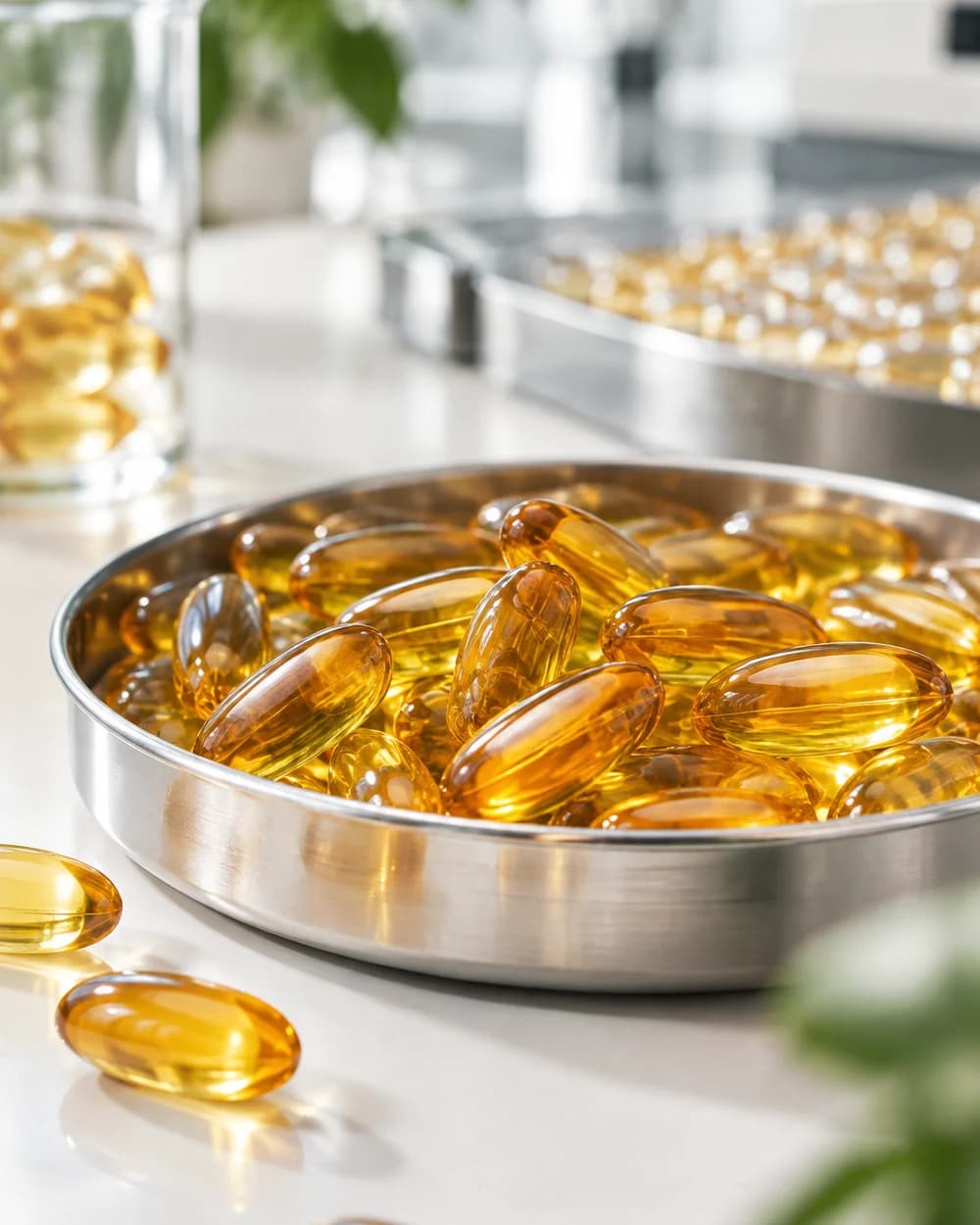
Vegetarian Softgel Manufacturer for Plant-Based Supplement Brands
EUPHM produces vegetarian softgels with pectin or modified starch shells. MOQ 1,000 units per SKU. Sample lead time 7-10 working days. GMP, ISO 22000, HACCP, halal certified.
Overview
Standard softgels use bovine or porcine gelatin. For brands targeting vegan, halal or flexitarian consumers, that shell is a barrier. EUPHM runs vegetarian softgel lines using pectin and modified starch. We handle fill weights from 150 mg to 1,200 mg, with round, oval and oblong formats. The facility is FDA-registered and operates under GMP, ISO 22000 and HACCP. Pilot runs start at 1,000 units. Retail bottling MOQ is 1,000 units per SKU.
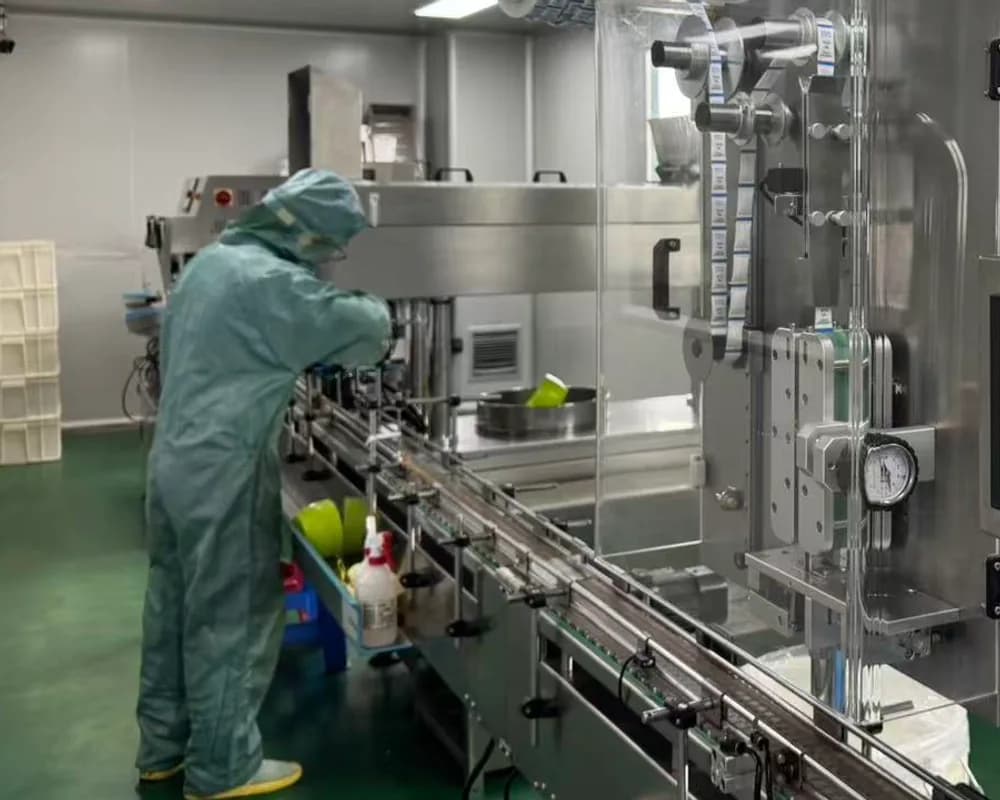
Vegetarian Softgel Production Capability
EUPHM operates two vegetarian softgel lines with a combined capacity of 1.2 million capsules per day. We run pectin-based shells on a rotary die process, which suits oil-soluble actives such as omega-3, vitamin D3, CoQ10 and curcumin. Modified starch shells are used for heat-sensitive ingredients and for fills that require a lower moisture environment. Both lines handle round, oval and oblong formats.
Changeover between shell types takes 4-6 hours. That matters if you plan to run several SKUs in one production window. Tooling is available for 20 standard sizes. Custom tooling for a new shape takes 15-20 working days and carries a one-time cost. We can also run small pilot batches of 1,000 units for stability and sensory testing before you commit to a retail order.
Formulating with Pectin and Starch Shells
Pectin shells work best with oil-based fills. The shell is hydrophilic, so it resists oxidation of the fill and has a clean release in the stomach. Typical fill weights are 300 mg to 1,000 mg. For vitamin D3, we recommend a 500 mg fill with 2,000 IU per softgel. For omega-3, a 1,000 mg fill with 180 mg EPA and 120 mg DHA is common. Starch shells suit botanical extracts and probiotics where moisture control is critical.
We test every formulation for shell-fill compatibility. That includes a 4-week accelerated stability check at 40°C and 75% relative humidity. If the shell softens or the fill separates, we adjust the plasticiser ratio or switch to a carrageenan blend. Vegetarian softgels typically have a 24-month shelf life. We provide a full stability report with each pilot batch so you can file it with your regulatory consultant.
Quality, Compliance and Order Logistics
EUPHM holds GMP, ISO 22000 and HACCP certifications. The plant is FDA-registered. We also carry halal and vegan certifications for vegetarian softgel production. Every batch is tested for microbial limits, heavy metals, and identity of the active ingredient. Certificates of analysis are issued before shipment. We do not claim FDA approval; the facility is registered, which is the correct status for a contract manufacturer.
Shipping terms are FOB Shenzhen or Hong Kong. Air freight to the US or EU takes 5-8 days; sea freight takes 22-30 days. We handle export documentation, including certificate of origin and health certificates. For first orders, we recommend a 30% deposit and 70% against the bill of lading. Lead time for mass production is 20-35 working days after you approve the sample and the artwork.
Quality Control and Batch Documentation
Every vegetarian softgel batch is tested against a written specification before release. Incoming raw materials, including pectin, modified starch and the active ingredient, are sampled for identity by FTIR and for potency by HPLC or UV methods where applicable. Microbial testing covers total aerobic count, yeast and mould, E. coli and Salmonella. Heavy metals are screened by ICP-MS against USP <232> limits, and disintegration is checked in purified water at 37°C to confirm the shell breaks down within the target window for plant-based shells.
In-process checks run at defined intervals during encapsulation. Fill weight is verified every 30 minutes with a tolerance of ±5%, and seam integrity is inspected visually and by leak testing. At the end of the run, a finished-product sample is pulled for full release testing. A certificate of analysis (COA) is issued per batch and includes the batch number, manufacturing date, expiry date, test parameters, specification limits, results and the analyst and QA sign-off. COAs are available in PDF and can be matched to your SKU code.
Retention samples of each batch are stored for the shelf life plus 12 months under labelled conditions. Stability protocols follow ICH Q1A(R2) where the customer requires it, with accelerated conditions at 40°C/75% RH for six months and long-term conditions at 25°C/60% RH or 30°C/65% RH. Real-time data is collected at 0, 3, 6, 12, 18 and 24 months. For pectin shells, moisture pick-up and shell hardness are monitored alongside potency and microbial counts, because plant-based shells are more sensitive to humidity than gelatin.
If a batch fails any specification, it is placed on hold and an investigation is opened. Root cause is documented, and corrective action is agreed with the customer before any rework or re-test. Deviation reports and out-of-specification records are retained for at least five years and can be shared during customer audits. We do not release a batch on a verbal waiver.
Packaging, Labelling and Retail Readiness
Vegetarian softgels can be packed in HDPE bottles, PET bottles, blister packs, stick packs or sachets. Bottle sizes commonly run from 30 to 180 counts, with induction seals and child-resistant or standard caps. Blister options include PVC/PVDC and aluminium-aluminium for moisture-sensitive fills. Stick packs and sachets are filled at 1 to 5 g per unit and are suited to single-dose formats. We can supply desiccant canisters or silica gel sachets where the shell requires low humidity.
For the US market, labels must carry the statement of identity, net quantity of contents, supplement facts panel, ingredient list, allergen declaration and the manufacturer or distributor address. We check that the label includes a lot code and a best-by or expiry date in the agreed format. For the EU, we reference the Food Supplements Directive and the relevant national rules, and we flag claims that need substantiation. We do not write claims for you, but we review label artwork against the approved formula before printing.
Lot coding is applied by inkjet or laser on the bottle, carton and shipper. Expiry dating follows the stability data for the specific formula and shell type, typically 24 months for pectin-based softgels when stored below 25°C and 60% RH. Cartons are specified with gross weight, dimensions and case pack count. Standard pallet footprints are 1,200 x 1,000 mm and 1,200 x 800 mm, with stretch wrapping and edge protectors. We can print Amazon FNSKU labels and apply them to poly-bagged units if required.
Retail readiness checks cover barcode verification (UPC or EAN), Nutrition Facts or Supplement Facts alignment, and artwork sign-off. For Amazon sellers, we can pack in poly bags with a suffocation warning and apply the FNSKU over the original barcode. We do not guarantee marketplace approval, but we provide the label files and packing configuration needed for your compliance review.
MOQ, Lead Times and Delivery
Sample production starts after formula and shell agreement. Standard sample lead time is 7 to 10 working days for a 1,000-unit pilot run, excluding shipping. If a new shell blend or a custom colour is required, add 5 to 7 working days for bench trials. Samples are sent with a preliminary COA and a packing list. Sample costs are quoted per project and are not credited against mass production unless agreed in writing.
Mass production runs 20 to 35 working days after sample approval and receipt of the deposit. This window covers raw material release, encapsulation, drying, testing and packing. Delays occur when artwork is not approved or when a raw material is on backorder; we notify you within two working days of any schedule change. For repeat orders with the same formula and packaging, the window is typically 20 to 25 working days.
We quote EXW, FOB Shenzhen or Hong Kong, and DDP for most destination countries. Air freight is used for samples and urgent orders, typically 5 to 8 days door to door. Sea freight is used for full containers and takes 25 to 40 days depending on the port. LCL is available for smaller volumes. We provide a commercial invoice, packing list, bill of lading or airway bill, COA, MSDS where relevant, and a free-sale certificate on request. Phytosanitary certificates are not normally required for softgels but can be arranged if your import authority asks for one.
For DDP shipments, we handle customs clearance and duty payment and provide the entry documents after delivery. We recommend confirming the Incoterm and the named place in the proforma invoice before production starts. Storage at origin is free for 14 days after production; after that, a weekly storage fee applies.
Configurations to Compare
Pectin shell
Plant-based, oil-resistant, suitable for omega-3, vitamin D3 and CoQ10. Fill weights 150-1,000 mg. Vegan and halal certified.
Modified starch shell
Low moisture, good for probiotics and botanical extracts. Fill weights 200-1,200 mg. Vegan certified.
Carrageenan blend
Seaweed-derived, used when pectin alone is too soft. Improves shell strength for large fills. Vegan and halal certified.
Custom shell colour
Natural colours from fruit and vegetable extracts. Options include clear, amber, green and red. No synthetic dyes.
How We Work
- 01
Send your formula
Share the active ingredients, target fill weight and shell preference. We confirm feasibility within 2 working days.
- 02
Request a sample
We produce a pilot batch of 1,000 units. Sample lead time is 7-10 working days. You pay for materials and freight.
- 03
Review stability data
We send a 4-week accelerated stability report with the sample. You check shell integrity and fill release.
- 04
Approve artwork
Send your label design. We check bottle dimensions and label placement. Artwork approval takes 3-5 working days.
- 05
Place the bulk order
MOQ is 1,000 units per SKU. We issue a proforma invoice and start production after the deposit.
- 06
Receive and release
Mass production takes 20-35 working days. We ship FOB Shenzhen or Hong Kong with a certificate of analysis.
Why EUPHM
Vegan and halal certified
No animal-derived ingredients in the shell or fill. Certificates available for your label claims.
Low pilot MOQ
Start with 1,000 units to test the market. Scale to 1,000 units for retail bottling.
Full stability testing
Accelerated and real-time data provided. 24-month shelf life typical for pectin and starch shells.
Questions buyers ask.
What is the MOQ for vegetarian softgels?+
MOQ is 1,000 units per SKU for retail bottling. Pilot runs start at 1,000 units. The lower pilot MOQ lets you test shell performance and consumer response before committing to a full production batch.
Are your vegetarian softgels halal certified?+
Yes. We hold halal certifications for pectin and modified starch shells. Certificates are issued per batch and can be shared with your regulatory team or retailer.
How long does sample production take?+
Sample lead time is 7-10 working days after we receive your formula and confirm feasibility. That includes a pilot batch of 1,000 units and a 4-week accelerated stability report.
Can you match a fill weight from my existing product?+
Yes. We produce fill weights from 150 mg to 1,200 mg. Send your current supplement facts panel and we will match the active dose in a vegetarian shell.
What certifications does the facility hold?+
EUPHM holds GMP, ISO 22000, HACCP, halal and vegan certifications. The plant is FDA-registered. We do not claim FDA approval; registration is the correct status for a contract manufacturer.
Can you produce vegetarian softgels with a fill that is a suspension rather than a clear liquid?+
Yes. We run suspension fills for ingredients that do not dissolve, such as certain plant extracts and mineral blends. The fill is milled to a defined particle size, typically below 100 microns, and viscosity is adjusted for the encapsulation line. Suspension fills are tested for uniformity and sedimentation before release. We will confirm whether your ingredient is suitable during the sample stage.
Do you provide stability data for the finished vegetarian softgel in my packaging?+
Yes, if you order a stability study. We run accelerated and real-time protocols on the finished product in your chosen bottle or blister. Accelerated data at 40°C/75% RH is available at six months. Real-time data is issued at 3, 6, 12, 18 and 24 months. The study is quoted separately and is not included in the standard batch COA.
What is your policy on label claims and health claims for vegetarian softgels?+
We review label artwork for formula consistency and required legal elements, but we do not write or substantiate health claims. Claims remain the brand owner's responsibility. For the US, structure-function claims must comply with DSHEA and the FTC. For the EU, claims must be on the authorised list or otherwise substantiated. We flag claims that appear non-compliant before printing but do not provide legal advice.
Other versions built in this dosage form.
- Softgel Manufacturer
- Enteric-Coated Softgel Manufacturer
- Halal Softgel Manufacturer
- Mini Softgel Manufacturer
- Liquid-Filled Softgel Manufacturer
- Chewable Softgel Manufacturer
- Gelatin-Free Softgel Manufacturer
- Non-GMO Softgel Manufacturer
- Vegan Softgel Manufacturer
- Vitamin D3 Softgel Manufacturer
- Vitamin K2 Softgel Manufacturer
- Vitamin E Softgel Manufacturer
- Multivitamin Softgel Manufacturer
- Omega-3 Softgel Manufacturer
- Fish Oil Softgel Manufacturer
- Krill Oil Softgel Manufacturer
- Algae Oil Softgel Manufacturer
- Cod Liver Oil Softgel Manufacturer
- MCT Oil Softgel Manufacturer
- CoQ10 Softgel Manufacturer
- Biotin Softgel Manufacturer
- Lutein Softgel Manufacturer
- Zeaxanthin Softgel Manufacturer
- Astaxanthin Softgel Manufacturer
- Ginger Softgel Manufacturer
- Hair Skin & Nails Softgel Manufacturer
- Prostate Softgel Manufacturer
Have a product in mind?
Send us the brief and we will come back with a formulation direction, indicative price and a realistic lead time — usually within one working day.