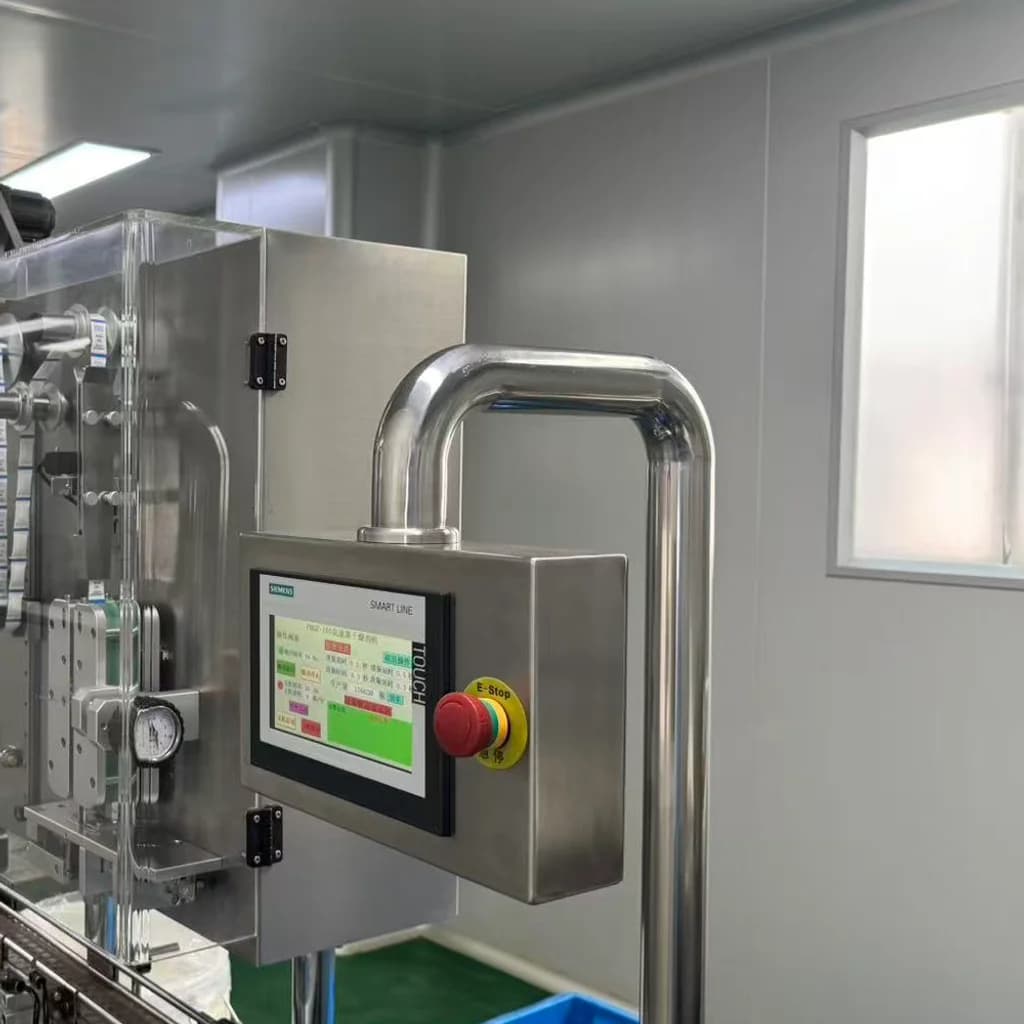
Liquid Drops Manufacturer for Supplement Brands
Liquid drops suit sublingual vitamins, herbal tinctures and sleep formulas. We fill 15-60 ml dropper and pipette bottles at 1,000 units per SKU, with samples in 7-10 working days.
Overview
Liquid drops are a fast-growing dose format for vitamin D3, CBD-free botanicals, melatonin and mineral blends. The format removes swallowing issues, allows flexible dosing and gives brands a premium shelf presence. As a liquid drops manufacturer, EUPHM handles alcohol and glycerin tinctures, oil suspensions and aqueous systems in 15-60 ml bottles. This page covers formulation limits, filling tolerances and the compliance documents you need for retail.
- MOQ
- 1,000 units per SKU (1,000 for pilot runs)
- Fill volume
- 15 ml, 30 ml, 50 ml, 60 ml dropper bottles
- Sample lead time
- 7-10 working days
- Mass production
- 20-35 working days after approval
- Filling accuracy
- ±1.5% of target volume on calibrated lines
- Certifications
- GMP, ISO 9001, ISO 22000, HACCP, NSF/ANSI 455-2, halal, FDA-registered
Filling and Packaging Capability
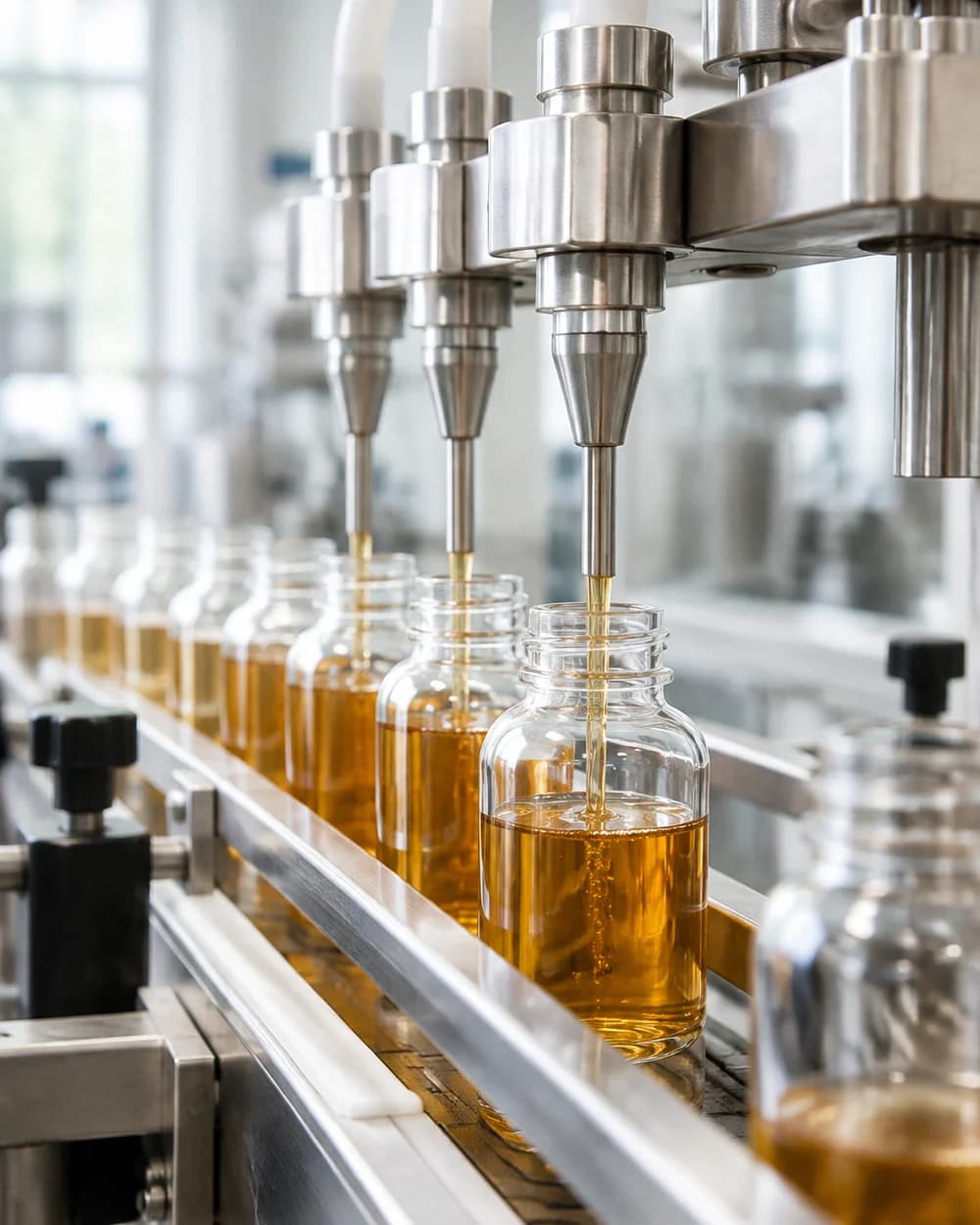
Our liquid lines run two filling formats: gravity and piston fillers for low-viscosity tinctures, and heated jacketed fillers for oils and suspensions that thicken below 20°C. Typical line speed is 2,000-4,000 bottles per hour, depending on fill volume and viscosity. Each bottle passes an inline checkweigher; out-of-tolerance units are rejected before capping.
Dropper assemblies are a common failure point, so we qualify each component batch before production. Pipettes are tested for drop volume consistency, glass thickness and bulb fit. Tamper-evident bands, child-resistant closures and induction seals are available. Secondary packaging options include single cartons, display boxes and shrink-wrapped trays.
Formulation Limits for Dropper Bottles
Not every ingredient works as a liquid drop. Fat-soluble actives such as vitamin D3, vitamin K2, CoQ10 and omega-3 need an oil carrier, typically MCT or sunflower oil. Water-soluble actives need glycerin, propylene glycol or an aqueous base with a preservative system. Alcohol tinctures extract botanicals well but carry taste and labelling implications in the EU and Middle East.
Dose per drop depends on pipette calibration. A standard 30 ml dropper delivers roughly 0.05 ml per drop, so 1,000 IU of vitamin D3 needs about 0.025 mg of active per drop. We test drop weight across 20 bottles per batch and supply the average drop volume for your label. Flavour masking with natural essences, stevia or monk fruit is available where the brief allows.
Quality Control and Export Documentation
Every batch is tested for assay, pH, viscosity, microbial limits and heavy metals before release. We retain samples for 24 months and issue a Certificate of Analysis with each shipment. Stability testing runs at 25°C/60% RH and 40°C/75% RH, with 3-month accelerated data available before you commit to a full run.
For US and EU buyers we prepare the documentation set: GMP certificate, ISO 22000 certificate, HACCP plan summary, free-sale certificate and ingredient specifications. Halal certification can be arranged where the formula qualifies. Air freight from Guangdong reaches Los Angeles in 3-5 days and Rotterdam in 5-7 days; sea freight takes 18-30 days depending on port.
Quality Control and Batch Documentation
Every liquid drops batch is tested against a written specification before release. Incoming raw materials are sampled at 100% of containers for identity by FTIR or HPLC, and each lot is quarantined until potency, microbials and heavy metals clear. For finished drops, we test identity and potency of every active at 100% of batches, microbial limits (TPC, yeast and mould, E. coli, Salmonella) at 100%, heavy metals (lead, cadmium, arsenic, mercury) at 100%, and pH and density at 100%. Disintegration testing does not apply to liquids; instead we run viscosity and sedimentation checks for suspensions and clarity for aqueous systems.
A Certificate of Analysis (COA) accompanies every batch and states the product name, lot number, manufacture and expiry dates, specification limits, test methods and results, and the signature of the QC manager. We retain samples from every batch for 24 months after the expiry date in a temperature-controlled archive. Stability follows a real-time protocol at 25°C/60% RH and 30°C/65% RH, with accelerated conditions at 40°C/75% RH for three months. Assays are taken at 0, 3, 6, 12, 18 and 24 months, covering potency, pH, microbials and packaging compatibility.
For export, the batch record package includes the executed batch manufacturing record, line clearance records, fill weight checks every 30 minutes, and deviation reports if any. We do not release a batch without a completed review by a second qualified person. If a buyer requires third-party verification, we can send samples to an accredited external laboratory at cost, and the resulting report is added to the batch file. This level of documentation is standard for liquid drops manufacturing and supports audits by retailers and notified bodies.
Packaging, Labelling and Retail Readiness
Liquid drops are filled into 15 ml, 30 ml, 50 ml and 60 ml amber or clear glass dropper bottles with tamper-evident caps and calibrated glass or plastic pipettes. For larger volumes we offer 100 ml bottles and 1 litre bulk containers. We also supply stick packs and sachets for single-serve liquid drops, with fill volumes from 1 ml to 10 ml. Bottle and carton artwork must include the FDA dietary-supplement label elements: statement of identity, net quantity, supplement facts panel, other ingredients, directions for use, and the manufacturer or distributor name and address. We check artwork against these requirements before printing.
Lot and expiry coding is applied by inkjet or laser on the bottle base and the carton. The format follows the buyer's instruction, typically LOT YYMMDD and EXP YYMM. Cartons are specified with a minimum 300 gsm board, and shippers are 5-ply corrugated with a compression strength of at least 8 kN/m. Pallets are 1,200 x 1,000 mm or 1,200 x 800 mm, stretch-wrapped and labelled with SSCC if required. For Amazon FNSKU and retail compliance, we can apply FNSKU labels, polybag the bottles where required, and print carton markings to the buyer's specification.
Retail readiness extends to the packaging compatibility report, which confirms that the dropper, gasket and bottle do not interact with the formulation. We run this test for every new bottle and closure combination before mass production. If a buyer supplies their own components, we require a pre-production sample run of at least 100 units to check filling performance and seal integrity. All packaging materials are checked against the EU and US food-contact requirements, and declarations of compliance are available on request.
MOQ, Lead Times and Delivery
The minimum order quantity for liquid drops is 1,000 units per SKU, with 1,000 units for pilot runs. Samples take 7 to 10 working days from approved formulation and artwork. Mass production runs 20 to 35 working days after sample approval, depending on bottle and carton lead times. We provide a production schedule at order confirmation and update it weekly. For repeat orders, the lead time is typically 20 to 25 working days because components are held in stock.
We ship under EXW, FOB and DDP terms. FOB ports are Shenzhen and Hong Kong; DDP is available for the US, EU, UK and Australia, with duties and taxes handled by our freight partner. Air freight takes 5 to 8 days door to door, and sea freight takes 25 to 35 days depending on the destination port. For urgent launches, we can split a batch between air and sea. Cartons are sized to maximise container fill, and we provide a loading plan with container utilisation.
The document pack for each shipment includes the commercial invoice, packing list, bill of lading or airway bill, Certificate of Analysis, Material Safety Data Sheet (MSDS) for the finished liquid, and a free-sale certificate where required by the destination country. For plant-based ingredients, a phytosanitary certificate can be arranged if the importing country asks for it. We also provide a certificate of origin on request. All documents are issued in English, and we can add the buyer's letterhead for the COA if needed.
Packaging and Format Choices
Alcohol tinctures
Botanical extracts in 40-60% food-grade ethanol. Suitable for herbal bitters, echinacea and valerian. Requires alcohol content labelling in most markets.
Glycerin tinctures
Alcohol-free extracts in vegetable glycerin. Popular for children's ranges and halal SKUs. Slightly sweeter taste, lower extraction efficiency for some herbs.
Oil-based drops
MCT, sunflower or olive oil carriers for vitamin D3, K2, CoQ10 and omega blends. Best for fat-soluble actives and sublingual absorption.
Aqueous drops
Water-based systems with preservatives for mineral drops, electrolyte blends and homeopathic formats. Requires validated preservative efficacy testing.
How We Work
- 01
Share your brief
Send target actives, dose per drop, bottle size and market. We confirm feasibility within 2 working days, including any ingredient restrictions.
- 02
Formulation and quote
Our lab proposes a base, flavour and preservative system. You receive a costed quote with MOQ, fill weight and lead time.
- 03
Sample production
We produce 5-10 sample bottles in 7-10 working days. Samples ship with drop-volume data and a draft specification sheet.
- 04
Sample approval
You test taste, drop consistency and label fit. Two revision rounds are included before you sign off the master sample.
- 05
Mass production
Bulk ingredients are released, lines are scheduled and production runs in 20-35 working days. In-process checks run every 30 minutes.
- 06
QC and shipping
Finished goods pass assay and microbial testing. We issue the CoA, pack to your carton spec and arrange air or sea freight.
Why EUPHM
Low pilot minimums
Start at 1,000 units for a pilot run and scale to 1,000-2,000 for retail bottling. This keeps initial cash outlay manageable for new SKUs.
Drop-volume data included
We measure average drop weight across 20 bottles per batch and give you the figure for your label. No guesswork on dose per drop.
Export-ready paperwork
GMP, ISO 9001, ISO 22000, HACCP, NSF/ANSI 455-2 and halal certification; FDA facility registration for US-bound shipments.
Questions buyers ask.
What is the minimum order quantity for liquid drops?+
MOQ is 1,000 units per SKU for retail bottling. Pilot runs start at 1,000 units, which lets you test the market before committing to a full production batch. Bottle size and pipette type affect the final unit cost.
How long do samples take?+
Sample production takes 7-10 working days from formula approval. Samples ship by courier with drop-volume measurements and a draft specification. Two revision rounds are included before you approve the master sample.
Can you produce alcohol-free liquid drops?+
Yes. We fill glycerin and aqueous systems that contain no ethanol. These suit children's ranges and markets with alcohol restrictions. Preservative efficacy testing is required for aqueous formulas and adds 10-15 working days.
What certifications does the facility hold?+
The plant holds GMP, ISO 22000 and HACCP certification. Halal and vegan certification can be arranged where the formula and processing lines qualify. We are an FDA-registered facility for the US market.
How do you control fill volume accuracy?+
Inline checkweighers verify every bottle against the target fill weight. Piston and gravity fillers hold ±1.5% of target volume. Rejected units are removed before capping, and batch records are retained for 24 months.
What is the shelf life of your liquid drops, and how is it determined?+
Shelf life is set by real-time stability data, typically 24 months for oil-based and glycerin tinctures and 18 months for aqueous systems. We test potency, pH, microbials and packaging compatibility at 0, 3, 6, 12, 18 and 24 months. Accelerated testing at 40°C/75% RH for three months supports the initial assignment. The expiry date on the label is based on the approved stability protocol for that specific formulation and bottle.
Can you fill and label bottles supplied by the buyer?+
Yes. We accept buyer-supplied bottles, droppers and cartons, provided they meet our filling line specifications. We require a pre-production sample run of at least 100 units to check filling accuracy, seal integrity and label placement. Buyer-supplied components must arrive at least 10 working days before the planned production date. We do not charge for the sample run, but the buyer covers shipping and any third-party testing needed for compatibility.
What is the process for a private-label liquid drops order from enquiry to delivery?+
The process starts with a formulation brief and target dose. We provide a quotation and draft specification within 3 working days. After a sample request, we produce samples in 7 to 10 working days. Once samples are approved and artwork is finalised, we issue a proforma invoice and production schedule. Mass production takes 20 to 35 working days. Before shipment, we send the COA and packing list for approval, then arrange air or sea freight according to the agreed Incoterm.
Other versions built in this dosage form.
- Liquid Manufacturer
- Drop Manufacturer
- Syrup Manufacturer
- Liquid Shots Manufacturer
- Single-Dose Liquid Manufacturer
- Liquid Emulsion Manufacturer
- Liquid Suspension Manufacturer
- Liquid Tonic Manufacturer
- Baby Drop Manufacturer
- Kids Drop Manufacturer
- Sugar-Free Drop Manufacturer
- Vitamin D3 Drop Manufacturer
- Vitamin B12 Liquid Manufacturer
- Omega-3 Liquid Manufacturer
- Fish Oil Liquid Manufacturer
- Algae Oil Liquid Manufacturer
- Cod Liver Oil Liquid Manufacturer
- MCT Oil Liquid Manufacturer
- Collagen Liquid Manufacturer
- Hyaluronic Acid Liquid Manufacturer
- Melatonin Liquid Manufacturer
- Zinc Liquid Manufacturer
- Iron Liquid Manufacturer
- Elderberry Liquid Manufacturer
- Apple Cider Vinegar Liquid Manufacturer
- Electrolytes Liquid Manufacturer
- Glutathione Liquid Manufacturer
- NAD+ Liquid Manufacturer
- Sea Moss Liquid Manufacturer
- Ginseng Liquid Manufacturer
- Propolis Liquid Manufacturer
- Propolis Drop Manufacturer
- Royal Jelly Liquid Manufacturer
- Taurine Liquid Manufacturer
- Sleep Support Liquid Manufacturer
- Energy shot Manufacturer
- Detox Liquid Manufacturer
Have a product in mind?
Send us the brief and we will come back with a formulation direction, indicative price and a realistic lead time — usually within one working day.