Cod Liver Oil Liquid Manufacturer for Private Label Brands
EUPHM fills cod liver oil liquids in Guangdong under GMP, ISO 22000 and HACCP. MOQ 1,000 units per SKU, samples in 7–10 working days, mass production in 20–35 working days.

Overview
Cod liver oil is a sensitive liquid. Vitamin A and D oxidise, flavour drifts, and emulsion stability decides whether a bottle looks clear or cloudy on shelf. As a cod liver oil liquid manufacturer, EUPHM handles the full path: oil sourcing, blending with natural vitamin E or lemon oil, nitrogen flushing, amber or clear PET and glass filling, and retail cartoning. The same liquid line supports the broader /liquid-manufacturer programme, so a single partner can cover your cod liver oil SKU and adjacent liquid supplements without a second audit trail.
| MOQ | 1,000 units per SKU |
|---|---|
| Fill sizes | 100 ml, 250 ml, 500 ml; 120 ml and 240 ml for US retail |
| Sample lead time | 7–10 working days with label mock-up |
| Mass production | 20–35 working days after approved sample |
| Line capacity | Up to 60,000 bottles per day on two liquid lines |
| Certifications | GMP, ISO 9001, ISO 22000, HACCP, NSF/ANSI 455-2, halal, FDA-registered |
Liquid filling capability and line setup
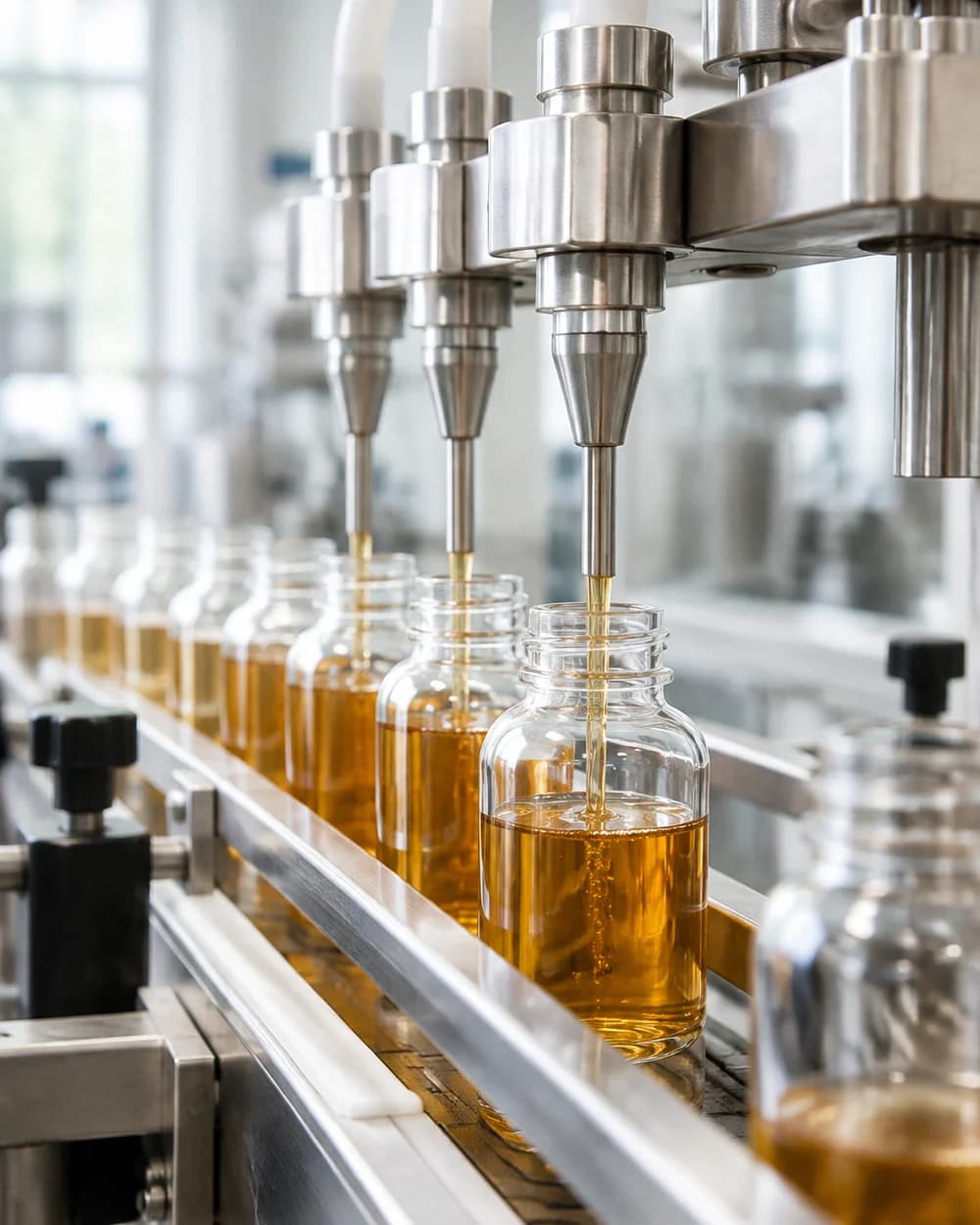
EUPHM runs two dedicated liquid lines for oils and water-soluble liquids. Bottle sizes from 50 ml to 1,000 ml are handled on the same platform, with changeover under four hours. Filling accuracy is ±1% by weight, checked every 30 minutes. Nitrogen flushing is standard for cod liver oil to displace headspace oxygen; residual oxygen is held below 2% where the formula requires it. Caps range from standard screw caps to child-resistant and tamper-evident closures for US and EU retail.
Capacity is up to 60,000 bottles per day across two shifts. That covers a 1,000-unit pilot and a 250,000-unit seasonal run without moving to a second supplier. Amber PET, clear PET and flint glass are stocked; dropper inserts, metered pumps and dosage cups are available as secondary packaging components. Cartoning, shrink-wrapping and export palletising are done in-house, which shortens the gap between bulk fill and a shippable finished good.
Formulation and ingredient control
Cod liver oil is not a single ingredient. It varies by species, season and refinery. EUPHM works with Norwegian and Icelandic cod liver oil, typically 1,000 mg or 1,100 mg per 5 ml serving, and documents vitamin A and D3 levels per batch. Natural vitamin E (mixed tocopherols) is added at 0.05–0.2% to slow oxidation. Lemon, mint and orange oils mask the marine note without synthetic flavour systems. For vegan-positioned lines, algal D3 and flaxseed or algal oil bases are available, though these are not cod liver oil and are labelled separately.
Every formula is built to the target market. EU and UK labels need vitamin A and D per 100 ml and per serving; US labels need % Daily Value based on the current FDA reference amounts. Middle East buyers often ask for halal-certified gelatine-free capsules alongside the liquid, and EUPHM can supply both from the same batch record. Stability testing runs at 25°C/60% RH and 40°C/75% RH for 6 months, with peroxide value and anisidine value checked at 0, 3 and 6 months.
Quality, compliance and export logistics
The facility is GMP-certified and holds ISO 22000 and HACCP. It is an FDA-registered facility, which supports US import filing but is not an FDA approval. Halal and organic certificates are available on request; organic cod liver oil requires a certified supply chain from the fishery, and EUPHM will confirm availability per project. Heavy metals, PCBs and dioxins are tested per batch against EU and US limits. COAs are issued in English and can be matched to your specification before release.
Shipping runs from Shenzhen and Hong Kong ports, with air freight for samples and small pilot batches. Typical sea transit is 25–35 days to US West Coast, 28–40 days to EU ports, and 18–28 days to Jebel Ali. EUPHM prepares commercial invoices, packing lists, health certificates and, where needed, certificates of origin. For first orders, a 30% deposit and 70% against bill of lading is standard; repeat orders can move to 30/70 against copy documents.
Quality Control and Batch Documentation
Every cod liver oil liquid batch is sampled at three points: raw oil intake, post-blending before filling, and finished bottles from the line. Identity is confirmed by fatty acid profile (EPA, DHA, and the characteristic C16:1 and C18:1 ratios for Gadus species), vitamin A and D3 by HPLC, peroxide value and anisidine value to track oxidation, and microbials by total plate count, yeast and mould, E. coli and Salmonella. Heavy metals (lead, cadmium, mercury, arsenic) are tested per batch against EU and US limits, and PCB and dioxin testing is available on request for EU-bound lots.
A certificate of analysis is issued per batch and includes the batch number, production date, best-before date, fill volume, vitamin A and D3 potency in IU or µg, peroxide value, microbial results, heavy metals, and a statement of conformity to the agreed specification. Where a customer supplies a target potency, the COA reports the measured value against that target with the analytical method named. Retained samples of every batch are stored at 5 °C and 25 °C for the full shelf life plus six months, so any post-market query can be checked against the original oil.
Stability follows a bracketed protocol: real-time data at 25 °C and 30 °C over 24 months, with accelerated conditions at 40 °C and 75% relative humidity for six months. Vitamin A and D3 retention, peroxide value and sensory attributes are checked at 0, 3, 6, 12, 18 and 24 months. For a 24-month shelf life claim, the real-time data set must cover the full period before the claim is printed, or the label carries a shorter date until the data matures. Customers receive the stability summary with the first production batch.
Packaging, Labelling and Retail Readiness
The liquid line fills amber and clear PET, amber glass and food-grade HDPE in 100 ml, 120 ml, 240 ml, 250 ml and 500 ml. Closures include tamper-evident screw caps, dropper inserts and measured-dose cups. For markets that prefer single-serve formats, the same oil can be filled into 10 ml stick sachets or 5 ml monodose bottles, though these run on a separate line and carry a higher unit cost. Bottle and carton dimensions are confirmed at sample stage so retail shelf-fit and shipper calculations are fixed before mass production.
Labels are checked against the destination market before printing. For US dietary supplements, the panel includes the Supplement Facts box with vitamin A and D IU or µg per serving, other ingredients, net quantity, and the mandatory allergen and 'keep out of reach of children' statements. EU labels carry nutrition declaration per 100 ml and per serving, the food business operator address, batch and best-before, and storage instructions. Lot and expiry are inkjet-coded on the bottle shoulder and the carton, with the same code on both so retail receiving can match unit to case.
Cartons are specified with the customer's dieline, board grade and print process, typically 300–350 gsm FBB with matt or gloss lamination. Shipper cases hold 12, 24 or 48 units, and pallet patterns are calculated to maximise container fill: a 20 ft container typically holds 8–10 pallets of 500 ml bottles at 1,200–1,400 cases per pallet depending on case count. For Amazon sellers, EUPHM applies FNSKU labels, polybags where required, and carton weight and dimension data formatted for FBA inbound, provided the seller supplies the FNSKU file before packing.
MOQ, Lead Times and Delivery
Sampling starts with a 7–10 working day turnaround from approved artwork and specification, covering a 100–250 ml filled bottle with a printed mock label. Sample cost is quoted per project and credited against the first mass production order above 1,000 units. Mass production runs 20–35 working days after sample approval, depending on bottle and carton lead times. Pilot runs from 1,000 units are available on the same line, with a fixed setup charge, so a brand can test a market before committing to a full container.
Shipping is quoted by air or sea. Air freight suits pilot and replenishment orders of 100–500 kg and moves in 5–8 days door to door. Sea freight is used from 1 pallet upward, with transit of 25–35 days to EU and UK ports and 18–28 days to US west coast ports, plus customs clearance. Incoterms offered are EXW, FOB Shenzhen or Hong Kong, and DDP for selected destinations where the customer prefers a landed-cost price. DDP quotes include duty and clearance but exclude destination storage beyond the agreed free days.
Each shipment is accompanied by a batch COA, a material safety data sheet, and a free-sale certificate where the destination requires one. For plant-based ingredients a phytosanitary certificate is issued; cod liver oil is an animal-derived product, so the relevant document is a health certificate for fishery products where the importing country asks for it, together with the halal certificate if that claim is on the label. Commercial invoice, packing list and bill of lading are issued in the customer's name, and documents are shared as PDFs within 48 hours of shipment.
Packaging and Format Choices
Amber PET bottle
100 ml, 250 ml and 500 ml amber PET with induction seal, child-resistant cap and dosing cup. Best for retail shelf life and light protection.
Flint glass bottle
100 ml and 250 ml flint glass with dropper or screw cap. Premium feel for pharmacy and health food channels in the EU and UK.
Metered pump bottle
250 ml and 500 ml with 1 ml or 2 ml metered pump. Suits daily-dose positioning and reduces over-pour for adult users.
Sachet and stick pack
10 ml and 15 ml single-serve sachets for travel, sample and subscription formats. Lower MOQ than bottles for pilot runs.
How a Project Runs
- 01
Brief and quote
Send target fill size, market, label claims and volume. EUPHM returns a quote with MOQ, unit cost and lead time within 2 working days.
- 02
Sample development
Formula and label mock-up prepared in 7–10 working days. Samples ship by courier with a COA for the trial batch.
- 03
Sample approval
You confirm taste, colour, fill weight and label artwork. Any revision restarts the sample clock, usually 5–7 working days.
- 04
Order and deposit
Purchase order and 30% deposit trigger raw material release and production scheduling. Batch record number is issued at this stage.
- 05
Production and QC
Mass production runs 20–35 working days. In-process checks cover fill weight, seal integrity, peroxide value and label accuracy.
- 06
Release and shipping
Final COA, packing list and health certificate issued. Goods move by sea or air from Shenzhen or Hong Kong, with tracking shared on dispatch.
Why EUPHM
Oxidation control
Nitrogen flushing, mixed tocopherols and amber packaging keep peroxide value within spec through 6-month stability testing at 25°C/60% RH.
Low pilot MOQ
Start at 1,000 units for a pilot before committing to 1,000 units. Same line, same batch record, no formula change between pilot and scale.
One partner, many liquids
The same liquid line handles cod liver oil, fish oil, vitamin D3 drops and herbal tinctures, so you can consolidate suppliers and audits.
Questions buyers ask.
What is the MOQ for cod liver oil liquid in retail bottles?+
MOQ is 1,000 units per SKU for standard retail bottling. Pilot runs start at 1,000 units for amber PET or glass. Sachet and stick pack formats can go lower, from 500 units, because the fill line changeover is shorter.
How long do samples take, and what do they cost?+
Samples ship in 7–10 working days after formula and label brief. Sample cost is quoted per project and typically credited against the first mass production order. Each sample includes a COA for the trial batch and a label mock-up.
Which certifications cover the facility and the product?+
The facility holds GMP, ISO 22000 and HACCP, and is an FDA-registered facility. halal and vegan certificates are available depending on the formula and supply chain. Organic cod liver oil needs a certified fishery-to-factory chain, confirmed per project.
What is the shelf life and how is oxidation managed?+
Standard shelf life is 24 months from production when stored below 25°C. Nitrogen flushing displaces headspace oxygen, mixed tocopherols slow oxidation, and amber PET or glass limits light exposure. Peroxide value and anisidine value are tested at 0, 3 and 6 months.
Can EUPHM handle EU, UK, US and Middle East label requirements?+
Yes. EU and UK labels show vitamin A and D per 100 ml and per serving. US labels use current FDA Daily Values. Middle East orders can include halal certification and Arabic-English bilingual labels. EUPHM prepares health certificates and certificates of origin for each destination.
Can you supply cod liver oil liquid in bulk drums for local filling?+
Yes. Food-grade epoxy-lined steel drums of 200 kg and 25 kg HDPE jerry cans are available for customers who fill locally. Bulk oil is nitrogen-flushed, sealed and shipped with a batch COA and peroxide value at dispatch. Minimum bulk order is 200 kg. Bulk shipments do not carry retail labels, so the customer is responsible for local filling, labelling and market compliance.
What is the vitamin A and D3 potency range you can guarantee at end of shelf life?+
Typical cod liver oil liquid is standardised to 2,500–5,000 IU vitamin A and 200–500 IU vitamin D3 per 5 ml, with overage calculated from the stability data so the label claim holds at the end of the declared shelf life. Potencies outside this range can be quoted after a formulation review. The COA reports measured potency at release, and the stability summary shows retention at each test point.
How do you handle flavour and oxidation for a lemon-flavoured cod liver oil?+
Natural lemon oil is added at 0.1–0.3% after the oil is nitrogen-blanketed, and the blend is held under nitrogen through filling. Peroxide value is checked before and after flavouring, and the finished product is released at a peroxide value below the agreed limit, typically 5 meq/kg for a flavoured retail oil. Sensory panels check for fishy or rancid notes at release and at each stability point.
Have a product in mind?
Send us the brief and we will come back with a formulation direction, indicative price and a realistic lead time — usually within one working day.