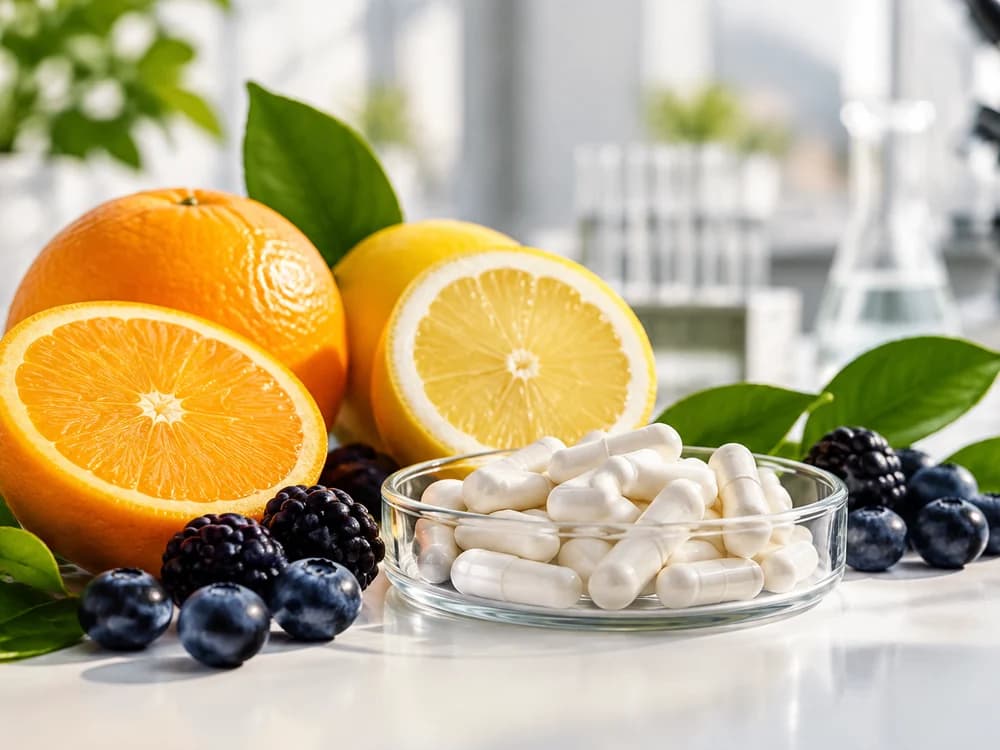
Propolis Drop Manufacturer for Private Label Brands
EUPHM produces propolis drops in a GMP-certified facility in Guangdong, China. We handle extraction, blending, filling and packing for retail and bulk orders. MOQ starts at 1,000 units per SKU.
Overview
Propolis drops are a concentrated liquid format: propolis extract blended with a carrier such as glycerin, propylene glycol or honey, then filled into dropper bottles. The format suits daily-use immunity and throat-care products. As a propolis drop manufacturer, we manage the full process — raw material testing, extraction ratio control, fill weight accuracy, and child-resistant dropper assembly — so your brand can launch without sourcing multiple suppliers. Pilot runs are available below standard MOQ for market testing.
Extraction and Formulation Control
Propolis is a resinous mixture; its consistency varies by origin and season. We source propolis from approved suppliers and test for heavy metals, pesticides and microbial load before extraction. Extraction uses food-grade ethanol or glycerin, with a controlled ratio — typically 1:2 to 1:5 raw propolis to solvent. The resulting extract is standardised for flavonoids and total phenolic content, so your label claim stays consistent between batches.
For alcohol-free drops, we use glycerin or propylene glycol as the carrier. Flavour systems include honey, lemon, mint or berry. We can add vitamin C, zinc or elderberry at label-claim levels. Every formulation is bench-tested for taste, viscosity and dropper flow rate before scale-up. If you have an existing formula, we replicate it under NDA; if not, our team develops one from your target claims and price point.
Filling, Packaging and Customisation
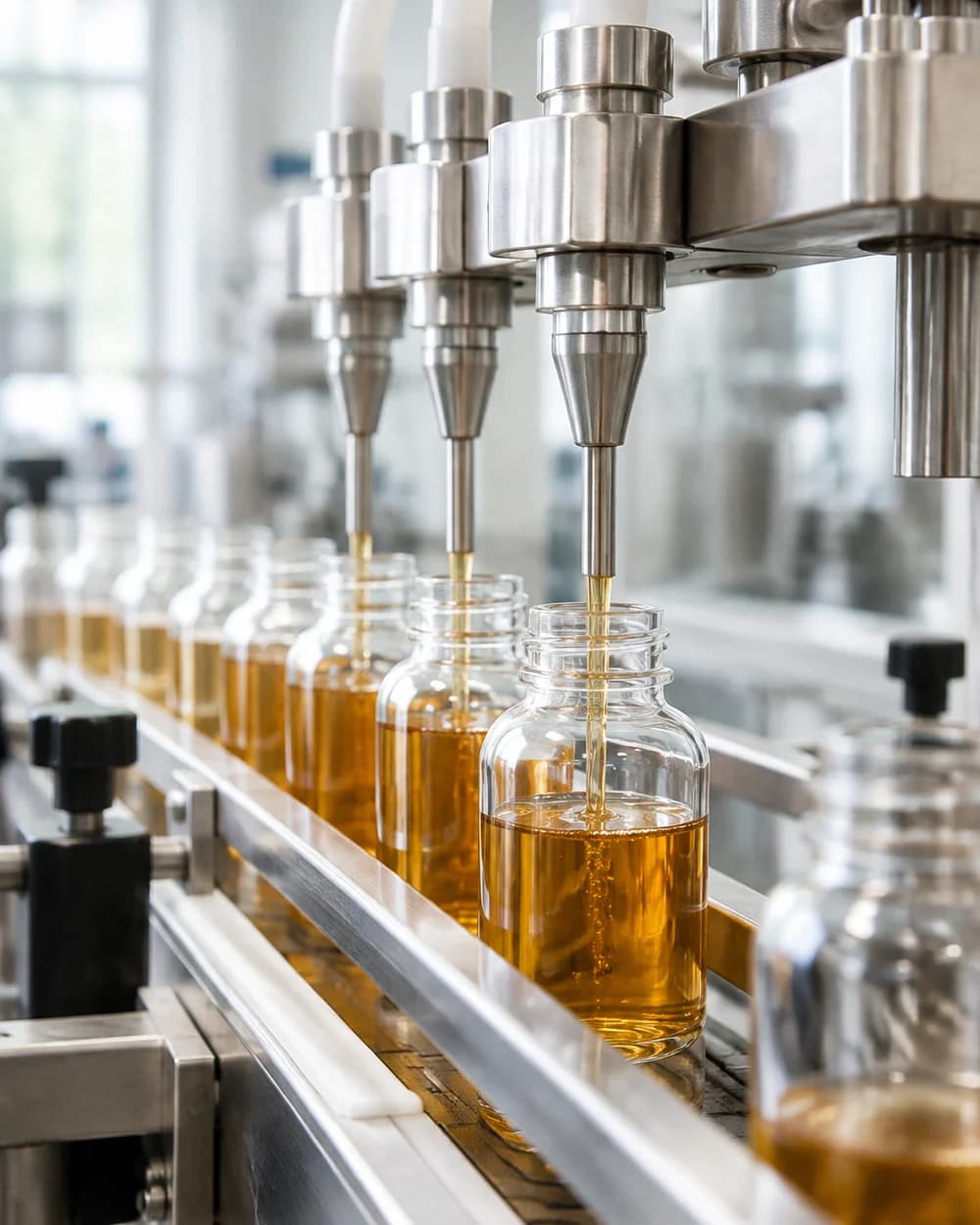
Dropper bottles require precise fill control because the dropper pipette displaces volume. Our inline fillers hold ±2% accuracy on 15–30 mL fills. We handle amber glass, clear glass and PET bottles, with child-resistant or tamper-evident caps. Pipettes are graduated for 0.5 mL or 1 mL doses. Labels can be applied in-house, and we support shrink sleeves, cartons and display boxes.
For bulk orders, we supply filled bottles without retail labels, or as unassembled components for local packing. Carton labelling follows EU, US and GCC requirements — ingredient list, allergen statement, batch number, best-before date and country of origin. We provide artwork templates and can review your label for compliance before printing. Packing options include single-unit cartons, three-packs and shelf-ready trays.
Quality Systems and Documentation
The facility is GMP-certified and operates under ISO 22000 and HACCP. Each batch of propolis drops is tested for pH, viscosity, fill weight, microbial limits and flavonoid content. We retain samples for 24 months. Certificates of analysis are issued per batch, and stability testing follows ICH guidelines for 12–24 months at 25°C/60% RH and 40°C/75% RH.
For halal or vegan claims, we source certified raw materials and maintain chain-of-custody records. Documentation includes certificate of origin, free sale certificate, MSDS and allergen statements. We do not claim FDA approval; the facility is FDA-registered where required for US-bound exports. Third-party lab testing can be arranged at your request, with results shared before shipment.
Quality Control and Batch Documentation
Every propolis drop batch is tested against a written specification before release. Incoming propolis extract is checked for identity by TLC or HPLC fingerprint, total flavonoid content, and microbial limits (total aerobic count, yeast and mould, E. coli, Salmonella). Heavy metals (lead, arsenic, cadmium, mercury) are tested per batch at a third-party laboratory. For alcohol-free drops, we verify the carrier and confirm the absence of ethanol. Fill weight is checked at start, middle, and end of each filling run, with a tolerance of ±2% for 15–50 mL bottles.
A Certificate of Analysis (COA) is issued for each batch and includes the product name, batch number, manufacturing date, expiry date, specification results, and the analyst signature. Retention samples of every batch are kept for the full shelf life plus six months at 25°C and 60% relative humidity. Stability testing follows a standard protocol: 0, 3, 6, 12, 18, and 24 months for real-time, with accelerated conditions at 40°C and 75% relative humidity for three months. These data support your shelf-life claim and are available for review during audits.
Microbial testing is performed on the finished product, not just the raw material, because the filling process can introduce contamination. We test total aerobic count, yeast and mould, and specified pathogens. Disintegration testing is not applicable to liquid drops, but we do check clarity, pH, and viscosity to ensure the dropper functions correctly. If you require additional testing, such as pesticide residues or specific marker compounds (e.g., CAPE or artepillin C), we can arrange it at cost. All testing records are retained for five years and are available for your quality team to review.
Packaging, Labelling and Retail Readiness
Propolis drops are typically filled into amber glass or PET dropper bottles with child-resistant or tamper-evident closures. We offer standard bottle sizes of 10, 15, 20, 30, and 50 mL, with dropper assemblies in glass or plastic. For brands targeting retail, we can supply folding cartons, shrink bands, and blister packs. Stick packs and sachets are available for single-serve formats, though these require a different filling line and have a higher MOQ. Bottle and carton dimensions are confirmed at sampling to ensure compatibility with your retail display.
For the US market, we can print labels that include all FDA dietary-supplement label elements: statement of identity, net quantity, supplement facts panel, ingredient list, allergen statement if applicable, and the manufacturer/distributor address. We do not provide legal review of your label claims; that remains your responsibility. Lot and expiry coding are applied by inkjet or laser on the bottle and carton. Cartons are packed in corrugated shippers, typically 24 or 48 units per carton, and palletised to your specification (e.g., 1,200 x 1,000 mm pallets, max height 1,800 mm).
For Amazon FNSKU compliance, we can apply FNSKU labels and polybag each unit if required. Retail compliance for the EU includes the responsible person address and allergen declaration. We can also provide a free-sale certificate for markets that require it. Packaging materials are food-grade and meet EU 10/2011 and US FDA 21 CFR 175.300 where applicable. We recommend ordering packaging samples before mass production to check print quality and barcode scannability.
MOQ, Lead Times and Delivery
The standard MOQ is 1,000 units per SKU for market testing. Sampling takes 7–10 working days after receipt of your specification and label artwork. Sample costs are quoted per project and are typically credited against the mass production order. Mass production runs 20–35 working days after sample approval and receipt of deposit. These timelines assume packaging is available; custom bottle or carton printing may add 10–15 working days.
We ship by air or sea depending on volume and urgency. Air freight is suitable for pilot runs and small orders, with transit times of 5–10 days to major hubs. Sea freight is more economical for full containers, with transit times of 25–40 days depending on destination port. We work with EXW, FOB, and DDP Incoterms. For DDP, we handle customs clearance and delivery to your door, but you remain responsible for import compliance in your market.
Documentation provided with each shipment includes the COA, MSDS, and a free-sale certificate. For plant-based ingredients, a phytosanitary certificate is not typically required for propolis, but we can arrange one if your import authority requests it. Other documents such as certificate of origin and packing list are provided as standard. We recommend confirming import requirements with your customs broker before ordering, as some markets have specific restrictions on bee-derived products.
Configurations to Compare
Alcohol-based extract
Standard propolis tincture using food-grade ethanol. Typical ratio 1:2 to 1:5. Suitable for throat sprays and concentrated drops.
Alcohol-free glycerin drops
Glycerin or propylene glycol carrier. Preferred for children's and sensitive-user products. Slightly sweeter taste, lower extraction efficiency.
Flavoured and fortified
Add honey, lemon, mint, berry, vitamin C, zinc or elderberry. Label claims supported by formulation records and lab testing.
Bulk or private label
Filled bottles with your label, or bulk drums for local packing. MOQ 1,000 units for retail; lower for pilot runs.
From Spec to Shipment
- 01
Inquiry and brief
Share your target formula, fill weight, MOQ and label claims. We respond within 1 working day with feasibility and pricing.
- 02
Sample development
We produce 2–3 sample variants in 7–10 working days. You receive physical samples, COA and draft label artwork.
- 03
Sample approval
You confirm taste, viscosity, fill weight and packaging. We lock the formulation and issue a proforma invoice.
- 04
Raw material sourcing
Propolis and excipients are ordered and tested. Certificates of analysis are reviewed before release to production.
- 05
Mass production
Filling, capping, labelling and packing run over 20–35 working days. In-process checks occur every 30 minutes.
- 06
QC and shipping
Final batch testing, retain samples and documentation. We arrange air, sea or courier shipment with tracking.
Why EUPHM
Low MOQ for testing
Start at 1,000 units per SKU. Pilot runs from 1,000 units help you validate the market before scaling.
In-house extraction
We control the propolis extraction step, so flavonoid content and taste stay consistent between batches.
Export documentation
COA, MSDS, free sale certificate and origin documents prepared for US, EU, UK and Middle East customs.
Questions buyers ask.
What is the MOQ for propolis drops?+
Standard MOQ is 1,000 units per SKU for retail bottling. Pilot runs start at 1,000 units. Bulk orders in 5 L or 25 L drums have a lower MOQ based on extract volume.
Can you produce alcohol-free propolis drops?+
Yes. We use glycerin or propylene glycol as the carrier. Alcohol-free drops typically have a milder taste and are preferred for children's products. Extraction efficiency is lower, so we adjust the raw propolis ratio to meet your target flavonoid level.
How long does sampling take?+
Sample lead time is 7–10 working days after we receive your brief and confirm raw material availability. You receive physical samples, a certificate of analysis and draft artwork. Courier time is additional.
Do you provide halal certification?+
Yes, when the formulation and raw materials meet the requirements. We source certified propolis and excipients and maintain chain-of-custody records. Certification documents are issued per order.
What is the shelf life of your propolis drops?+
Typically 18–24 months in unopened amber glass or PET bottles. We run stability tests at 25°C/60% RH and 40°C/75% RH following ICH guidelines. Best-before dating is set from the stability data.
Can you provide a sample before I place a bulk order?+
Yes, we provide samples for evaluation. Sampling takes 7–10 working days after we receive your specification and label artwork. Sample costs are quoted per project and are typically credited against the mass production order. We recommend requesting samples of both the propolis drop and the packaging to check compatibility and print quality before committing to a full run.
What is the shelf life of your propolis drops and how is it determined?+
Shelf life is typically 24 months when stored in a cool, dry place away from direct sunlight. We determine shelf life through real-time stability testing at 25°C and 60% relative humidity, with checkpoints at 0, 3, 6, 12, 18, and 24 months. Accelerated testing at 40°C and 75% relative humidity for three months provides additional data. These results support the expiry date printed on your label.
Do you offer low-MOQ pilot runs for new brands?+
Yes, we offer 1,000 units per SKU, below our standard MOQ of 1,000 units. Pilot runs are intended for market testing and are priced accordingly. They use the same production lines and quality controls as full-scale runs. Lead time for pilot runs is typically 15–20 working days after sample approval, depending on packaging availability.
Have a product in mind?
Send us the brief and we will come back with a formulation direction, indicative price and a realistic lead time — usually within one working day.