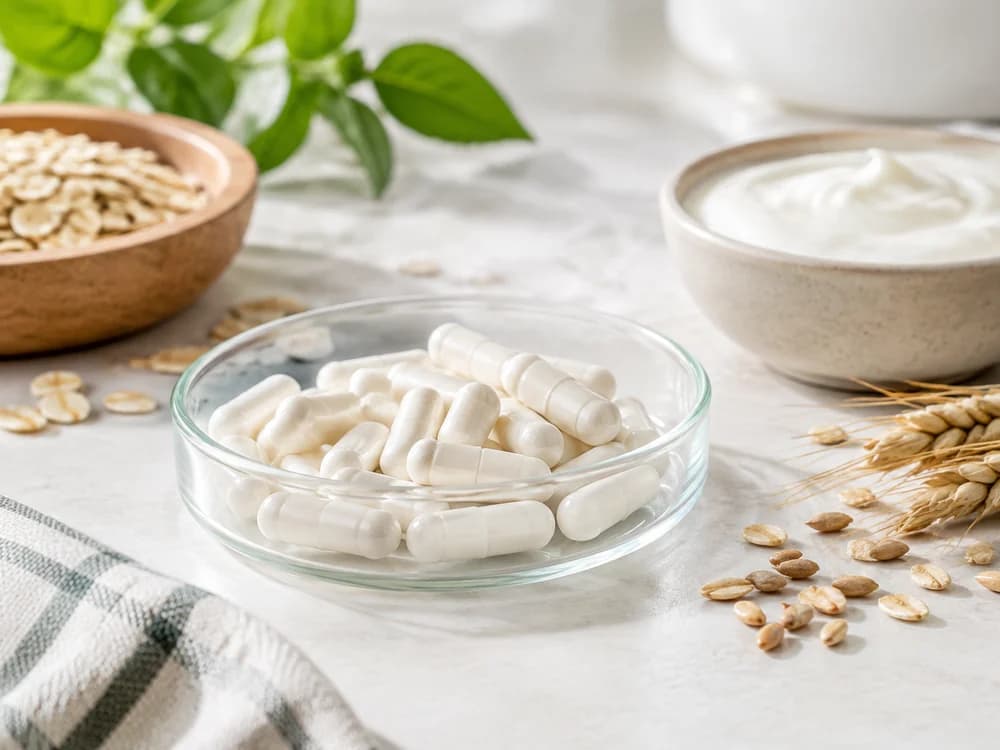
Probiotics Capsule Manufacturer for Global Brands
EUPHM produces probiotics capsules in a GMP-certified facility in Guangdong, China. We handle low-MOQ pilot runs and scaled retail bottling with documented stability and CFU verification.
Overview
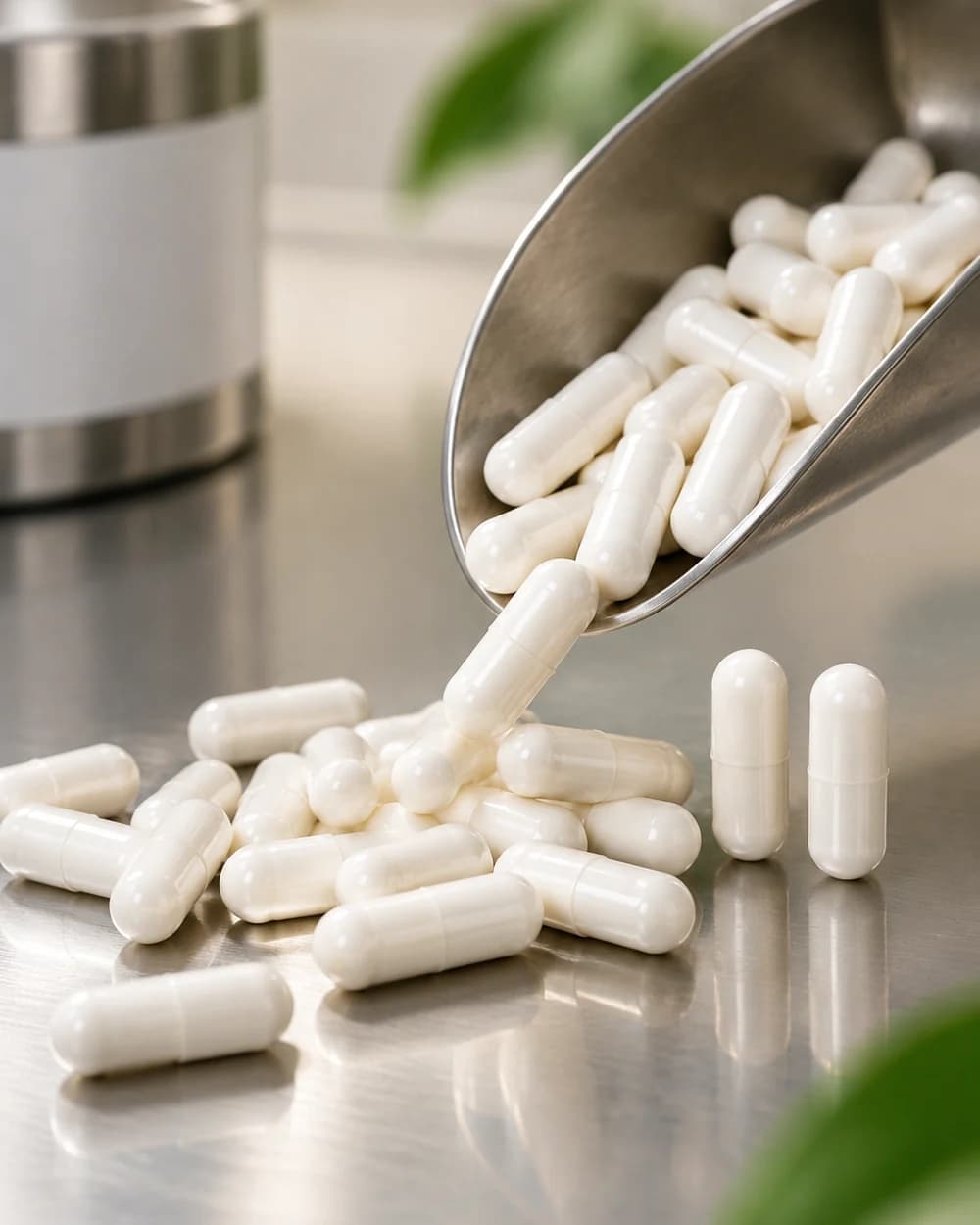
Sourcing probiotics capsules requires a manufacturer that controls moisture, temperature and viable count from blending to packing. EUPHM runs dedicated capsule lines with in-process CFU checks, desiccant options and nitrogen flushing. We support retail bottle formats from 30 to 120 capsules, with MOQ from 1,000 units per SKU. Certifications include GMP, ISO 22000, HACCP, plus halal and vegan capsule options where required.
| MOQ (retail bottling) | 1,000 units per SKU; lower for pilot runs |
|---|---|
| Capsule fill weight | 200–800 mg typical; custom fill on request |
| Sample lead time | 7–10 working days |
| Mass production | 20–35 working days after sample approval |
| Line capacity | Up to 1.2 million capsules per day |
| Certifications | GMP, ISO 9001, ISO 22000, HACCP, NSF/ANSI 455-2, halal, FDA-registered |
Capsule Production Capability
EUPHM operates encapsulation suites with controlled temperature (18–22°C) and relative humidity below 35% to protect probiotic viability. We run automatic capsule fillers for powder, pellet and beadlet formats, with fill weights from 200 mg to 800 mg. Changeover between SKUs is documented, and line clearance records are available for audit. Typical output is up to 1.2 million capsules per day across two shifts.
For brands scaling from pilot to retail, we hold MOQ at 1,000 units per SKU for standard bottle formats. Pilot runs below that threshold are possible with manual or semi-automatic filling. We can also produce blister packs, stick packs and sachets if your dosage form requires it. Capsule shell options include HPMC, gelatin, pullulan and enteric-coated HPMC for delayed release.
Formulation and Strain Handling
Probiotic strains vary in sensitivity to heat, moisture and oxygen. Our formulation team reviews your strain list and CFU targets before quoting. We blend with cryoprotectants such as trehalose or skim milk powder when needed, and we can add prebiotics like inulin or FOS. Overages are calculated to meet label claim at end of shelf life, not just at release. Typical overage ranges from 10% to 50% depending on strain and stability data.
We work with single-strain and multi-strain blends up to 10 strains per capsule. CFU targets range from 1 billion to 50 billion per capsule. For multi-strain products, we verify strain identity via third-party PCR testing where requested. Excipients such as magnesium stearate, silicon dioxide and microcrystalline cellulose are available, or we can formulate without them for clean-label positioning.
Quality Control and Compliance
Every batch of probiotics capsules is tested for viable count, moisture content, and microbiological safety including total aerobic count, yeast and mould, E. coli, Salmonella and Staphylococcus aureus. We retain samples for the shelf life of the product. Stability studies follow ICH guidelines, with accelerated conditions at 40°C/75% RH and real-time conditions at 25°C/60% RH. Certificates of analysis are issued per batch.
Our facility is GMP-certified and registered with the relevant Chinese authorities. We hold ISO 22000 and HACCP certifications. For halal requirements, we source capsule shells and excipients from approved suppliers with valid certificates. Vegan and vegetarian capsule options are available. Documentation for EU and US import, including health certificates and free sale certificates, can be arranged.
Packaging, Labelling and Retail Readiness
Probiotics capsules are packed in HDPE bottles with induction seals and child-resistant closures where required, in blister packs with aluminium foil backing, or in single-serve stick sachets for powder formats. Bottle sizes range from 30 to 120 capsules, with desiccant canisters or silica gel sachets added to control headspace moisture. For stick packs, we run vertical form-fill-seal lines with nitrogen flushing to displace oxygen. Blister options include PVC/PVDC and alu-alu for moisture-sensitive strains. Cartons are printed to customer artwork with lot number and expiry date applied by inkjet or laser coding at packing.
Labels for the US market must include the statement of identity, net quantity of contents, supplement facts panel, ingredient list, allergen statement where applicable, and the manufacturer or distributor name and address. We support customers in checking that the supplement facts panel matches the formula and that the CFU claim is stated at end of shelf life where the brand chooses that convention. For EU markets, labels follow Regulation (EU) No 1169/2011 and the nutrition and health claims regulation, with the responsible person address included. We do not provide regulatory advice but will format artwork to the customer's approved text.
Lot and expiry coding is applied to each bottle, blister or sachet, and to the outer carton. Cartons are specified with a standard E-flute or B-flute corrugated board, with pallet configurations of 48 to 60 cartons per layer and up to five layers per pallet, stretch-wrapped and corner-boarded. For Amazon sellers, we can apply FNSKU labels and poly-bag units to Amazon's packaging requirements, and we can print suffocation warnings where required. Retail-ready shelf trays and display cartons are available on request.
Before mass production, we issue a packaging specification sheet showing bottle dimensions, cap type, desiccant quantity, label dimensions and carton weight. A pre-production sample is sent for customer approval, and the approved sample is retained as the packing standard. Any change to bottle supplier, desiccant or closure triggers a re-approval. Shipping cartons are drop-tested to ISTA 1A or 3A on request so that brands can assess whether retail packaging survives parcel networks.
MOQ, Lead Times and Delivery
Sampling starts with a formulation brief and a target strain list. Stock formulas can be sampled in 7 to 10 working days, while custom blends with new strain combinations take 10 to 15 working days because of potency verification and stability set-up. Samples are sent by courier with a preliminary COA and a packaging options sheet. Sample costs are credited against the first mass-production order where the order exceeds the MOQ.
Mass production runs 20 to 35 working days after sample approval and receipt of deposit, depending on capsule fill, packaging format and whether desiccant or nitrogen flushing is specified. Line capacity is up to 1.2 million capsules per day, but probiotics scheduling allows for cleaning and environmental monitoring between strains. Bottling and labelling add 3 to 5 working days to the capsule production window. We confirm a production slot in writing once artwork and purchase order are approved.
Shipments are quoted EXW, FOB Shenzhen or Hong Kong, or DDP to the customer's door. Air freight is typical for samples and launch quantities, with transit of 5 to 8 days to major hubs. Sea freight is used for full-container orders, with transit of 18 to 30 days depending on destination port. For probiotics, we recommend insulated or temperature-controlled options where the destination climate is hot, and we can provide gel packs or thermal liners on request. Shipping documents include commercial invoice, packing list, bill of lading or airway bill, COA, MSDS where applicable, and a free-sale certificate. A certificate of origin can be issued for preferential tariff treatment.
We do not ship probiotics capsules without a signed approval of the pre-production sample and a confirmed label proof. Where a customer needs a phytosanitary certificate or a halal certificate for a specific lot, we arrange this before shipment and include it in the document pack. Delivery terms, inspection rights and payment milestones are set out in the proforma invoice so that both parties have a clear record before production begins.
Configurations to Compare
HPMC vegetarian capsules
Plant-based shell suitable for vegan and vegetarian claims. Available in sizes 0, 1 and 2. Good for moisture-sensitive strains when combined with desiccant.
Enteric-coated capsules
Delayed-release shell designed to resist stomach acid and target intestinal release. Useful for strains sensitive to gastric pH. Requires stability verification.
Bottle formats 30–120ct
HDPE or PET bottles with induction seal, child-resistant cap and desiccant. Label application and shrink banding available. Cartons optional.
Blister and stick packs
Aluminium blister or stick pack formats for single-serve dosage. Lower moisture ingress than bottles. Suitable for travel and sample packs.
How We Work
- 01
Send your spec
Share strain list, CFU target, capsule size, fill weight, packaging format and target market. We confirm feasibility and provide a quote within 2–3 working days.
- 02
Sample production
We produce a sample batch in 7–10 working days. Samples include CFU testing and a draft certificate of analysis. You approve the sample before mass production.
- 03
Formulation lock
Once the sample is approved, we lock the formulation, overage, excipients and capsule shell. Any changes after this point may affect lead time and cost.
- 04
Mass production
Production runs in 20–35 working days after sample approval and receipt of deposit. We provide batch records and in-process CFU checks during encapsulation.
- 05
Quality release
Finished goods are tested for viable count, moisture and microbiology. A certificate of analysis is issued. Retain samples are kept for the shelf life period.
- 06
Shipping and docs
We ship from Guangdong via air or sea. Documents include commercial invoice, packing list, certificate of analysis, health certificate and free sale certificate where required.
Why EUPHM
Low MOQ, scalable
Start at 1,000 units per SKU for retail bottling. Pilot runs below 1,000 units are possible. Scale up as your order volume grows without changing formulation.
Documented CFU control
We test viable count at release and during stability. Overages are set to meet label claim at end of shelf life. Batch records and CoAs are provided.
Multi-Certification
GMP, ISO 9001, ISO 22000, HACCP, NSF/ANSI 455-2 and halal certification; FDA facility registration for US-bound shipments.
Questions buyers ask.
What is the MOQ for probiotics capsules?+
Standard MOQ is 1,000 units per SKU for retail bottling. Pilot runs below 1,000 units are possible with semi-automatic filling. MOQ depends on capsule size, packaging format and whether custom tooling is required.
How do you ensure CFU count at end of shelf life?+
We apply an overage based on real-time and accelerated stability data for your specific strains. Overages typically range from 10% to 50%. We test viable count at release and at intervals during stability to confirm label claim through expiry.
Can you produce vegan or halal probiotics capsules?+
Yes. We offer HPMC and pullulan capsules for vegan and vegetarian products. For halal and we source shells and excipients from suppliers with valid certificates. Certificates are available for your records.
What is the lead time for samples and mass production?+
Sample lead time is 7–10 working days. Mass production takes 20–35 working days after sample approval and deposit. Lead times may extend for custom capsule shells, novel strains or packaging that requires new tooling.
Do you provide stability testing and documentation?+
Yes. We run accelerated stability at 40°C/75% RH and real-time at 25°C/60% RH. We issue certificates of analysis per batch, and can provide health certificates and free sale certificates for import into the EU, US and Middle East.
What strain documentation can you provide for a probiotic capsule formula?+
For each strain in the formula we can provide the strain name, deposit number where the supplier holds one, and the CFU contribution per capsule. We also supply a certificate of analysis for the raw strain lot, showing identity by 16S rRNA sequencing or strain-specific PCR, purity and potency. We do not provide health claim substantiation dossiers, but we can share method summaries that brands use in their own regulatory filings.
Can you pack probiotics capsules in blister packs or stick sachets instead of bottles?+
Yes. We run blister lines for PVC/PVDC and alu-alu formats, and vertical form-fill-seal lines for stick sachets with nitrogen flushing. Blister and sachet formats typically have a higher MOQ than bottles because of tooling and foil set-up, usually from 5,000 units per SKU. We issue a packaging specification sheet for each format showing dimensions, materials and moisture barrier data before production.
How do you handle temperature control during shipping for probiotics capsules?+
We can pack orders with gel packs, thermal liners or insulated cartons for air and sea shipments, and we provide a temperature excursion note for the carrier where needed. For hot-climate destinations we recommend air freight or temperature-controlled containers. Stability data generated under zone IVb conditions supports the label storage statement, and we can share the summary so the brand can set its own shipping and storage instructions.
Have a product in mind?
Send us the brief and we will come back with a formulation direction, indicative price and a realistic lead time — usually within one working day.