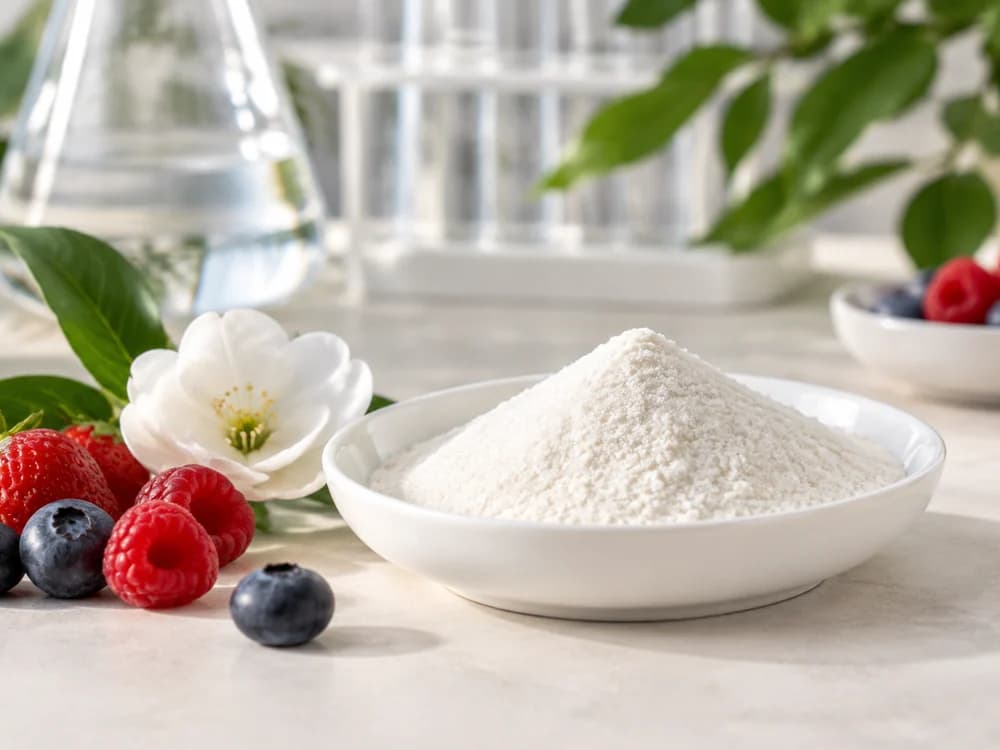
Hyaluronic Acid Capsule Manufacturer for Global Supplement Brands
EUPHM produces hyaluronic acid capsules in a GMP-certified facility in Guangdong, China. MOQ starts at 1,000 units per SKU, with sample lead times of 7–10 working days and mass production in 20–35 working days.
Overview
Hyaluronic acid is one of the most requested joint and skin health ingredients in the capsule category. As a contract manufacturer, we handle sourcing, blending, encapsulation, packaging and QC under one roof. This page covers the specifications, formulation options and compliance documentation you need to evaluate a hyaluronic acid capsule manufacturing partner.
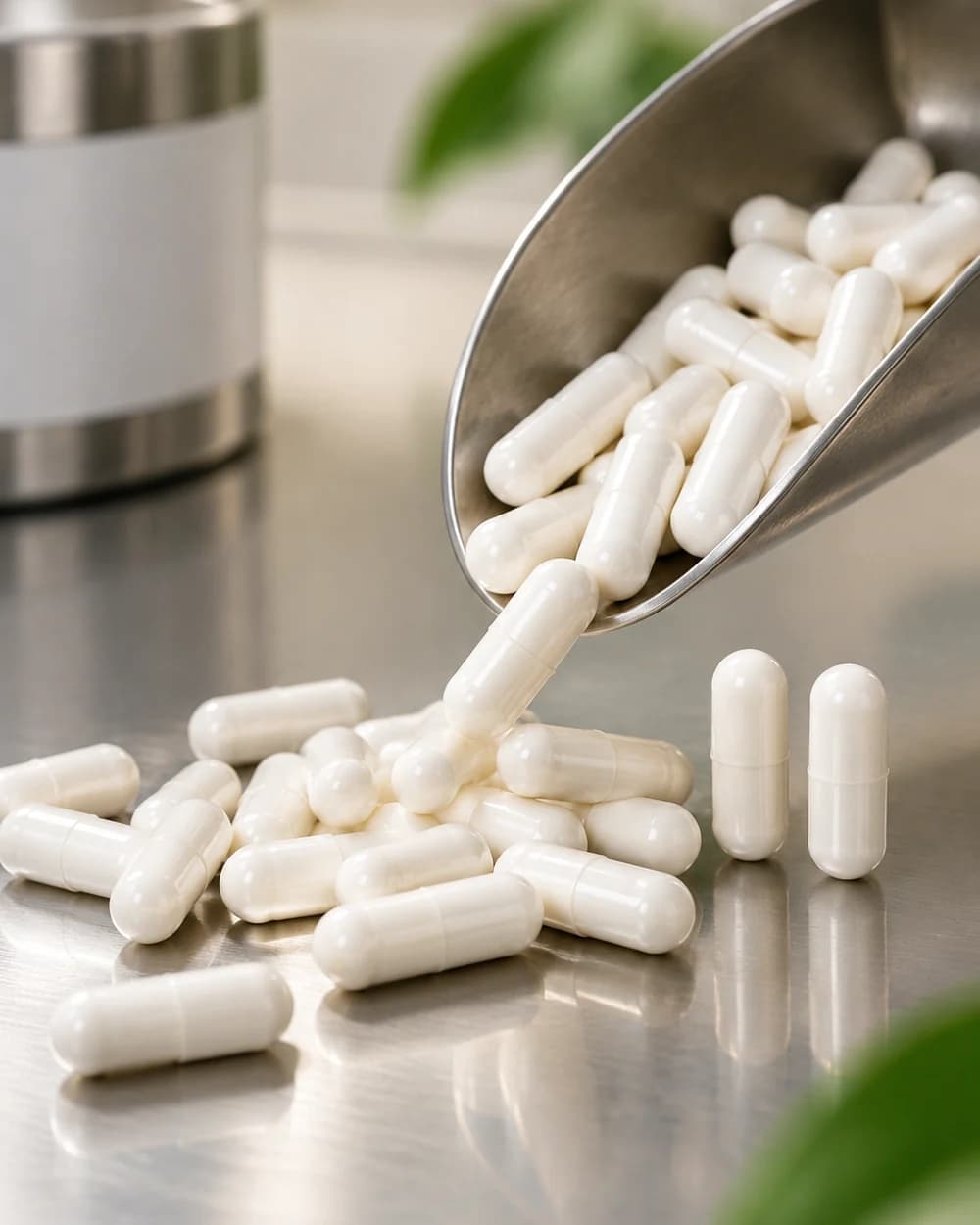
- MOQ
- 1,000 units per SKU for retail bottling; lower for pilot runs
- Fill weights
- 150 mg, 250 mg, 500 mg, 750 mg and 1,000 mg capsules
- Lead time
- Samples 7–10 working days; mass production 20–35 working days
- Dosage forms
- HPMC (vegan) or bovine gelatin capsules, size 0, 1 and 2
- Certifications
- GMP, ISO 9001, ISO 22000, HACCP, NSF/ANSI 455-2, halal, FDA-registered
- Packaging
- 30, 60, 90 and 120 count bottles; blister packs and bulk pouches
- Testing
- HPLC assay, microbial limits, heavy metals, disintegration and stability
Capsule manufacturing capability
Our encapsulation lines run at 80,000–120,000 capsules per hour, depending on capsule size and fill weight. Hyaluronic acid powders are often light and cohesive, so we control humidity and use auger or tamping fill systems to keep weight variation within ±3%. For 500 mg fill weights in size 0 capsules, typical output is 90,000 capsules per shift. We produce both pilot batches of 500–1,000 units for stability and sensory checks, and full commercial runs from 1,000 units upward.
Every batch is manufactured under GMP conditions with in-process checks at blending, encapsulation and packaging. We can blend hyaluronic acid with other actives in the same capsule, such as collagen, vitamin C, biotin or chondroitin. If you need a vegan capsule, we use HPMC shells; for standard retail, bovine gelatin is available. Bottles can be induction-sealed, labelled and shrink-wrapped on site.
Hyaluronic acid formulation details
Hyaluronic acid is supplied as sodium hyaluronate, typically in molecular weights from 50 kDa to 1,500 kDa. Lower molecular weight grades are often chosen for skin health positioning; higher molecular weights are common in joint health products. Our standard capsule fills range from 150 mg to 1,000 mg of sodium hyaluronate. We also offer formulations with 5–20% hyaluronic acid combined with collagen peptides, MSM or glucosamine for combination products.
Excipients matter for capsule performance. We use microcrystalline cellulose, magnesium stearate and silicon dioxide at levels that meet USP/EP requirements and keep disintegration under 30 minutes. If you want a clean-label claim, we can produce capsules with no magnesium stearate and no titanium dioxide. Flavour masking is not usually needed for capsules, but we can add a light coating if your formula includes bitter botanicals.
Quality, compliance and logistics
Our facility is GMP-certified and holds ISO 22000 and HACCP. For halal claims, we source gelatin and excipients from approved suppliers and maintain full traceability. Organic and certification is available when you use certified organic hyaluronic acid. We do not claim FDA approval; the facility is FDA-registered for dietary supplements. Every shipment includes a certificate of analysis (CoA), and we retain samples for 24 months.
We ship from Shenzhen and Hong Kong ports. Typical transit times are 18–25 days to the US west coast, 25–35 days to Europe, and 12–20 days to the Middle East. We provide documents for customs: commercial invoice, packing list, CoA, GMP certificate and, where required, halal certificates. For urgent orders, air freight can reduce transit to 5–10 days at higher cost. We also support DDP terms for first-time buyers.
Quality Control and Batch Documentation
Every hyaluronic acid capsule batch is tested at three points: incoming raw material, in-process blend, and finished capsules. Identity is confirmed by FTIR against a reference spectrum, and potency by HPLC assay with a specification of 95.0–105.0% of label claim. Microbial limits follow USP <61> and <62> with total aerobic count below 1,000 cfu/g, and heavy metals are screened by ICP-MS against EU and US pharmacopoeial limits. Disintegration testing uses USP <701> with a 30-minute limit for gelatin and 15 minutes for HPMC capsules.
A certificate of analysis (COA) is issued per batch and includes the batch number, manufacturing date, expiry date, specification, test method, result, and pass/fail status for each parameter. The COA also lists the hyaluronic acid molecular weight range and source (fermentation or avian). Retention samples of each batch are kept for the full shelf life plus 12 months, stored under labelled conditions. Stability protocols follow ICH Q1A(R2) with accelerated conditions at 40°C/75% RH for six months and long-term at 25°C/60% RH for 24 months.
Documentation is provided as a batch record package: executed manufacturing batch record, QC test records, COA, and deviation reports if applicable. For EU-bound orders, we supply a declaration of compliance for food contact materials and an allergen statement. For US orders, a certificate of free sale and a statement of no prohibited substances are available on request. All records are retained for five years and can be retrieved by batch number for traceability audits.
Packaging, Labelling and Retail Readiness
Hyaluronic acid capsules are packed in HDPE bottles with induction seals and child-resistant closures where required, in 30, 60, 90, and 120 count sizes. Blister packs use PVC/PVDC or alu-alu for moisture protection, with 10 or 12 capsules per blister. Stick packs and sachets are available for powder blends, though capsules are typically bottled. Cartons are specified with dimensions, board grade, and printing method; pallet configurations use standard 1200x1000 mm or 1200x800 mm pallets with stretch wrap and corner boards.
Labels are produced to your artwork and must include the FDA dietary supplement label elements: statement of identity, net quantity of contents, supplement facts panel with serving size and percent daily value, ingredient list, and allergen declaration. We also add lot number and expiry date by inkjet or laser coding, with a minimum character height of 1.5 mm. For Amazon FNSKU compliance, we apply the FNSKU label over the barcode or print it directly, and we can poly-bag bottles with a suffocation warning label.
Retail-ready packaging includes a check for scannable barcodes (UPC or EAN), correct font sizes for net quantity, and placement of the supplement facts panel. We provide a packaging specification sheet with dielines, material specifications, and barcode verification reports. For private-label orders, we hold your artwork and label inventory under a quarantine process to prevent mix-ups. Carton marking includes lot number, expiry date, quantity, and country of origin.
MOQ, Lead Times and Delivery
Sample requests for hyaluronic acid capsules are typically fulfilled in 7–10 working days from receipt of a signed sample request and specification sheet. Samples are provided in stock bottles with generic labels, or with your artwork if a print-ready file is supplied. Sample quantities are up to 100 capsules per SKU at no charge, with freight collect. Mass production begins after sample approval and receipt of a 30% deposit, with a production window of 20–35 working days depending on capsule size, packaging complexity, and whether custom labelling is required.
Shipping is arranged by air or sea. Air freight takes 5–10 days door to door for most destinations, while sea freight takes 25–40 days depending on port and routing. We quote EXW, FOB Shenzhen or Hong Kong, and DDP for select markets. DDP includes customs clearance and delivery to your door, with duties and taxes paid by us and invoiced back at cost. For sea shipments, we provide a packing list and container loading photos.
Documents provided with each shipment include the commercial invoice, packing list, COA, material safety data sheet (MSDS), and certificate of free sale. For plant-based products, a phytosanitary certificate is not typically required for encapsulated goods, but we can arrange one if your import authority requests it. A health certificate is available for some markets. All documents are issued in English and can be legalised or apostilled on request at additional cost and lead time.
Packaging and Format Choices
Vegan HPMC capsules
Plant-based shells suitable for vegan and vegetarian claims. Available in sizes 0, 1 and 2 with fill weights from 150 mg to 750 mg. No animal-derived ingredients.
Bovine gelatin capsules
Standard retail option with good oxygen barrier. Suitable for halal certification when sourced from approved suppliers. Lower cost per unit at high volumes.
Combination formulas
Blend hyaluronic acid with collagen, vitamin C, biotin or chondroitin in one capsule. We handle compatibility testing and stability studies for multi-ingredient fills.
Low-molecular-weight grades
Sodium hyaluronate from 50 kDa to 300 kDa for skin health positioning. Higher molecular weight grades from 800 kDa to 1,500 kDa for joint health products.
How a Project Runs
- 01
Send your brief
Share target fill weight, capsule type, MOQ and label claims. We confirm feasibility and send a quotation within 2 working days.
- 02
Formulation review
Our team reviews excipient compatibility, disintegration targets and any clean-label requirements. We suggest adjustments to meet your market regulations.
- 03
Sample production
We produce 500–1,000 sample capsules in 7–10 working days. Samples include a CoA and can be shipped by courier for your review.
- 04
Order confirmation
You approve the sample and place a purchase order. We issue a proforma invoice and schedule production. Deposit is typically 30%.
- 05
Mass production
Production runs in 20–35 working days after deposit and artwork approval. We provide in-process updates and a pre-shipment sample if requested.
- 06
QC and shipping
Final QC includes assay, microbial and heavy metal testing. We release the CoA and ship from Shenzhen or Hong Kong with all customs documents.
Why EUPHM
Low MOQ for market testing
Start at 1,000 units per SKU. Pilot runs from 500 units let you test packaging and claims before committing to full production.
Full documentation package
GMP, ISO 9001, ISO 22000, HACCP, NSF/ANSI 455-2 and halal certification; FDA facility registration for US-bound shipments.
One facility, many formats
Capsules, tablets, powders and softgels produced under one roof. This simplifies supply chain management and reduces lead time for multi-format ranges.
Questions buyers ask.
What is the MOQ for hyaluronic acid capsules?+
MOQ is 1,000 units per SKU for retail bottling. For pilot runs, we can produce 500–1,000 units. MOQ depends on capsule size, fill weight and packaging. We confirm exact MOQ in your quotation.
How long does production take?+
Samples take 7–10 working days. Mass production takes 20–35 working days after deposit and artwork approval. Shipping adds 5–10 days by air or 12–35 days by sea, depending on destination.
Can you make vegan hyaluronic acid capsules?+
Yes. We use HPMC capsules for vegan and vegetarian products. We also source vegan magnesium stearate and silicon dioxide. Certificates for vegan claims can be provided on request.
Do you provide halal certification?+
Yes. We source halal certified gelatin and excipients from approved suppliers. Certificates are issued per batch. Organic and certification is available if you use certified organic hyaluronic acid.
What testing is included?+
Every batch includes HPLC assay for hyaluronic acid content, microbial limits, heavy metals and disintegration testing. Stability studies are available at additional cost. A certificate of analysis is issued for each shipment.
Can you supply hyaluronic acid capsules with a specific molecular weight?+
Yes. We source hyaluronic acid in molecular weight ranges from 0.8 to 2.0 million Daltons for standard grades, and lower molecular weight grades below 0.5 million Daltons for formulations targeting different absorption profiles. The molecular weight range is stated on the COA. Minimum order quantities apply per molecular weight grade, typically 1,000 units for retail bottling or 25 kg for bulk powder.
What is the shelf life of your hyaluronic acid capsules?+
Shelf life is 24 months from the date of manufacture when stored below 25°C in a dry place away from direct sunlight. We support this with accelerated stability data at 40°C/75% RH for six months and long-term data at 25°C/60% RH. If you require a longer shelf life, we can discuss a stability study at additional cost. Expiry dates are printed on the label and carton.
Do you offer low-moisture or preservative-free capsule formulations?+
Yes. We can formulate with low-moisture excipients and use HPMC capsules that are preservative-free. For hyaluronic acid, we typically use magnesium stearate or silicon dioxide as flow agents at levels below 1% of fill weight. If you require a clean-label formulation with no excipients, we can discuss direct encapsulation, though fill weight accuracy may vary. Moisture content is controlled to below 8% for gelatin capsules.
Have a product in mind?
Send us the brief and we will come back with a formulation direction, indicative price and a realistic lead time — usually within one working day.