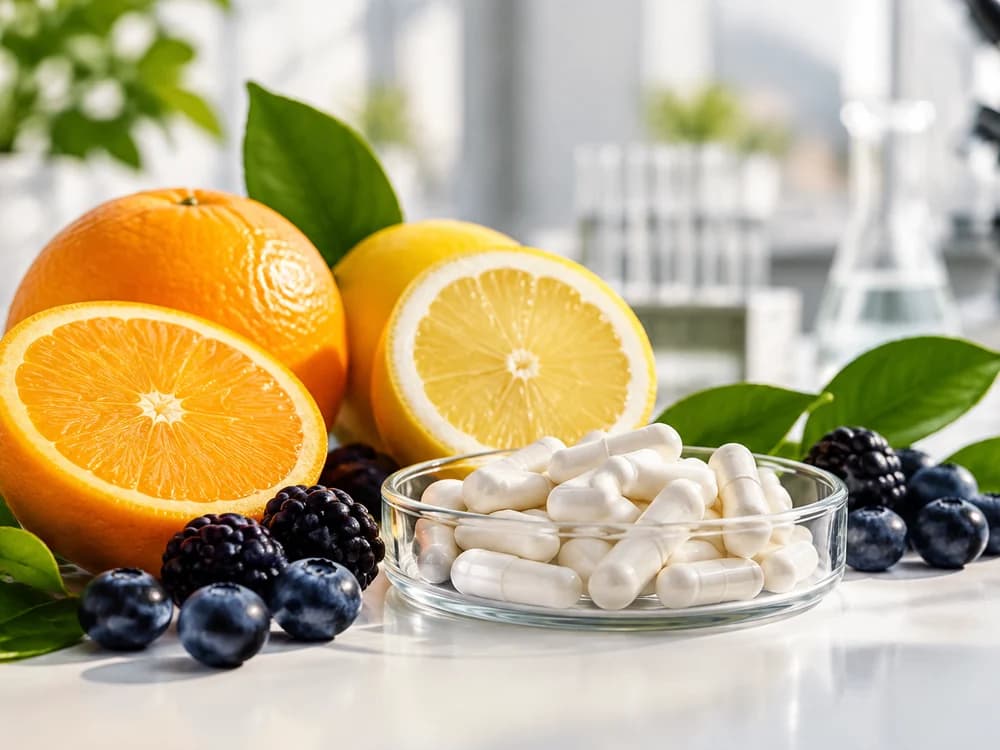
Royal Jelly Capsule Manufacturer for Private Label Brands
EUPHM produces royal jelly capsules for brands in the US, EU, UK and Middle East. We handle freeze-dried 10:1 powder, 500 mg fill weights, halal certification, and pilot runs from 1,000 units.
Overview
Royal jelly is sensitive to heat, moisture and light. Turning it into a stable capsule that holds its 10-HDA content for 24 months takes controlled drying, low-humidity blending and tight fill-weight tolerances. We run freeze-drying, encapsulation and blister or bottle packing on one GMP-certified site in Guangdong. That means fewer handoffs, faster sampling and a clear paper trail from raw material to finished carton.
Capsule Production Capacity and Formats
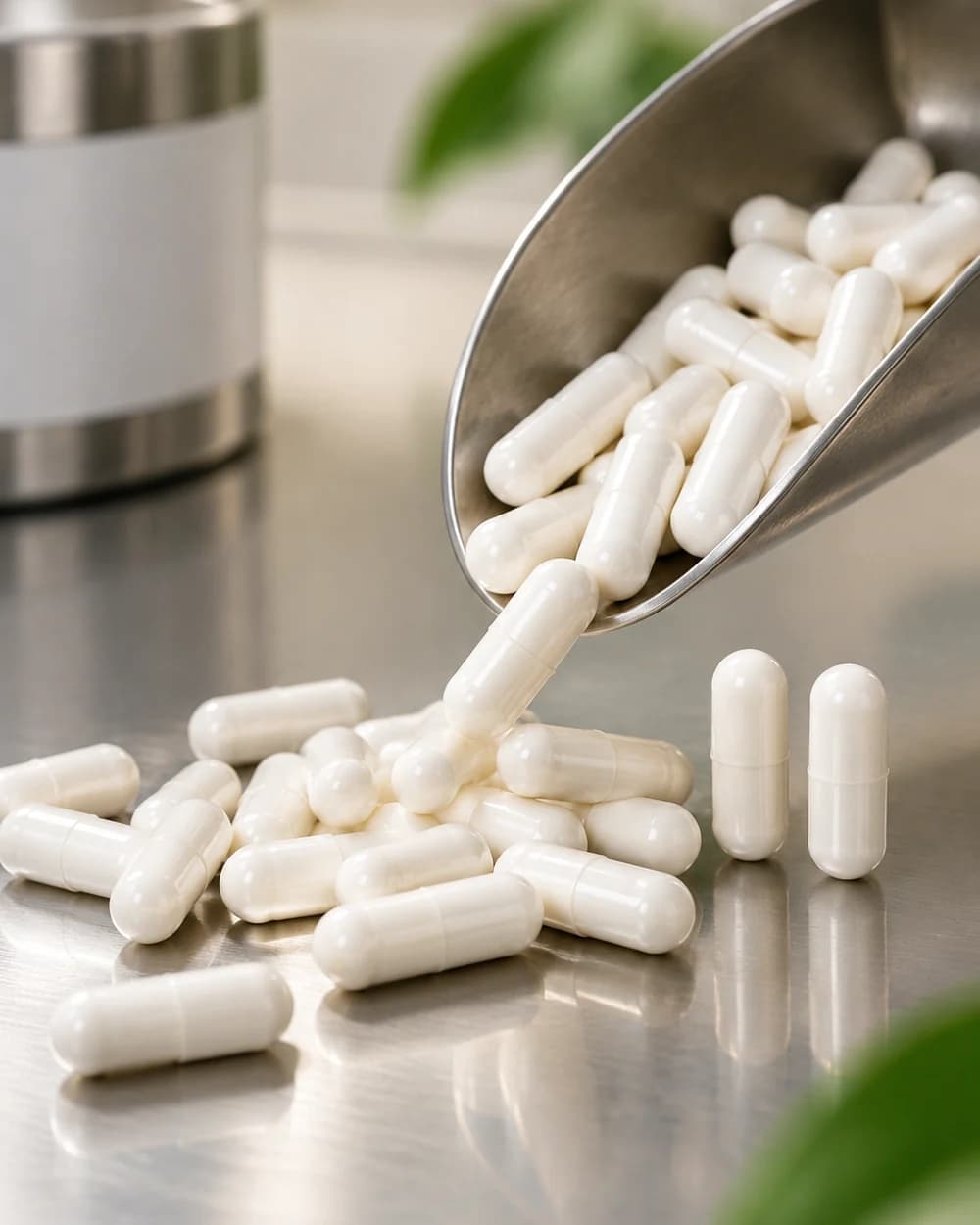
Our encapsulation suite runs three automatic lines with a combined output of 1.2 million capsules per shift. We fill powder, granule and small-pellet blends at 300 mg to 1,000 mg per capsule. For royal jelly, the standard format is a size 0 or size 1 hard capsule holding 500 mg of freeze-dried 10:1 powder. We also run two-piece HPMC capsules for vegan claims and fish gelatin for pescatarian markets. Bottle filling covers 30, 60, 90 and 120 counts, with induction sealing and child-resistant caps where required.
Changeover between SKUs takes 4 to 6 hours, which includes full line clearance and documentation. That keeps small runs practical. A 1,000-unit order is not treated as a nuisance here. If you need a pilot batch before a full launch, we can produce 1,000 units on the same equipment used for commercial volumes, so the sample reflects the final product rather than a hand-made approximation.
Royal Jelly Sourcing and Formulation Detail
Fresh royal jelly is roughly 60-70% water and degrades within days at room temperature. We buy fresh royal jelly from apiaries in China and freeze-dry it within 72 hours of harvest. The result is a 10:1 powder: 1 kg of powder represents 10 kg of fresh royal jelly. We standardise each lot to a minimum 10-HDA content, the marker compound buyers use to judge quality. Typical specification is 1.4% to 2.0% 10-HDA in the powder, verified by HPLC before blending.
Royal jelly blends well with bee pollen, propolis, ginseng and vitamin C. It does not blend well with high-moisture ingredients or alkaline excipients. We use silicon dioxide and magnesium stearate at low inclusion rates to keep flow steady without masking the active. Flavour masking is rarely needed for capsules, but we can add a thin enteric coating if your label claims stomach-acid protection. Every formula is reviewed for compatibility before we quote a fill weight.
Quality Control and Export Documentation
The plant holds GMP, ISO 22000 and HACCP certification. We are FDA-registered for export to the United States. Halal certificates are available for gelatin and HPMC shells, and organic certification can be arranged if your royal jelly supply is USDA or EU organic. Incoming royal jelly powder is tested for 10-HDA, moisture, heavy metals, microbiology and pesticide residues. Finished capsules are tested for fill weight, disintegration, and total plate count before release.
Each shipment leaves with a certificate of analysis, batch record summary, and allergen statement. For EU buyers, we prepare the necessary documents for novel food and health claim review, though the final claim responsibility sits with your brand. Air freight from Hong Kong to Los Angeles takes 3-5 days; to Rotterdam, 4-6 days. Sea freight is 18-25 days. We can hold finished goods in our warehouse for up to 60 days at no charge while you finalise artwork.
Quality Control and Batch Documentation
Every royal jelly capsule batch is tested at three points: incoming raw material, in-process blend, and finished capsules. Identity and potency are confirmed by HPLC for 10-HDA, with a specification of not less than 1.4% in the freeze-dried powder. Microbial tests include total aerobic count, yeast and mould, E. coli, Salmonella and Staphylococcus aureus. Heavy metals cover lead, arsenic, cadmium and mercury. Disintegration testing follows the pharmacopoeial method, with a typical limit of 30 minutes in water at 37°C. These tests run on every batch, not by exception.
The certificate of analysis (COA) issued with each batch lists the tests performed, specifications, results and methods. It also includes batch number, manufacturing date, expiry date, quantity and storage conditions. A retention sample of at least 200 g or 100 capsules from every batch is kept for 24 months beyond the expiry date in a controlled stability chamber at 25°C/60% RH and 30°C/65% RH. Accelerated stability at 40°C/75% RH runs for six months to support the 24-month shelf life claim.
Documentation is compiled before release. The batch record includes raw material COAs, weighing and blending records, encapsulation parameters, fill-weight checks, and packaging line records. Any deviation is logged and reviewed by the quality team. The COA, batch record summary and retention sample record are filed under the batch number and can be retrieved within one working day for customer audits or regulatory requests.
Packaging, Labelling and Retail Readiness
Royal jelly capsules can be packed in HDPE bottles with induction seals, blister packs, stick packs or sachets. Bottle sizes range from 30 to 120 capsules, with desiccant or oxygen absorber options. Blister packs use PVC/PVDC or aluminium cold-form foil for moisture protection. Stick packs and sachets are typically 2 to 5 g of powder or 1 to 2 capsules per unit. All primary packaging materials are food-grade and supplied with migration test reports where required.
Labels can be printed with FDA dietary-supplement elements: statement of identity, net quantity, supplement facts panel, ingredient list, allergen statement, and the disclaimer “These statements have not been evaluated by the Food and Drug Administration. This product is not intended to diagnose, treat, cure, or prevent any disease.” Lot number and expiry date are inkjet-coded on the bottle or carton. We can also apply Amazon FNSKU labels, retail barcodes and tamper-evident seals.
Cartons are specified to withstand export handling. A standard shipper holds 12 to 24 bottles, with a gross weight under 15 kg. Pallets are 1,200 x 1,000 mm or 1,200 x 800 mm, stretch-wrapped and corner-protected, with a typical load of 48 to 60 cartons per pallet. We provide carton dimensions, weights and pallet patterns before production so you can confirm retail or fulfilment centre requirements.
MOQ, Lead Times and Delivery
The minimum order quantity is 1,000 units per SKU. Samples are prepared in 7 to 10 working days after artwork and specification approval. Sample costs are credited against the first mass-production order. Mass production runs 20 to 35 working days after sample approval, depending on capsule fill weight, packaging format and whether labels are customer-supplied or printed by us.
Shipping is arranged by air or sea. Air freight takes 5 to 10 days door-to-door for most destinations, while sea freight takes 25 to 40 days depending on port and routing. We work with EXW, FOB Shenzhen or Hong Kong, and DDP terms for selected markets. For DDP, we handle customs clearance and final delivery, with duties and taxes quoted separately.
Documents provided with each shipment include the commercial invoice, packing list, COA, MSDS, and a free-sale certificate. For plant-based capsule shells, a phytosanitary certificate is not normally required, but we can arrange one if your import authority requests it. Other documents such as certificate of origin or halal certificate can be arranged on request, subject to lead time.
Manufacturing Options to Compare
Vegan HPMC shell
Plant-based hydroxypropyl methylcellulose. Suitable for vegan, halal claims. No animal gelatin. Slightly higher cost per unit than bovine gelatin.
Enteric-coated capsule
Delayed-release coating for stomach-acid protection. Adds 3-5 working days to production. Useful if you claim intestinal delivery.
Bottle or blister
HDPE bottles with induction seal, or PVC/PVDC blister packs. Bottle counts from 30 to 120. Blister strips of 10 or 12.
Custom label and carton
We print labels and cartons from your artwork. Digital proof in 2 working days. Minimum 1,000 labels per SKU.
How We Work
- 01
Send your spec
Tell us fill weight, capsule shell, target 10-HDA, pack format and quantity. We reply with a quote in 1-2 working days.
- 02
Sample production
We produce 100-200 sample capsules with your formula. Lead time 7-10 working days. You approve the sample before mass production.
- 03
Formula lock
Once the sample is approved, we lock the bill of materials and fill weight. No changes after this point without a new sample.
- 04
Mass production
Production runs 20-35 working days depending on capsule shell and coating. You receive weekly progress updates.
- 05
QC and release
Finished capsules are tested for 10-HDA, fill weight, disintegration and microbiology. Certificate of analysis issued on release.
- 06
Shipping and docs
We pack to your carton spec and ship by air or sea. Full export documentation, COA and batch records included.
Why EUPHM
Low MOQ for testing
Start at 1,000 units per SKU. Pilot runs from 1,000 units. Test the market before committing to a full container.
10-HDA Verified
Every royal jelly lot is HPLC-tested for 10-HDA. You get the actual number, not a range from a supplier certificate.
One site, fewer delays
Freeze-drying, blending, encapsulation and packing on one GMP site. No third-party handoffs that add 10-15 days.
Questions buyers ask.
What is the minimum order for royal jelly capsules?+
1,000 units per SKU for standard retail bottling. Pilot runs start at 1,000 units on the same equipment used for commercial volumes. There is no separate pilot line, so your sample matches what you will sell.
How do you verify royal jelly quality?+
We test each lot for 10-HDA by HPLC, plus moisture, heavy metals, microbiology and pesticide residues. Typical powder specification is 1.4% to 2.0% 10-HDA. You receive the actual test result for your batch, not a generic spec sheet.
Can you make vegan royal jelly capsules?+
Yes. We use HPMC (plant-based) capsules instead of gelatin. The royal jelly powder itself is an animal product, so the finished capsule is vegetarian but not vegan. For a fully vegan product, royal jelly is not suitable. HPMC shells carry halal certification.
What is the shelf life of your royal jelly capsules?+
24 months from production when stored below 25°C and 60% relative humidity. We use induction-sealed HDPE bottles with desiccant where needed. Stability data from our 6-month accelerated study is available on request under NDA.
Do you ship to the EU and Middle East?+
Yes. We ship to all EU member states, the UK, Saudi Arabia, UAE and other Middle East markets. Air freight to Europe takes 4-6 days. We provide COA, batch records, allergen statements and halal certificates for the relevant markets.
What is the 10-HDA content in your royal jelly capsules?+
We standardise freeze-dried royal jelly powder to a minimum of 1.4% 10-HDA, the key active marker. Each batch is tested by HPLC and the result is stated on the COA. If you require a higher specification, such as 2.0% or 3.0%, we can source accordingly, though MOQ and lead time may increase. We do not add synthetic 10-HDA.
Can you provide stability data for the 24-month shelf life?+
Yes. We run accelerated stability at 40°C/75% RH for six months and real-time stability at 25°C/60% RH and 30°C/65% RH. The real-time data supports the 24-month shelf life, and we can share a stability summary report with the COA. Retention samples from each batch are kept for the shelf life plus 24 months.
Do you offer low-moisture blending to protect 10-HDA?+
Yes. Royal jelly powder is blended in a dehumidified room below 30% RH and at temperatures under 25°C. Encapsulation runs in the same controlled environment. This limits moisture pickup, which is the main cause of 10-HDA degradation. We monitor blend moisture before encapsulation and record it in the batch record.
Have a product in mind?
Send us the brief and we will come back with a formulation direction, indicative price and a realistic lead time — usually within one working day.