Delayed-Release Capsule Manufacturer
EUPHM produces delayed-release capsules with enteric coatings that resist stomach acid and dissolve in the intestine. We handle formulations from 1,000-unit pilot runs to full-scale production, with GMP, ISO 22000 and HACCP certification.
Overview
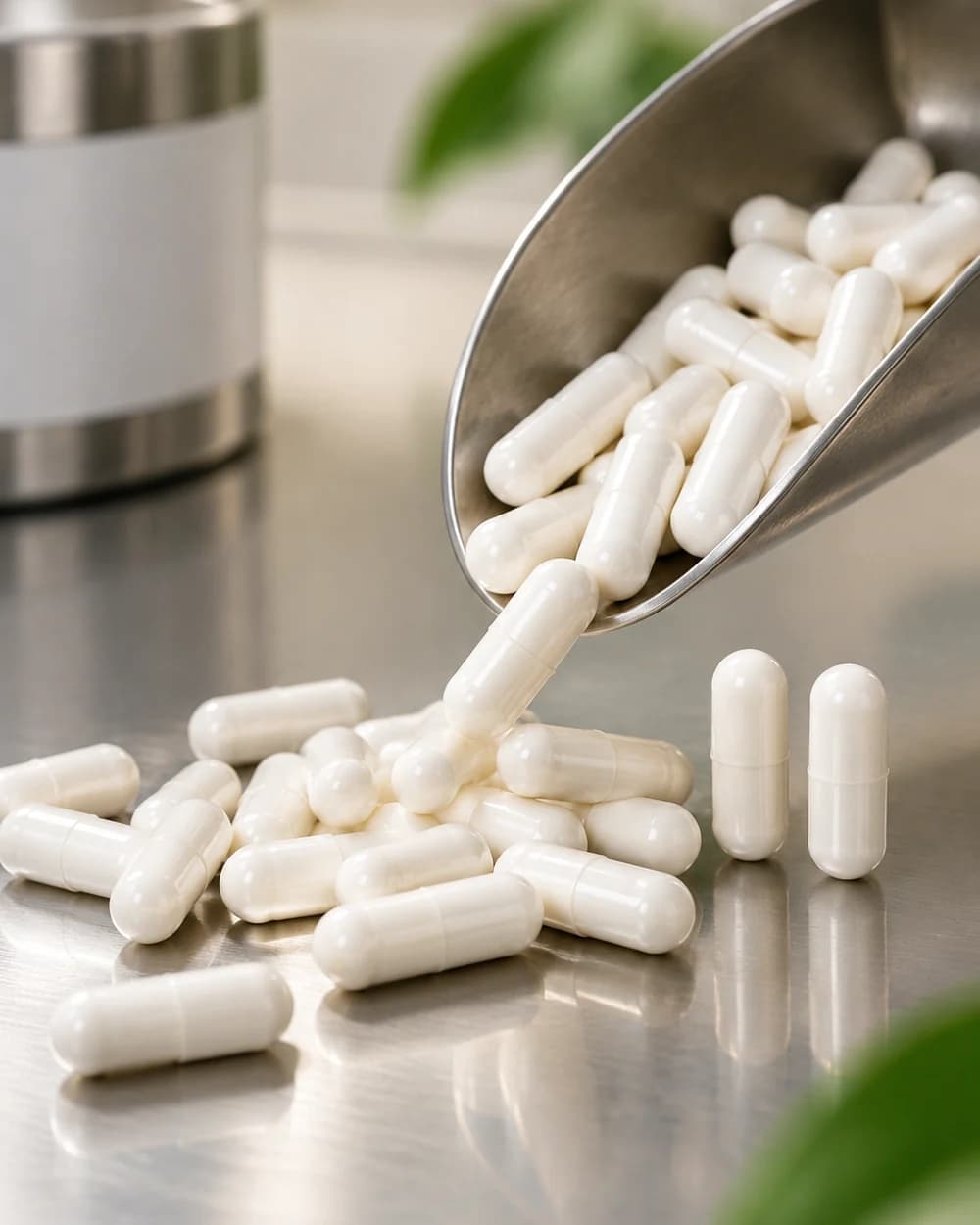
Delayed-release capsules protect sensitive ingredients from gastric acid and release them in the small intestine. As a contract manufacturer, EUPHM applies enteric coatings such as HPMC-AS and Eudragit to hard capsules, then validates dissolution profiles to match your target release point. Our facility runs 12 encapsulation lines with an annual capacity of 2.4 billion capsules. MOQ starts at 1,000 units per SKU for pilot batches, scaling to 5,000 for retail bottling.
- MOQ
- 1,000 units per SKU (pilot); 5,000 units for retail bottling
- Capsule sizes
- Size 0, 1, 2, 3, 4; custom sizes on request
- Coating options
- HPMC-AS, Eudragit L100-55, Eudragit S100, cellulose acetate phthalate
- Fill weights
- 50 mg to 1,200 mg per capsule
- Sample lead time
- 7-10 working days
- Mass production lead time
- 20-35 working days after approval
Manufacturing Capability for Delayed Release
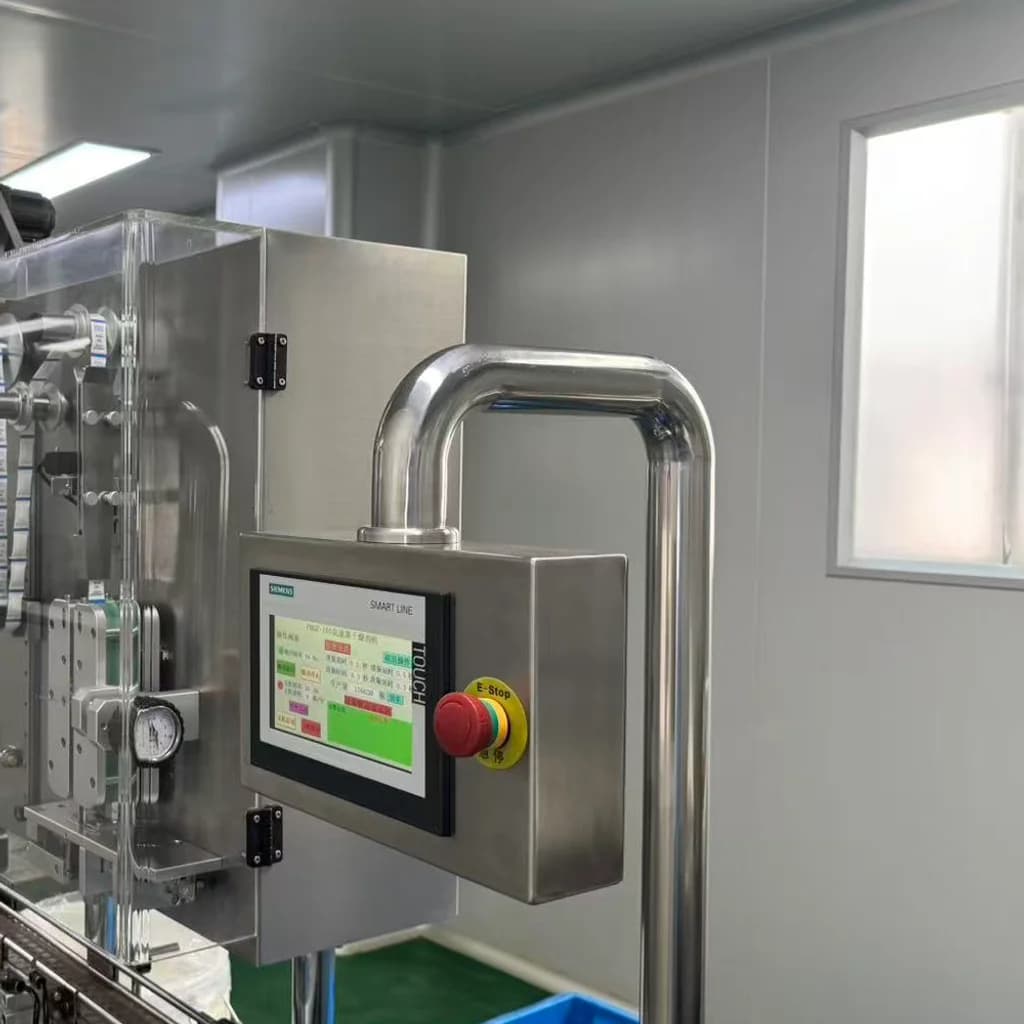
Our encapsulation suite includes 12 automatic capsule filling machines with a combined output of 1.8 million capsules per day. For delayed-release formats, we use fluid-bed coating systems with precise temperature and spray-rate control. This allows uniform film thickness across batches from 1,000 to 500,000 units. We monitor coating weight gain in real time and verify enteric integrity with disintegration testing in simulated gastric fluid for 2 hours, followed by intestinal fluid.
We handle both gelatin and HPMC (vegetarian) capsule shells. For clients targeting halal markets, we source certified empty capsules and maintain segregated production runs. Our team can also work with your existing formulation or develop a coating protocol from scratch. All processes are documented for tech transfer and regulatory submission.
Formulation and Ingredient Protection
Delayed release is critical for ingredients that degrade in stomach acid, including probiotics, enzymes, omega-3s, and certain plant extracts. We select the coating polymer based on your target pH and transit time. For example, Eudragit L100-55 dissolves at pH 5.5, while Eudragit S100 targets pH 7.0. This ensures release in the duodenum or ileum, depending on your needs.
We also evaluate fill compatibility. Some actives interact with coating solvents or require a subcoat to prevent migration. Our formulation team runs accelerated stability studies at 40°C/75% RH for 3 months to confirm that the delayed-release profile holds over shelf life. If needed, we adjust plasticiser levels or add a seal coat. Every batch is tested for assay, dissolution, and moisture content before release.
Quality, Compliance and Logistics
EUPHM operates a GMP-certified facility with ISO 22000 and HACCP accreditation. Our quality unit reviews every batch record, and we retain samples for 12 months after expiry. For delayed-release capsules, we perform USP <711> dissolution testing at multiple time points. We also offer halal and vegan certification for applicable projects. Third-party lab testing is available on request.
We ship worldwide from Guangdong, China. Standard packaging is HDPE bottles with induction seals, or blister packs for unit-dose formats. Air freight to the US or EU takes 5-8 days; sea freight 18-25 days. We provide all export documents, including Certificate of Analysis, MSDS, and health certificates. For repeat orders, we hold your approved formulation and artwork for 24 months.
Quality Control and Batch Documentation
Every delayed-release capsule batch is tested against a written specification before release. Incoming raw materials are sampled at √n+1 per container and tested for identity by FTIR, assay by HPLC, microbial limits (TPC, yeast and mould, E. coli, Salmonella), heavy metals by ICP-MS (lead, cadmium, arsenic, mercury), and, where relevant, residual solvents by GC. Excipients and capsule shells are checked for appearance, dimensions and moisture content. Water used in coating preparation meets pharmacopoeial purified water standards and is monitored weekly.
In-process checks run at defined intervals during encapsulation and coating. Capsule fill weight is verified every 15 minutes on a 10-capsule sample, with acceptance limits of ±5% of target for fills above 300 mg and ±7.5% below. Coating weight gain is measured on 20 capsules per pan at start, middle and end, targeting 8–12% w/w depending on the enteric polymer. Disintegration testing in 0.1 N HCl for 2 hours followed by pH 6.8 buffer is performed on each coating pan; capsules must remain intact in acid and disintegrate within 60 minutes in buffer. Dissolution profiling (USP Apparatus 1 or 2) is run on finished batches at 1, 2, 4 and 6 hours to confirm the release curve matches the approved target.
Finished-product testing includes assay and uniformity of dosage units by HPLC, microbial limits, heavy metals, and where applicable residual moisture (Karl Fischer, target below 6% for HPMC-AS coatings). A Certificate of Analysis (COA) is issued per batch and includes: product name, lot number, manufacture and expiry dates, specification references, test methods, results with pass/fail against limits, and the signature of the QC manager. COAs are available in PDF within 48 hours of batch release. For US-bound products we can include a statement of conformity to 21 CFR 111 cGMP requirements; for EU-bound products, a statement of compliance with EU GMP Annex 1 where applicable.
Retention samples of every batch are stored at 25°C/60% RH and 30°C/65% RH for the full shelf life plus 12 months. Stability protocols follow ICH Q1A(R2): long-term (25°C/60% RH), intermediate (30°C/65% RH) and accelerated (40°C/75% RH) conditions, with testing at 0, 3, 6, 9, 12, 18 and 24 months for long-term and 0, 3 and 6 months for accelerated. Parameters include appearance, assay, disintegration, dissolution and microbial limits. Stability data packages are shared with clients under confidentiality; ongoing stability is maintained for each commercial product. Batch records are retained for five years after expiry.
Packaging, Labelling and Retail Readiness
We offer primary packaging in HDPE bottles (30, 60, 90, 120, 180 and 250 cc) with induction seals and child-resistant or standard caps, blisters (PVC/PVDC or alu-alu for moisture-sensitive formulas), stick packs and sachets. Bottle filling lines run at 60–120 bottles per minute and include desiccant options (silica gel canisters or sachets) where the stability profile requires it. Blister lines handle 10, 12, 14, 20 and 30-count formats. For stick packs, fill weights range from 1 g to 5 g, with a four-side seal and tear notch. All primary packaging materials are food-grade and supplied with certificates of conformity.
Labels for the US market include all FDA dietary-supplement label elements: statement of identity, net quantity of contents, supplement facts panel with serving size and percent daily value where applicable, list of ingredients by common name, allergen declarations (e.g. contains gelatin), and the name and place of business of the manufacturer, packer or distributor. We can add the DSHEA disclaimer if requested. For EU retail, labels include the nutrition declaration, recommended daily portion, storage conditions, batch code and best-before date, and the name and address of the food business operator. We do not print health claims without client-supplied substantiation.
Lot coding follows a client-defined format or our standard Julian date plus line code. Expiry dates are calculated from stability data and printed in the format requested (MM/YYYY or DD/MM/YYYY). Cartons are printed with product name, lot, quantity, dimensions and gross/net weight; pallets are configured to client specification, typically 1,200 x 1,000 mm or 1,200 x 800 mm, with a maximum height of 1,800 mm including pallet, and stretch-wrapped. We can apply Amazon FNSKU labels, polybag the bottles with a suffocation warning, and pack in Amazon-ready master cartons with the required carton labels. Retail compliance checks (e.g. GS1 barcodes, country of origin marking) are performed before shipment.
MOQ, Lead Times and Delivery
Sample requests are handled within 7–10 working days from receipt of a signed sample request form and, where a custom formulation is involved, a mutually agreed specification. Samples are supplied free of charge for standard formulas; client-specific coatings or fills may incur a development fee, credited against the first production order. The sample pack includes a preliminary COA, a specification sheet and a packaging mock-up where relevant. We recommend that clients test samples for appearance, disintegration and dissolution before approving mass production.
Mass production lead time is 20–35 working days after approval of the sample, artwork and purchase order. This window covers raw material procurement (7–10 days for standard enteric polymers), encapsulation and coating (5–10 days depending on batch size), QC testing and release (3–5 days), and packaging (2–5 days). Delays can occur if artwork approval or label supply is late; we provide a production schedule at order confirmation and weekly progress updates. For repeat orders with unchanged specifications, lead time can reduce to 15–25 working days.
Shipping is arranged by air or sea depending on volume and urgency. Air freight (typically 3–7 days door-to-door) suits pilot batches and small retail orders; sea freight (25–40 days to US or EU ports) is more economical for full pallets. We quote on EXW, FOB Shenzhen or Hong Kong, and DDP terms; DDP includes customs clearance and delivery to a named address, with duties and taxes paid by us and recharged at cost. All shipments include a commercial invoice, packing list, bill of lading or airway bill, COA, MSDS (where required for transport), and a free-sale certificate. For plant-derived ingredients we can provide a phytosanitary certificate where the destination country requires it. We do not arrange product liability insurance unless requested; clients should confirm their own cover.
Formats and Packaging Options
HPMC-AS coating
Synthetic polymer that dissolves at pH 5.5-6.0. Suitable for vegan and halal markets. No animal derivatives.
Eudragit L100-55
Dissolves at pH 5.5. Common for probiotics and enzymes. Provides reliable enteric protection in gastric fluid.
Eudragit S100
Dissolves at pH 7.0. Targets release in the lower small intestine. Used for ileum-specific delivery.
Cellulose acetate phthalate
Dissolves at pH 6.0. Cost-effective option for acid-sensitive actives. Requires plasticiser for flexibility.
From Brief to Batch
- 01
Inquiry and quote
Send your formula, target dose, and capsule size. We respond within 1 business day with pricing and lead time.
- 02
Sample production
We produce a 1,000-unit pilot batch in 7-10 working days. You receive samples for stability and dissolution testing.
- 03
Formulation lock
After sample approval, we finalise the coating polymer, fill weight, and capsule shell. You sign off on the master batch record.
- 04
Quality testing
We run in-process checks and finished-product testing per USP <711>. A Certificate of Analysis is issued for each batch.
- 05
Mass production
Full-scale manufacturing takes 20-35 working days, depending on batch size and coating complexity. We provide weekly updates.
- 06
Shipping and documentation
We pack in HDPE bottles or blisters, then ship via air or sea. All export documents are provided for customs clearance.
Why EUPHM
Low MOQ for pilots
Start with 1,000 units per SKU. Scale to 5,000 for retail. Ideal for market testing without large inventory risk.
Certified for global markets
GMP, ISO 9001, ISO 22000, HACCP, NSF/ANSI 455-2 and halal certification; FDA facility registration for US-bound shipments.
Fast turnaround
Samples in 7-10 days. Mass production in 20-35 days. We hold your formulation for 24 months for repeat orders.
Questions buyers ask.
What is the minimum order quantity for delayed-release capsules?+
MOQ is 1,000 units per SKU for pilot runs. For retail bottling with printed labels and retail-ready packaging, MOQ is 5,000 units. We can discuss lower quantities for feasibility studies.
How do you verify that the capsules are truly delayed-release?+
We perform USP <711> dissolution testing. Capsules are placed in simulated gastric fluid (pH 1.2) for 2 hours, then transferred to intestinal fluid (pH 6.8). We measure the percentage of active released at each stage. A batch passes only if less than 10% releases in acid and more than 75% releases in intestinal fluid within 45 minutes.
Can you produce vegan delayed-release capsules?+
Yes. We use HPMC (hydroxypropyl methylcellulose) capsule shells and HPMC-AS or Eudragit coatings, which contain no animal derivatives. These are suitable for vegan, halal certification.
What is the shelf life of your delayed-release capsules?+
Shelf life depends on the active ingredient and packaging. Typically, we guarantee 24 months when stored below 25°C in sealed HDPE bottles. We run accelerated stability studies to confirm your specific formulation.
Do you provide regulatory support for the US or EU?+
We provide a Certificate of Analysis, MSDS, and manufacturing flow chart. Our facility is FDA-registered and GMP-certified. We can also supply documentation for your regulatory submission, including coating polymer specifications and dissolution methods.
Can you supply delayed-release capsules with a specific release pH, such as pH 5.5 or pH 7.0?+
Yes. The release pH is determined by the enteric polymer selected. Eudragit L100-55 dissolves above pH 5.5, Eudragit S100 above pH 7.0, and HPMC-AS grades offer thresholds from pH 5.0 to 6.8. We confirm the target by dissolution testing in media at the specified pH and can adjust coating weight gain to fine-tune the release point. Provide your target pH and release window, and we will propose a coating system and test protocol.
Do you offer capsule-in-capsule or tablet-in-capsule designs for delayed release?+
We can encapsulate enteric-coated mini-tablets or pellets inside a hard capsule, and we can also produce a delayed-release capsule containing a second immediate-release component. These designs require a feasibility review covering fill weight, capsule size and dissolution method. Minimum order for such projects is 10,000 units per SKU due to the additional handling steps. We will provide a development report with dissolution profiles before production.
What is your policy on artwork and label approvals, and how do you handle changes after approval?+
We require a signed artwork approval form before printing. Minor text changes after approval are accommodated free of charge if received before plate or digital file setup; changes after that point may incur a setup fee and add 2–3 working days. Major changes affecting the supplement facts panel or regulatory statements require a new approval cycle. We retain approved artwork files for two years and can supply PDF proofs for your records.
Other versions built in this dosage form.
- Capsule Manufacturer
- Vegan Capsule Manufacturer
- HPMC Capsule Manufacturer
- Enteric Capsule Manufacturer
- Two-Piece Capsule Manufacturer
- Pullulan Capsule Manufacturer
- Two-in-One Capsule Manufacturer
- Hard Gelatin Capsule Manufacturer
- Vitamin B Complex Capsule Manufacturer
- Vitamin K2 Capsule Manufacturer
- Vitamin E Capsule Manufacturer
- CoQ10 Capsule Manufacturer
- Probiotics Capsule Manufacturer
- Prebiotics Capsule Manufacturer
- Hyaluronic Acid Capsule Manufacturer
- Selenium Capsule Manufacturer
- Chromium Capsule Manufacturer
- Ashwagandha Capsule Manufacturer
- Turmeric Capsule Manufacturer
- Apple Cider Vinegar Capsule Manufacturer
- Glutathione Capsule Manufacturer
- NMN Capsule Manufacturer
- NAD+ Capsule Manufacturer
- Berberine Capsule Manufacturer
- Milk Thistle Capsule Manufacturer
- Mushroom Extract Capsule Manufacturer
- Maca Capsule Manufacturer
- Ginseng Capsule Manufacturer
- Propolis Capsule Manufacturer
- Royal Jelly Capsule Manufacturer
- Glucosamine Capsule Manufacturer
- MSM Capsule Manufacturer
- Psyllium Fiber Capsule Manufacturer
- Taurine Capsule Manufacturer
- L-Theanine Capsule Manufacturer
- GABA Capsule Manufacturer
- 5-HTP Capsule Manufacturer
- Weight Management Capsule Manufacturer
- Menopause Capsule Manufacturer
- Prostate Capsule Manufacturer
- Joint Health Capsule Manufacturer
- Detox Capsule Manufacturer
Have a product in mind?
Send us the brief and we will come back with a formulation direction, indicative price and a realistic lead time — usually within one working day.