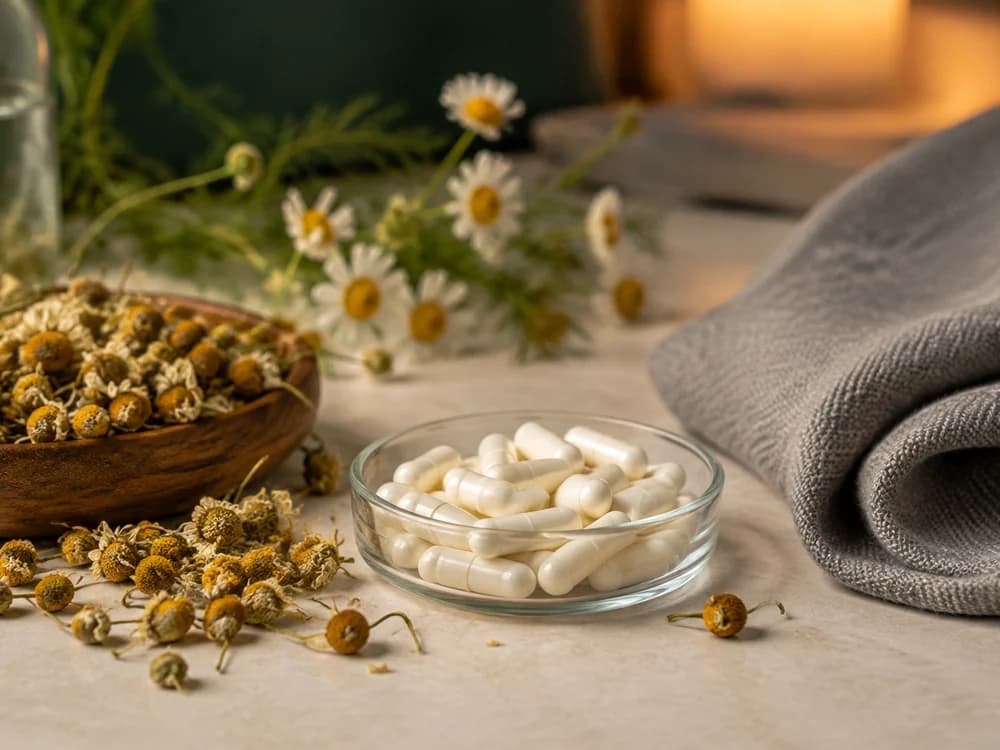
Ashwagandha Powder Manufacturer for Bulk Supplement Production
Source ashwagandha root powder in bulk from a GMP-certified plant in Guangdong. We handle milling, blending, filling and retail packaging for capsules, stick packs and bulk drums, with MOQs from 1,000 units per SKU.
Overview
Ashwagandha root powder is one of the most requested adaptogens in the US, EU and Middle East. Buyers need a manufacturer that can hold particle size, withanolide content and microbial limits batch after batch. This page covers how EUPHM produces ashwagandha powder at commercial scale, from raw root intake through milling, blending, filling and retail cartoning.
| MOQ | 1,000 units per SKU for retail bottling; lower for pilot runs |
|---|---|
| Sample lead time | 7-10 working days |
| Mass production | 20-35 working days after sample approval |
| Particle size | 60-100 mesh standard; finer grades on request |
| Withanolide content | 1.5%-5% typical, verified by HPLC per batch |
| Certifications | GMP, ISO 9001, ISO 22000, HACCP, NSF/ANSI 455-2, halal, FDA-registered |
Milling and blending capacity
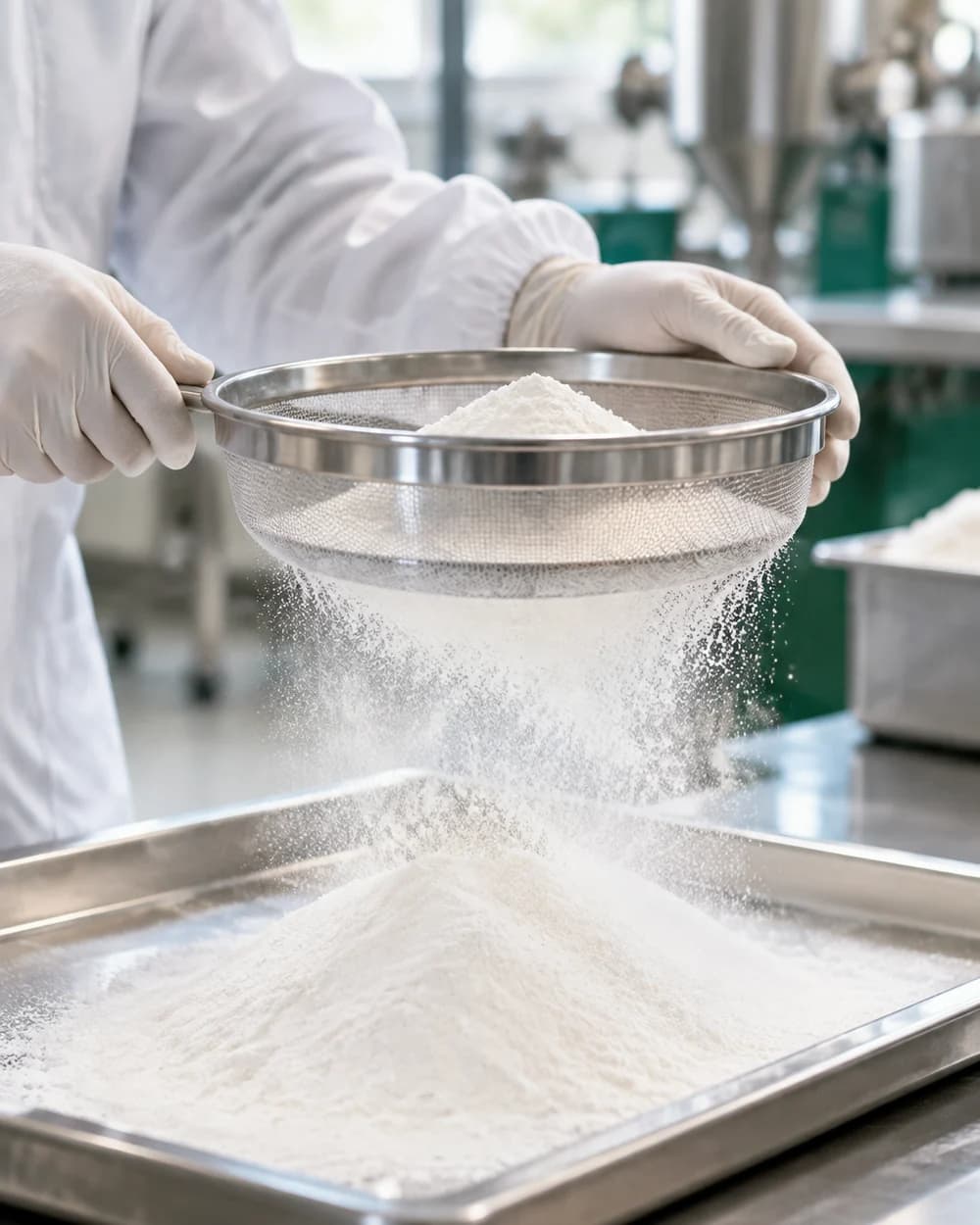
The plant runs dedicated milling and blending lines for botanical powders. Ashwagandha root arrives as dried whole root or pre-milled powder, then passes through metal detection and sifting before milling. We hold particle size between 60 and 100 mesh for standard retail powder, with finer grades down to 200 mesh available for capsule filling. Batch sizes range from 50 kg pilot lots to 500 kg commercial blends.
Blending is done in stainless steel ribbon blenders with a working capacity of 300 kg. For capsule and stick pack formats, we blend ashwagandha with excipients such as magnesium stearate or silicon dioxide, or keep it as a single-ingredient fill. Line capacity for powder filling is approximately 30,000 capsules per shift and 12,000 stick packs per shift, depending on fill weight.
Formulation and ingredient detail
Ashwagandha root powder can be supplied as a single ingredient or combined with black pepper extract, shatavari, rhodiola or L-theanine. We source root from Indian suppliers with COA and pesticide residue testing. Withanolide content is verified by HPLC at intake and again after blending. Typical specification is 1.5% to 5% withanolides, depending on your label claim.
For capsule formats, common fill weights are 300 mg, 500 mg and 600 mg in size 0 or size 00 HPMC or gelatin capsules. Stick packs are filled at 3 g to 5 g. Bulk powder is packed in 25 kg fibre drums with double polyethylene liners. We can also produce organic ashwagandha powder under USDA organic and EU organic standards if the raw material is certified.
Quality, compliance and logistics
Every batch is tested for heavy metals, microbial limits, pesticide residues and withanolide content. The facility is GMP-certified, ISO 22000 and HACCP. Halal certification are available for specific production runs. We do not claim FDA approval; the facility is FDA-registered for dietary supplement manufacturing. Documentation includes COA, MSDS, flow chart and allergen statements.
Shipping is arranged from Shenzhen or Hong Kong ports. Standard lead time for mass production is 20-35 working days after sample approval and receipt of deposit. Air freight samples can be dispatched within 7-10 working days. We handle labelling, cartoning and shrink-wrapping for retail-ready units. Payment terms are 50% deposit, 50% before shipment, with LC options for orders above 10,000 units.
Quality Control and Batch Documentation
Every lot of ashwagandha root powder is sampled at intake, after milling and before filling. Identity is confirmed by macroscopic and microscopic examination plus TLC against a reference root, and withanolide content is quantified by HPLC. Microbial testing covers total aerobic count, yeasts and moulds, E. coli, Salmonella and Staphylococcus aureus. Heavy metals (lead, cadmium, arsenic, mercury) are screened by ICP-MS. For finished capsules we also test disintegration and uniformity of mass. Results are recorded against the batch number and retained for five years.
The certificate of analysis issued with each shipment lists batch number, production date, expiry date, plant part used, particle size, withanolide content, moisture, ash, microbial results, heavy metals and, where requested, pesticide residues. A signed and stamped PDF is provided before dispatch, and a hard copy can be inserted in the carton. If your market requires it, we can add a residual solvent screen or a PAH panel. We do not issue a COA until all results are within specification.
Retention samples of 200 g per batch are held in sealed foil bags under controlled temperature for the full shelf life plus six months. Stability follows a real-time protocol at 25°C/60% RH and 30°C/65% RH, with accelerated data at 40°C/75% RH for three months. Typical shelf life assigned to ashwagandha powder is 24 months from the date of manufacture when stored below 25°C and away from direct light. We can run a custom stability study if your label claims a longer period.
Deviation handling is documented. If a batch falls outside the withanolide specification, it is placed on hold, re-sampled and either re-blended with a compliant lot under a recorded ratio or rejected. Buyers receive a notification within two working days. Change control covers supplier changes, milling parameters and packaging materials, and any change that affects the finished product triggers a new COA and, where relevant, a new stability pull.
Packaging, Labelling and Retail Readiness
Ashwagandha powder is filled into HDPE bottles from 60 cc to 500 cc, with induction seals and child-resistant or standard caps. Capsule formats can be supplied in blisters, stick packs or sachets. Bottle labels are printed on coated paper or PP film, with lot number and expiry date applied by inkjet or laser. Cartons are printed to your artwork with a maximum of six spot colours. We hold a library of stock bottles and caps to reduce tooling time, but custom moulds are possible at additional cost and lead time.
For the US market, labels must carry a Supplement Facts panel with the correct serving size, amount per serving, percent daily value where applicable and the list of dietary ingredients. We check that the principal display panel includes the net quantity, and that the allergen statement, if any, is complete. Structure-function claims are the brand owner's responsibility, but we flag obvious non-compliant wording during artwork review. For the EU, nutrition declaration, botanical name and a food business operator address are required.
Lot coding follows a 7-digit format: two digits for year, two for week and three for the batch sequence. Expiry is printed as best before end of month. Cartons are packed in corrugated shippers with a maximum gross weight of 15 kg for manual handling, and pallets are 1,200 x 800 mm or 1,200 x 1,000 mm with a stated stack height. We can apply Amazon FNSKU labels, poly-bag the bottles and print the FBA box labels if you supply the shipment plan.
Retail compliance support includes barcode verification to GS1 standards, country-of-origin marking and a check against your retailer's packaging specification. We do not provide legal review of claims, but we can supply the specification sheet and COA that your regulatory team needs for notification. Artwork approval is required before printing, and we keep a signed proof for each SKU. Reorders use the same approved artwork unless you issue a new version.
MOQ, Lead Times and Delivery
Sampling starts with a 100 g to 500 g free sample of the powder or capsules, dispatched within 7 to 10 working days after specification confirmation. Courier cost is at the buyer's account unless agreed otherwise. If you need custom packaging, a pre-production sample with your artwork takes 12 to 15 working days. We do not charge for the sample itself, but a tooling or plate fee applies for printed cartons and is credited against the first production order.
Mass production runs 20 to 35 working days after sample approval and receipt of the deposit. The lower end applies to stock bottles and standard labels; the upper end applies to custom cartons, blisters or a new capsule size. MOQ is 1,000 units per SKU for retail bottling; smaller pilot runs can be discussed case by case. Bulk powder orders start at 25 kg. Capacity is roughly 30 tonnes of powder per month, so seasonal peaks should be booked four to six weeks ahead.
Air freight from Shenzhen or Hong Kong to the US or EU takes 5 to 8 days door to door, with a cost per kilogram that suits pilot and launch orders. Sea freight to Los Angeles is about 18 to 25 days port to port, and to Rotterdam about 30 to 38 days. We quote EXW, FOB Shenzhen or DDP to your warehouse. DDP includes duty and customs clearance but requires an accurate product description and HS code, which we confirm before booking.
Shipping documents include the commercial invoice, packing list, bill of lading or airway bill, COA, material safety data sheet and, where required, a free-sale certificate and phytosanitary certificate for the raw botanical. Certificates of origin can be issued on request. We send scanned copies before dispatch so your broker can pre-clear. For DDP shipments, we use a forwarder with a customs bond in the destination country and share the tracking number once the container or air waybill is booked.
Formats and Packaging Options
Capsules
HPMC or gelatin, 300-600 mg fill, 60-120 count bottles. MOQ 1,000 units.
Stick packs
3-5 g fill, single-serve sachets. Suitable for drink mixes. MOQ 5,000 units.
Bulk drums
25 kg fibre drums with double liners. For repackers and formulators. MOQ 50 kg.
Blended powders
Ashwagandha with other botanicals or excipients. Custom ratios from 100 kg.
From Brief to Batch
- 01
Send your spec
Share target withanolide content, fill weight, capsule type and packaging format.
- 02
Sample production
We produce a 7-10 day sample batch for your approval. Includes COA and label mock-up.
- 03
Quotation and PO
Receive a firm quote with MOQ, unit price, lead time and payment terms.
- 04
Raw material intake
Ashwagandha root is tested for identity, potency and contaminants before release to production.
- 05
Production and QC
Milling, blending, filling and packaging over 20-35 working days. In-process checks at each stage.
- 06
Shipping and docs
We arrange export from Shenzhen or Hong Kong with COA, MSDS and commercial invoice.
Why EUPHM
Consistent withanolides
HPLC testing at intake and after blending keeps potency within your label claim.
Flexible moqs
Pilot runs below 1,000 units for market testing, then scale to 5,000+ for retail.
Retail-ready packing
Bottling, labelling, cartoning and shrink-wrapping done in-house to reduce handling.
Questions buyers ask.
What is the MOQ for ashwagandha powder capsules?+
MOQ is 1,000 units per SKU for retail bottling. For pilot runs, we can go lower, typically 1,000 units, with a higher unit cost. Bulk powder MOQ is 50 kg. Blended powder MOQ starts at 100 kg.
How long does production take?+
Sample lead time is 7-10 working days. Mass production runs 20-35 working days after sample approval and deposit. This covers milling, blending, filling, packaging and QC release. Shipping time from Shenzhen or Hong Kong depends on destination.
Can you supply organic ashwagandha powder?+
Yes, if the raw material is certified organic. We produce under USDA organic and EU organic standards. Certification documents are provided with each batch. Organic runs require a minimum of 100 kg and may add 5-7 working days to lead time.
What certifications does the facility hold?+
The plant is GMP-certified, ISO 22000 and HACCP. Halal certification are available for specific production runs. The facility is FDA-registered for dietary supplement manufacturing. We do not claim FDA approval of finished products.
Do you provide label and packaging support?+
Yes. We handle bottle filling, labelling, cartoning and shrink-wrapping. You supply artwork or we can work with your designer. We also provide label review for regulatory compliance in your market, including US, EU and Middle East requirements.
What is the difference between ashwagandha root powder and ashwagandha extract powder?+
Root powder is milled dried root with a withanolide content typically 0.1% to 0.5%, while extract powder is standardised to 1.5% to 5% withanolides by solvent or water extraction. Extract gives a smaller capsule size for a given potency. We supply both forms and can blend them to meet your label claim. Specify the withanolide level and we will confirm the ratio and COA before quoting.
Do you offer low-pesticide or organic-certified ashwagandha powder?+
We can source root grown to a low-pesticide specification and test for a panel of organochlorines and organophosphates on request. Organic certification depends on the raw material lot; we only supply organic powder when a valid certificate covers that batch, and we will not label a product organic without it. Tell us your target market and we will confirm what is available at the time of order.
Can you fill ashwagandha powder into capsules and print my brand label?+
Yes. We fill powder into size 0 or 00 HPMC or gelatin capsules, or supply stick packs and sachets, then apply your printed labels and cartons. Capsule fill weight is set to your label claim with a tolerance of plus or minus 5%. Artwork is reviewed for Supplement Facts and net quantity before printing. MOQ for capsules is 1,000 units per SKU, with a 1,000-unit pilot option.
Have a product in mind?
Send us the brief and we will come back with a formulation direction, indicative price and a realistic lead time — usually within one working day.