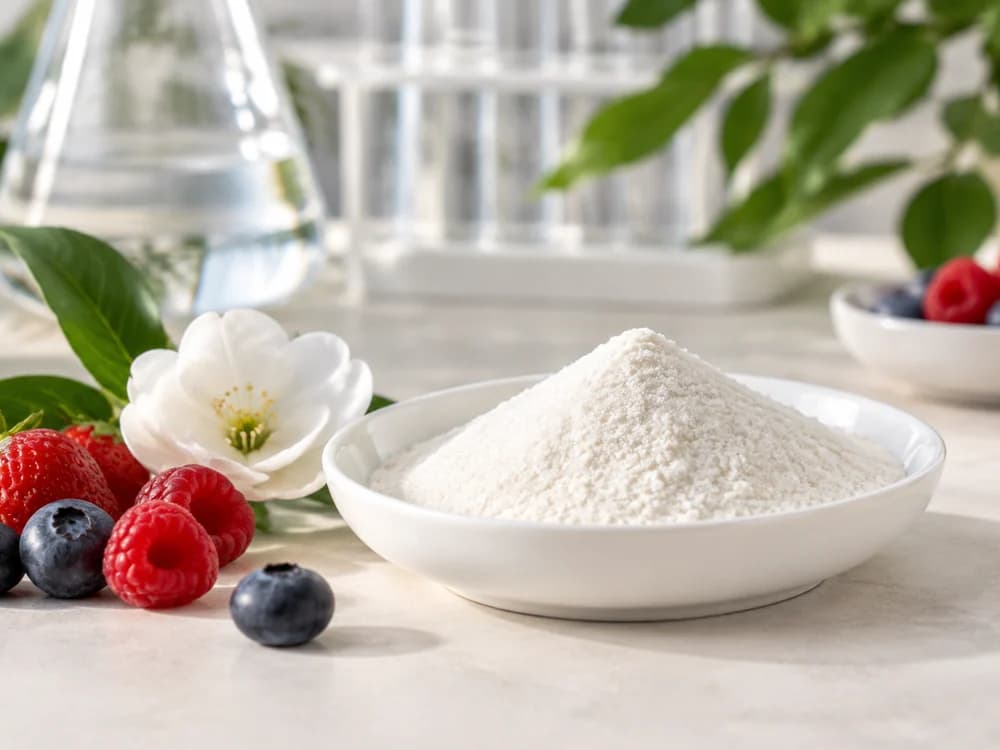
Collagen Powder Manufacturer for Bulk and Private Label
EUPHM produces collagen peptide powders in retail bottles, stick packs and bulk drums at a GMP-certified plant in Guangdong, China. MOQ starts at 1,000 units per SKU.
Overview
Brands source collagen powder for many reasons: joint health, skin elasticity, sports recovery and beauty-from-within positioning. The manufacturing decision is narrower. You need a plant that can blend 10 g and 20 g doses accurately, keep moisture below 5%, and run the same formula for a 1,000-unit launch and a 30,000-unit reorder. EUPHM runs collagen lines across three fill formats with in-house blending, filling and packing.
- MOQ
- 1,000 units per SKU
- Fill weights
- 5 g, 10 g, 15 g, 20 g scoops; 2 g–10 g stick packs
- Sample lead time
- 7–10 working days
- Mass production
- 20–35 working days after sample sign-off
- Certifications
- GMP, ISO 9001, ISO 22000, HACCP, NSF/ANSI 455-2, halal, FDA-registered
- Line capacity
- Up to 60,000 bottles or 400,000 stick packs per day
Blending and filling capability
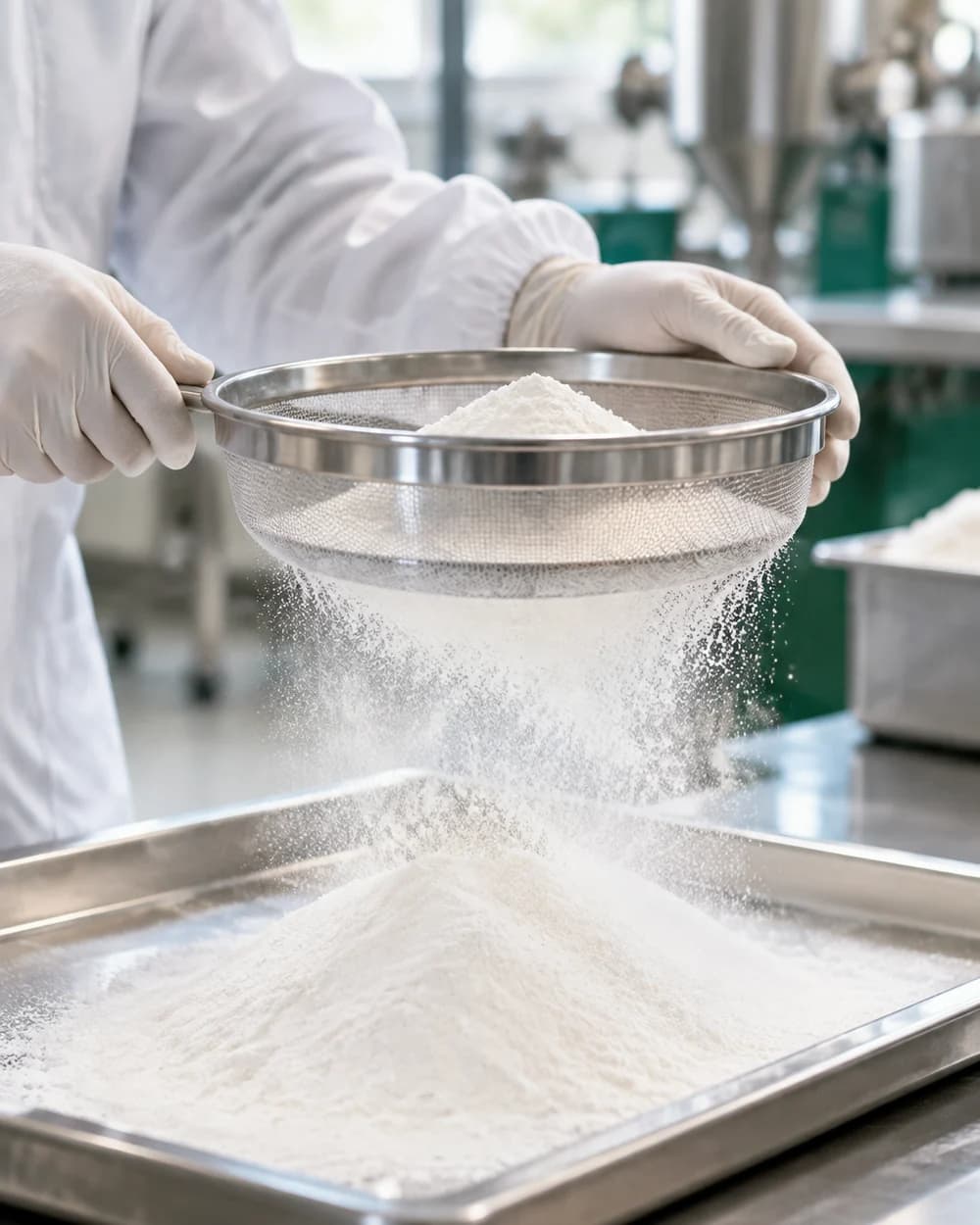
Collagen peptide powders are hygroscopic and prone to clumping when humidity rises above 45% RH. The plant runs two V-blenders at 500 kg and 1,000 kg batch sizes with humidity-controlled rooms at 40–45% RH. That range keeps flowability stable through the filler without adding anti-caking agents beyond the 1–2% typically needed for retail bottles.
Filling runs on three lines: a 6-head auger filler for 150 g–1 kg bottles, a stick-pack line for 2 g–10 g sachets, and a bulk line for 10 kg and 25 kg drums. Changeover between SKUs takes 2–4 hours including cleaning verification. A 1,000-unit launch run and a 30,000-unit reorder use the same equipment settings, so dose weight stays within ±3% across batches.
Collagen types, doses and flavour systems
Most retail collagen powders use hydrolysed bovine or marine peptide with a molecular weight between 2,000 and 5,000 Da. Bovine type I and III suits joint and skin claims; marine type I is common in beauty SKUs. Vegan alternatives include fermented collagen-like peptides or amino acid blends, though label claims differ by market and should be checked against local rules before printing.
Standard doses run 5 g, 10 g and 20 g per serving. Flavour systems are built around natural flavours, stevia or monk fruit, and citric or malic acid for tartness. Vitamin C at 40–80 mg per serving is a common addition because it supports normal collagen formation. We can also add hyaluronic acid, biotin or elastin, but each addition raises the MOQ to 5,000 units per SKU.
Quality, testing and export documentation
Every batch is tested for identity, heavy metals, microbial limits and moisture before release. Third-party lab reports from SGS or Intertek are available on request. The facility is GMP-certified, ISO 22000 and HACCP compliant, and holds halal certificates for markets that require them. For EU shipments, we provide the necessary documentation for customs clearance, though the importer remains responsible for final market compliance.
Export packing uses food-grade liners inside fibre drums or corrugated cartons. Shelf life is typically 24 months in sealed bottles and 18 months in stick packs. Shipping from Shenzhen or Hong Kong ports takes 18–35 days to the US or EU depending on the route. Air freight for samples or urgent launches takes 3–7 days. We handle FOB, CIF and DDP terms depending on your freight setup.
Quality Control and Batch Documentation
Every collagen powder batch is tested against a written specification before release. Identity is confirmed by FTIR or HPLC against a reference standard, and potency (protein content and collagen peptide profile) is assayed by Kjeldahl or HPLC. Microbial testing covers total aerobic count, yeast and mould, E. coli, Salmonella and Staphylococcus aureus. Heavy metals (lead, arsenic, cadmium, mercury) are tested by ICP-MS. Moisture is checked to confirm the below 5% target. Tests run on incoming raw material, on the blended bulk before filling, and on the finished packed lot.
The certificate of analysis (COA) issued with each lot lists the product name, lot number, manufacturing date, expiry date, tests performed, specification limits and results. It also names the testing laboratory and the release signature. Where a customer needs a specific method, such as a particular HPLC column or a third-party lab, that is written into the specification before the first batch. We do not issue a COA until all results are within specification.
Retention samples are kept for every batch: at least two finished units per lot, stored under label conditions, for the full shelf life plus six months. Stability follows a bracketed protocol with time points at 0, 3, 6, 12, 18 and 24 months, testing moisture, appearance, microbials and potency. Accelerated data at 40°C/75% RH supports the initial shelf-life claim, and real-time data confirms it. Customers can request the stability summary for their formula before signing off artwork.
Deviation handling is documented. If a batch fails a specification, it is placed on hold, investigated and either reworked within the approved process or rejected. Retained records include batch records, equipment logs, cleaning records and deviation reports, and are available for customer audit. This is the documentation a brand needs when a retailer or importer asks how the collagen powder was made and released.
Packaging, Labelling and Retail Readiness
Collagen powder fills into several pack formats. Wide-mouth HDPE or PET jars suit 200 g to 1 kg with a 5 g to 20 g scoop, and stick packs run from 2 g to 10 g for single-serve use. Sachets and pouches are available for larger single doses or sample packs. We can also fill into composite cans or doypacks with a zipper. Closure, liner and scoop options are confirmed at sample stage. Bottle and stick-pack filling lines run at up to 60,000 bottles or 400,000 stick packs per day, so packaging choice affects scheduling more than capacity.
For the US market, the label must carry the statement of identity, net quantity, ingredient list, allergen declaration where applicable and the supplement facts panel with serving size and percent daily value. We check that the label artwork matches the approved formula and fill weight before printing. Lot number and expiry date are inkjet-coded on the base or crimp of each unit, and the same code appears on the carton. Cartons are specified with gross weight, dimensions and units per carton, and pallets are built to a stated carton count and height for container loading.
Retail and e-commerce compliance is handled at packing. For Amazon, we can apply FNSKU labels and poly-bag units where required, and build cartons to the marketplace's weight and size limits. For retail, we check barcode placement and can add a peggable or shelf-ready carton. We do not print regulated claims on your behalf; the brand owner approves final artwork. What we do is confirm that the printed lot, expiry and net content match the batch record so the packed goods are ready for the importer or fulfilment centre.
MOQ, Lead Times and Delivery
Sampling starts with a formulation brief and a target dose. Stock collagen base samples are available in 7 to 10 working days; a custom flavour or a new blend adds 5 to 7 days for bench work and sensory approval. The sample you sign off becomes the reference standard for the production batch, so flavour, colour and fill weight are matched to it. MOQ is 1,000 units per SKU when a brand needs market feedback before a full order.
Mass production runs 20 to 35 working days after sample sign-off and receipt of packaging components. That window covers blending, filling, coding, cartoning and release testing. If packaging is supplied by the brand, add transit time to the plant. We schedule around Chinese New Year and other peak periods, so a confirmed order placed before the holiday avoids a four to six week gap. Repeat orders on the same formula and pack move faster because artwork and specification are already approved.
Delivery is quoted EXW, FOB or DDP. Sea freight suits full containers and larger reorders; air freight suits launches and sample quantities. We provide a commercial invoice, packing list, COA, MSDS, free-sale certificate and, where the destination requires it, a phytosanitary certificate or non-GMO statement. Incoterms and documents are agreed before production, not after, so the importer knows exactly what arrives with the container.
Formats and Packaging Options
Retail bottles
150 g, 300 g, 500 g and 1 kg HDPE or PET bottles with induction seals, scoops and full-colour labels. MOQ 1,000 units per SKU.
Stick packs
2 g to 10 g single-serve sachets in 15, 30 or 60-count cartons. Ideal for travel, sampling and subscription boxes. MOQ 5,000 units.
Bulk drums
10 kg and 25 kg food-grade drums for brands that fill or repack in their own facility. Lower MOQ, typically 500 kg per order.
Custom blends
Collagen combined with vitamin C, hyaluronic acid, biotin, probiotics or electrolytes. Flavour and sweetness adjusted to your brief. MOQ 5,000 units.
How a Project Runs
- 01
Brief and quote
Send your formula, fill weight, pack format and target market. We return a quote and a realistic timeline within 2–3 working days.
- 02
Sample production
We produce a 500 g–1 kg sample batch for your approval. Sample lead time is 7–10 working days, including flavour and texture checks.
- 03
Sample sign-off
You approve the sample in writing. We lock the formula, label artwork and packaging specification before production starts.
- 04
Mass production
Bulk ingredients arrive and blending begins. Production takes 20–35 working days depending on format and order size.
- 05
QC and release
Each batch is tested for identity, heavy metals, microbials and moisture. Certificates of analysis are issued before goods leave the plant.
- 06
Shipping and documents
We pack to your spec and ship FOB, CIF or DDP. Export documents, COA and halal certificates travel with the consignment.
Why EUPHM
Low MOQ for launches
Start at 1,000 units per SKU, or 1,000 units for pilot runs. Scale to 60,000 bottles per day without changing equipment or settings.
Certified and audited
GMP, ISO 9001, ISO 22000, HACCP, NSF/ANSI 455-2 and halal certification; FDA facility registration for US-bound shipments.
One plant, three formats
Bottles, stick packs and bulk drums run under one roof. That shortens lead times and keeps dose weight consistent across formats.
Questions buyers ask.
What is the MOQ for collagen powder manufacturing?+
MOQ is 1,000 units per SKU for retail bottles and stick packs. Pilot runs start at 1,000 units. Bulk drum orders start at 500 kg. Custom blends with added ingredients such as hyaluronic acid or biotin typically require 5,000 units per SKU.
How long does production take?+
Samples take 7–10 working days. Mass production takes 20–35 working days after sample sign-off, depending on format and order size. Bottles usually run faster than stick packs. Add 18–35 days for sea freight to the US or EU, or 3–7 days by air.
Can you produce vegan collagen powder?+
Yes. We produce vegan alternatives using fermented collagen-like peptides or amino acid blends. These do not contain animal-derived collagen, so label claims differ by market. Check local rules before printing. MOQ for vegan SKUs is 5,000 units.
What certifications does the plant hold?+
The facility is GMP-certified and holds ISO 22000 and HACCP. Halal certificates are available for relevant markets. We are an FDA-registered facility. Certificates of analysis and third-party lab reports from SGS or Intertek are provided per batch.
Do you help with formulation and flavour?+
Yes. We adjust flavour, sweetness and mouthfeel using natural flavours, stevia or monk fruit, and food acids. Vitamin C at 40–80 mg per serving is a common addition. Send your target dose and taste profile, and we build a sample for approval within 7–10 working days.
Can you supply collagen powder in bulk without retail packaging?+
Yes. We supply bulk collagen powder in food-grade lined fibre drums or PE bags, typically 20 kg or 25 kg net, with a COA and lot number on each unit. Bulk supply suits brands that fill or repack in their own market. MOQ for bulk is lower than for finished goods; confirm the exact figure with the specification, as it depends on whether the powder is a stock grade or a custom blend.
What is the shelf life of your collagen powder and how is it verified?+
Shelf life is set per formula, typically 18 to 24 months in an unopened container stored below 25°C and away from direct light. It is supported by accelerated stability at 40°C/75% RH and confirmed by real-time data at 0, 3, 6, 12, 18 and 24 months. The stability summary is available before artwork sign-off so the expiry date printed on pack is justified.
Do you provide a free-sale certificate and other export documents?+
Yes. Standard export documents include the commercial invoice, packing list, COA, MSDS and free-sale certificate. Where the destination country requires it, we arrange a phytosanitary certificate or a non-GMO statement. Certificates of origin can be issued for preferential tariff treatment. Document requirements are confirmed at order stage so nothing is missing when the container is loaded.
Have a product in mind?
Send us the brief and we will come back with a formulation direction, indicative price and a realistic lead time — usually within one working day.