Magnesium Powder Manufacturer for Private Label Brands
EUPHM produces magnesium powder supplements in stick packs, tubs and sachets from a GMP-certified plant in Guangdong. MOQ starts at 1,000 units per SKU, with pilot runs from 500 units.
Overview
Magnesium is one of the highest-volume minerals in the supplement aisle, and powder formats are growing faster than capsules in the US and EU. Buyers choose powder for higher elemental magnesium per serving, faster mixing and lower unit cost. As a magnesium powder manufacturer, EUPHM handles sourcing, blending, flavouring, filling and packing under one roof, with documentation ready for retail and e-commerce listings.
- MOQ
- 1,000 units per SKU; pilot runs from 500 units
- Sample lead time
- 7–10 working days
- Mass production
- 20–35 working days after sample approval
- Fill weights
- 3 g–10 g stick packs; 100 g–500 g tubs; 5 g–15 g sachets
- Certifications
- GMP, ISO 9001, ISO 22000, HACCP, NSF/ANSI 455-2, halal, FDA-registered
- Line capacity
- Up to 2 million stick packs and 120,000 tubs per month
Powder Production Capability
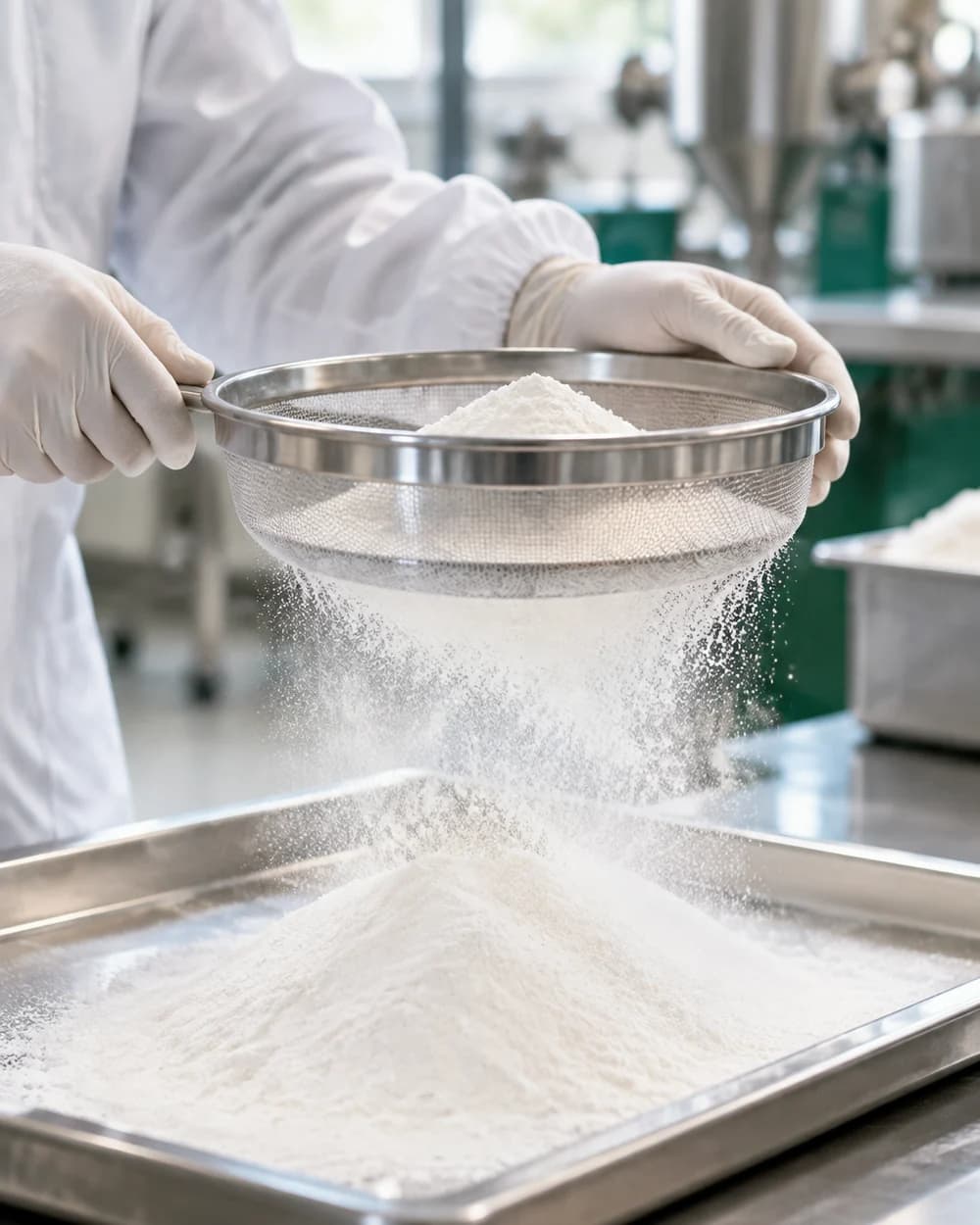
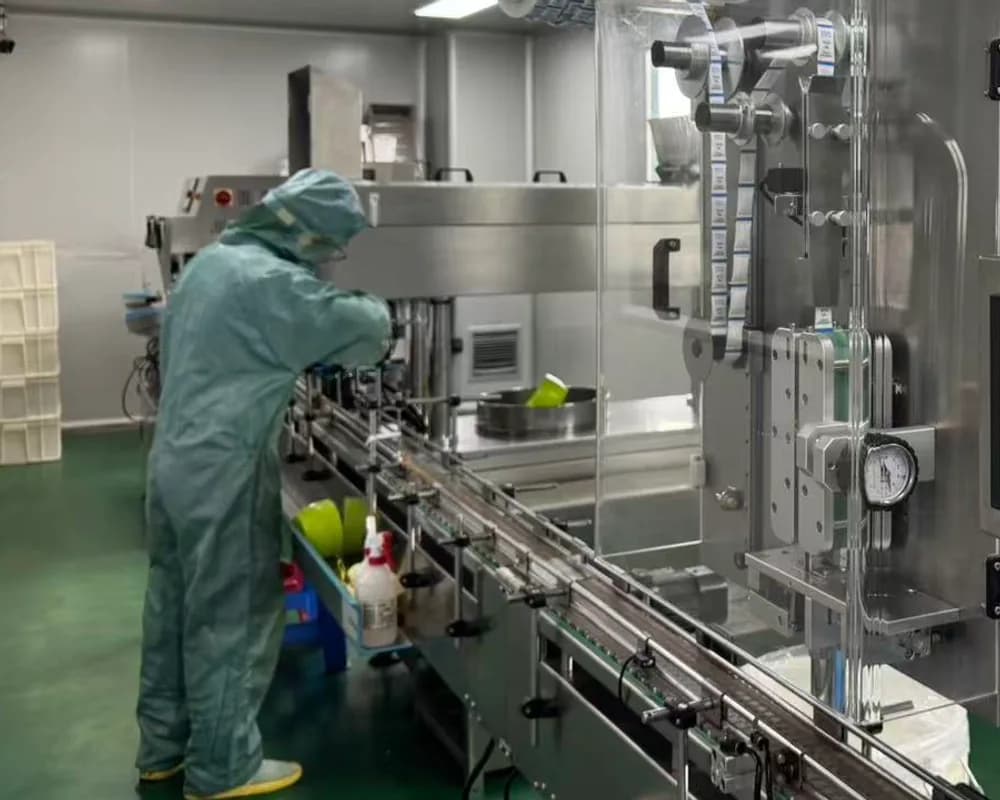
The plant runs two powder lines: one for stick packs and sachets, one for tubs and jars. Stick pack filling runs at 40–60 cycles per minute, with fill weights from 3 g to 10 g and accuracy of ±2%. Tub filling handles 100 g to 500 g with induction sealing and optional scoop inclusion. We blend in 500 kg and 1,000 kg ribbon mixers, which keeps flavour and mineral distribution consistent across a batch.
For brands scaling from a pilot, we hold the same formula and packaging specification across small and large runs. That means the 500-unit pilot and the 50,000-unit reorder come off the same process, same sieve size and same metal detection settings. Changeover between SKUs takes 4–6 hours, so multi-flavour launches can be scheduled in the same week.
Magnesium Forms and Formulation
We work with magnesium citrate, glycinate, malate, taurate, oxide, carbonate and threonate. Each has a different elemental magnesium content: citrate around 16%, glycinate around 14%, oxide around 60%. That matters for label claims. A 300 mg elemental magnesium serving needs roughly 1,875 mg of citrate or 500 mg of oxide, which changes the scoop size and the taste profile you are working with.
Flavouring is where most powder projects succeed or fail. We stock natural and artificial flavours for citrus, berry, mango, mint and unflavoured. We can add sweeteners such as stevia, monk fruit, sucralose or erythritol, plus anti-caking agents like silicon dioxide at 0.5–1.0%. If you want a clean-label deck, we can formulate with only magnesium salt, flavour and stevia. We run a 3–5 kg bench sample before any pilot batch.
Quality, Compliance and Shipping
Every batch is tested for magnesium assay, heavy metals, microbial limits and uniformity. We hold GMP, ISO 22000 and HACCP certificates. Halal and vegan documentation is available when the formula and supply chain support it. Certificates of analysis are issued per batch, and we retain samples for 24 months. The facility is FDA-registered for US-bound dietary supplements.
We ship FOB Shenzhen or Yantian, with air freight for samples and sea freight for production. Typical transit is 12–18 days to Los Angeles, 28–35 days to Rotterdam and 18–25 days to Jebel Ali. We handle labelling artwork checks, carton marking and pallet configuration. For Amazon and Shopify sellers, we can pack in retail-ready cartons with barcodes and FNSKU labels applied at the line.
Quality Control and Batch Documentation
Every magnesium powder batch is sampled at three points: incoming raw material, the blended bulk powder, and the finished packed units. Incoming magnesium salts and carriers are tested for identity by FTIR or titration, assay potency, microbial counts (total plate count, yeast and mould, E. coli, Salmonella), heavy metals (lead, arsenic, cadmium, mercury) and moisture. Blended bulk is re-tested for potency and uniformity before filling, so a 500 kg lot is not released to the line on supplier paperwork alone.
Finished-product testing covers potency, microbials, heavy metals, net fill weight and, for stick packs and sachets, seal integrity. Disintegration is not applicable to powders, so the release criteria focus on dissolution behaviour in water and absence of caking after accelerated storage. Where a formula carries a claim such as 200 mg elemental magnesium per stick, the assay is calculated on elemental content, not on the weight of the magnesium salt, and the calculation is shown on the certificate of analysis.
Each batch ships with a COA listing product name, lot number, manufacture and expiry dates, test parameters, specification limits, results and the release signature. Retention samples of every lot are held for 24 months at ambient conditions, or for the shelf life plus 12 months, whichever is longer. Accelerated stability runs at 40 degrees Celsius and 75 percent relative humidity for three and six months, with real-time data generated in parallel for clients who need a two-year shelf-life claim.
Microbial and heavy-metal testing is outsourced to accredited third-party laboratories, with in-house checks for potency, moisture and fill weight on every batch. If a result falls outside specification, the batch is quarantined, an investigation record is opened, and the client is notified before any rework decision is taken. Documentation packs can be supplied in English, with Chinese and other language versions available on request for registration files.
Packaging, Labelling and Retail Readiness
Powder formats for this mineral typically run as 3 g to 10 g stick packs, 5 g to 15 g sachets, and 100 g to 500 g tubs with a measuring scoop. Stick and sachet film options include metallised PET, aluminium laminate and kraft-look structures, with matt or gloss finishes. Tubs are HDPE or PET with induction seals and child-resistant or standard screw caps depending on market. We can also fill blister-style powder cavities and single-serve sachets for sample packs, though stick packs remain the most common retail format.
Labels are prepared to the destination market. For US dietary supplements, the panel carries the supplement facts box with elemental magnesium per serving, other ingredients, net quantity, and the mandatory allergen and storage statements, plus the distributor name and address and a lot code with best-by date. For the EU, the nutrition declaration, recommended daily portion, and any authorised health claims are checked against the applicable regulation before print. We do not create claims; the brand owner supplies and approves final label copy.
Coding is applied inline: lot number and expiry date are printed or laser-coded on each stick, sachet or tub, and the same data appears on the carton. Standard cartons are 3-ply corrugated, with pallet configurations matched to the client's warehouse or Amazon requirements. For Amazon FBA, we can apply FNSKU labels over the barcode, poly-bag units where required, and print carton labels with box contents and quantity, provided the seller supplies the FNSKU data and prep instructions.
Retail compliance support covers barcode verification (EAN or UPC), artwork proofing against dieline, and a pre-production PDF proof for sign-off before any film or label is printed. We keep a record of approved artwork per SKU so repeat orders use the same version. Where a retailer requires a specific carton mark, such as a best-before date on the outer, that is set up once at the start of the run and applied to every carton.
MOQ, Lead Times and Delivery
Sampling starts with a brief covering formula, target elemental magnesium per serving, flavour, packaging format and destination market. Stock formulations can be quoted within two working days, and custom flavour or formula development takes 7 to 10 working days for a sample, with courier transit on top. Sample costs are typically credited against the first mass-production order, subject to the agreed terms.
Mass production runs 20 to 35 working days after sample approval and receipt of packaging materials. The window depends on film or tub lead times, whether labels are printed locally or supplied by the client, and the queue position at booking. Pilot runs from 500 units are available for market testing, while standard MOQ is 1,000 units per SKU. Booking production before Chinese New Year and the October holiday period is advisable, as factory and freight capacity tighten in those weeks.
Shipping is quoted as EXW, FOB Shenzhen or Hong Kong, or DDP to a named address, depending on the buyer's preference. Air freight is used for samples and urgent launches, typically 5 to 10 days door to door, while sea freight for full containers takes 25 to 40 days to US and EU ports depending on routing. We provide packing lists, commercial invoices and the shipping documents required for customs clearance, and can arrange consolidation with other SKUs from the same facility.
Each shipment is accompanied by a certificate of analysis, a material safety data sheet where applicable, and a free-sale certificate for markets that request one. For plant-derived ingredients in a blend, a phytosanitary certificate can be arranged where the destination requires it. Certificates of origin and halal documentation are issued on request, and all documents are checked against the commercial invoice before dispatch so that lot numbers match across the pack.
Magnesium Powder Manufacturer: Working With EUPHM
As a magnesium powder manufacturer, EUPHM manages the full path from raw material sourcing to packed cartons, which means one point of contact for formula, packaging, testing and shipping. Buyers who need a single SKU or a small range can start with a pilot run and scale to container volumes once the label and formula are fixed. The same documentation pack is used for retail listings, distributor onboarding and marketplace compliance checks.
Projects are handled by a named account contact who tracks sample approval, artwork sign-off, production booking and dispatch. Clients receive a production schedule at order confirmation and a pre-shipment photo report before goods leave the facility. Any change to formula, packaging or label copy is confirmed in writing before it is applied, so repeat orders stay consistent with the approved specification.
Documentation and Testing Questions Buyers Ask
Most buyer questions at quotation stage concern testing scope, label requirements and shipping terms rather than the powder itself. The answers below cover the points that come up most often once a formula and pack format are on the table. Where a question depends on the destination market or the specific blend, the account contact will confirm the detail in writing before an order is placed.
Choosing the Right Magnesium Form for a Powder SKU
Form choice affects taste, elemental content, scoop size and cost per serving. Citrate and glycinate are common in flavoured stick packs, oxide is used where a higher elemental load per gram matters, and blends are often built to balance taste and label claims. The form also drives the assay method and the elemental conversion shown on the COA, so it should be fixed before artwork is finalised.
Options for Your Format
Stick packs
3 g–10 g single-serve sticks. Good for travel, gym and subscription boxes. Runs at 40–60 cycles per minute with ±2% fill accuracy.
Tubs and jars
100 g–500 g HDPE or PET tubs with induction seal. Suits 30–90 serving counts. Optional scoop and desiccant.
Sachets
5 g–15 g foil sachets for clinical or sample use. Lower MOQ than sticks, suitable for trial packs and practitioner channels.
Bulk powder
1 kg–25 kg food-grade bags for brands that fill or repack in their own facility. Unflavoured or flavoured.
From Brief to Batch
- 01
Brief and quote
Send target dose, format, flavour and volume. We return a costed quote within 2 working days, including MOQ and lead time.
- 02
Bench sample
We produce a 3–5 kg bench sample of your formula. You taste, test and approve. 7–10 working days.
- 03
Pilot batch
A 500–1,000 unit pilot confirms filling, sealing and label fit. Useful before committing to full MOQ.
- 04
Artwork and compliance
We check your label against EU, UK, US or GCC rules and flag claims that need substantiation before print.
- 05
Mass production
Full run of 1,000–50,000 units. 20–35 working days from approved sample and artwork.
- 06
QC and dispatch
Batch COA, retained samples and release. We book freight and provide documents for customs clearance.
Why EUPHM
One plant, one spec
Pilot and production runs use the same lines and settings, so flavour and fill weight stay consistent as you scale.
Label-ready documentation
GMP, ISO 9001, ISO 22000, HACCP, NSF/ANSI 455-2 and halal certification; FDA facility registration for US-bound shipments.
Low entry MOQ
Pilot runs from 500 units let you test a flavour or channel before committing to a 1,000 unit production order.
Questions buyers ask.
What is the MOQ for magnesium powder?+
Standard MOQ is 1,000 units per SKU for retail bottling and stick packs. Pilot runs start at 500 units so you can test a formula before a full order. Bulk powder MOQ is 25 kg.
Which magnesium forms can you blend?+
Citrate, glycinate, malate, taurate, oxide, carbonate and threonate. Elemental content varies from about 14% for glycinate to 60% for oxide, which affects scoop size and label claims. We advise on the best fit for your dose.
How long do samples and production take?+
Bench samples take 7–10 working days. Mass production runs 20–35 working days after you approve the sample and artwork. Add 12–35 days for sea freight depending on destination.
Can you make a clean-label or organic version?+
Yes. We can formulate with only magnesium salt, natural flavour and stevia. and vegan certification is available if the magnesium source and all excipients meet the standard. We confirm before quoting.
What certifications does the facility hold?+
GMP, ISO 22000 and HACCP. Halal and vegan certificates are issued where the formula qualifies. The plant is FDA-registered for US-bound dietary supplements. Certificates of analysis are provided per batch.
Do you provide a certificate of analysis with every batch?+
Yes. Each batch ships with a COA showing product name, lot number, manufacture and expiry dates, test parameters, specification limits, results and release signature. Potency, microbials and heavy metals are included, with third-party laboratory reports available on request. Retention samples are held for at least the shelf life plus 12 months so a later query can be checked against the original lot.
Can you support Amazon FBA prep and retail barcode requirements?+
Yes, provided the seller supplies FNSKU data and prep instructions. We can apply FNSKU labels over the barcode, poly-bag units where required, and print carton labels with contents and quantity. Barcodes are verified against the artwork before print, and a PDF proof is issued for sign-off. Retailer-specific carton marks can be set up at the start of the run and applied to every carton.
What shipping terms and export documents do you offer?+
Orders are quoted as EXW, FOB Shenzhen or Hong Kong, or DDP to a named address. Air freight for samples and urgent launches takes roughly 5 to 10 days door to door; sea freight to US and EU ports takes 25 to 40 days depending on routing. Documents include COA, MSDS where applicable, free-sale certificate, and certificates of origin, halal on request.
How is elemental magnesium content verified on the label?+
The assay is calculated on elemental magnesium, not on the weight of the magnesium salt, and the conversion is shown on the COA. For example, a stick pack claiming 200 mg elemental magnesium is tested against that figure. The supplement facts or nutrition declaration is built from the verified elemental value, so the label claim and the batch result match at release.
Can you handle label artwork and regulatory checks for my market?+
We prepare labels to the destination market and check panel elements such as supplement facts, nutrition declaration, net quantity, allergen and storage statements, lot code and best-by date. The brand owner supplies and approves final copy and any health claims. A pre-production PDF proof is issued against the dieline, and approved artwork is stored per SKU so repeat orders use the same version.
Have a product in mind?
Send us the brief and we will come back with a formulation direction, indicative price and a realistic lead time — usually within one working day.