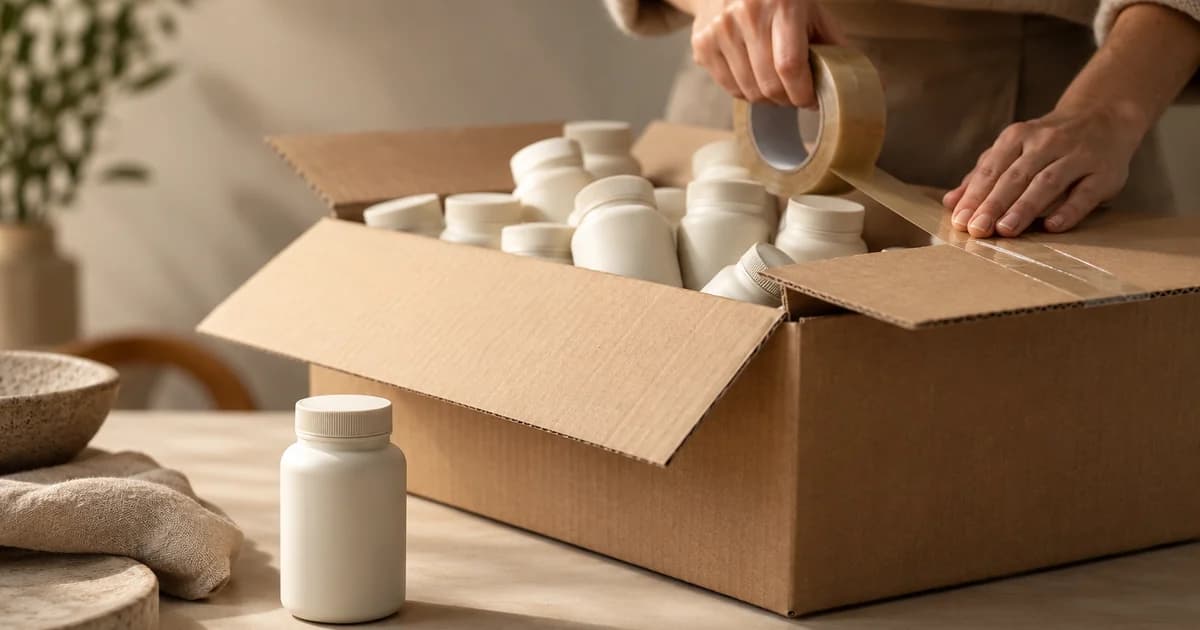
From Sample to Mass Production: A Buyer's Guide
Moving from a sample to mass production involves clear steps: sample approval, deposit, raw material sourcing, production scheduling, quality checks, and shipping. Each stage has defined timelines and costs. This guide covers the process for dietary supplements.
Overview
This article is part of our /resources/manufacturing library. It explains how a supplement project moves from a bench sample to full-scale production. You will see typical lead times, MOQs, and checkpoints. The goal is to help brand owners and procurement managers plan accurately and avoid delays. Figures reflect a GMP-certified facility in Guangdong, China, serving US, EU, UK, and Middle East markets.
- MOQ (retail bottling)
- 1,000 units per SKU
- MOQ (pilot run)
- 1,000 units per SKU
- Sample lead time
- 7–10 working days
- Mass production lead time
- 20–35 working days
- Certifications
- GMP, ISO 9001, ISO 22000, HACCP, NSF/ANSI 455-2, halal, FDA-registered
- Line capacity
- Up to 50,000 bottles per day (solid dosage)
Capability: What the Plant Can Do
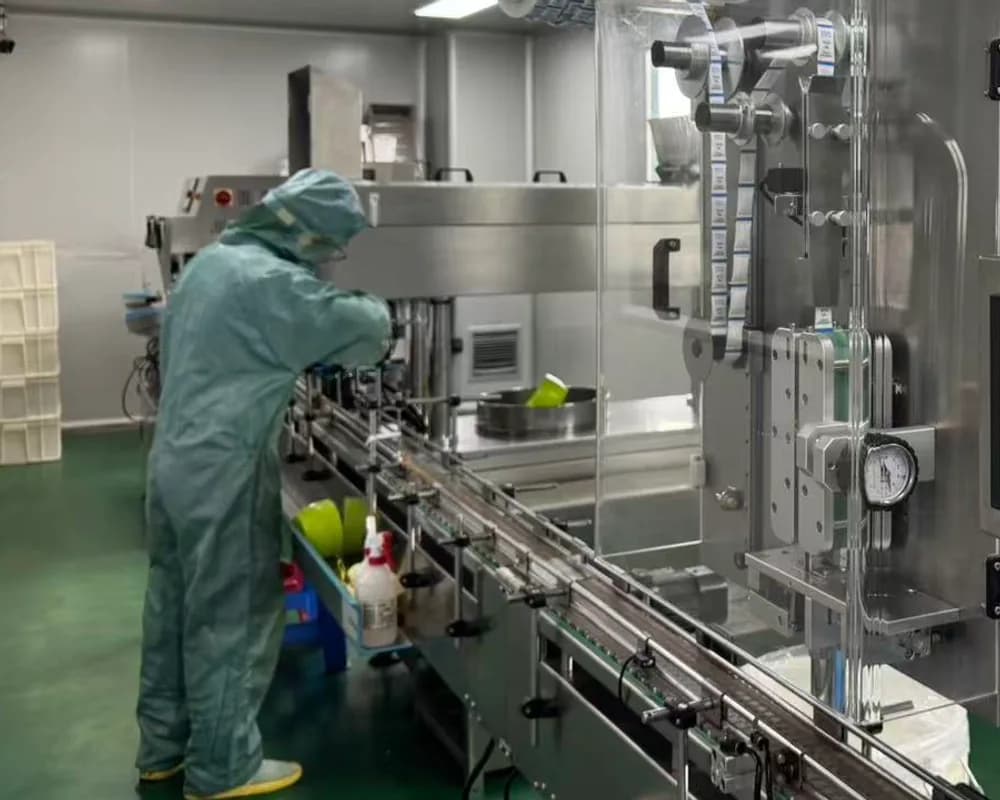
A GMP-certified plant in Guangdong runs separate lines for capsules, tablets, softgels, and powders. Capsule filling handles sizes 0 to 000, with fill weights from 200 mg to 1,200 mg. Tablet presses run up to 500,000 tablets per shift. Softgel lines produce 800 to 1,500 mg fills. Powder blending covers 5 kg to 500 kg batches. These ranges matter when you scale from a 1 kg sample to a 500 kg production run.
Capacity is not the only constraint. Changeover between SKUs takes 4 to 8 hours for cleaning and line setup. If your order is under 10,000 units, the plant may group it with similar products to reduce downtime. This is why pilot runs of 1,000–2,000 units are possible but cost per unit is higher. For orders above 50,000 units, production is scheduled in dedicated blocks, often 3 to 5 days per SKU.
Formulation and Ingredient Details
Your sample starts with a formula. The plant's R&D team checks ingredient compatibility, dosage, and stability. For example, a probiotic blend needs a moisture barrier and may require a desiccant. A high-dose vitamin C tablet needs a binder to prevent capping. These details are settled in the sample stage. If you change an ingredient after sample approval, a new sample and stability test may be required, adding 7–10 working days.
Raw materials are sourced from approved suppliers. For organic or claims, certificates must be on file. Halal certifications require dedicated storage and cleaning. Lead times for specialty ingredients vary: standard vitamins ship in 5–7 days, botanicals in 10–15 days, and probiotics in 15–20 days. The plant holds safety stock for common excipients, but unique actives are ordered per project. Plan for 2–3 weeks of ingredient procurement before production starts.
Quality and Compliance Checkpoints
Every batch goes through incoming material testing, in-process checks, and finished product testing. Incoming materials are tested for identity, potency, and microbial safety. In-process checks include weight variation, hardness, and disintegration. Finished products are tested for label claim, heavy metals, and pathogens. Certificates of analysis (CoA) are issued per batch. For US and EU markets, the plant follows cGMP and ISO 22000. HACCP plans cover each product type.
Documentation for customs and regulatory filing is prepared before shipping. This includes CoA, MSDS, and certificates of origin. For halal or separate certificates are issued. Organic products require transaction certificates. The plant does not claim FDA approval; it is an FDA-registered facility. For UK and EU, the plant provides documentation to support your own compliance. Plan for 3–5 working days for document preparation after production ends.
Quality control and batch documentation: what gets tested and when
Every batch starts with incoming raw material checks. Each lot of active ingredient is sampled and tested for identity by FTIR or HPLC, assay potency against the supplier specification, microbial limits (total plate count, yeast and mould, E. coli, Salmonella), heavy metals (lead, arsenic, cadmium, mercury by ICP-MS) and, where relevant, pesticide residues. Raw materials are quarantined until these results are released, typically within 5 to 7 working days. Suppliers must provide a certificate of analysis, and the plant retains a reserve sample of every incoming lot for at least two years.
During production, in-process checks cover weight variation, hardness and thickness for tablets, fill weight for capsules, and homogeneity for powders. After compression or encapsulation, disintegration testing is run to the relevant pharmacopoeial method, with tablets required to disintegrate within 15 minutes and capsules within 30 minutes unless the formula specifies otherwise. Finished-product testing then confirms potency, microbials and heavy metals again, and for liquids or gummies includes pH, brix and preservative efficacy where applicable. A batch is only released when all results meet the agreed specification.
The certificate of analysis issued with each shipment lists the product name, batch number, manufacture and expiry dates, the tests performed, the specification limits, the results and the method used. It is signed by the QC manager and references the retained sample. Retention samples are stored at the labelled conditions for the shelf life plus 12 months, so a 24-month product keeps a reserve for 36 months. Stability protocols follow ICH Q1A principles: accelerated conditions at 40°C and 75% relative humidity for six months, plus real-time data at 25°C and 60% relative humidity to support the expiry date claimed on the label.
Deviation handling is documented. If an out-of-specification result occurs, the batch is placed on hold, an investigation is opened, and root cause is recorded before any re-test or re-work decision. The plant does not release a batch on re-test alone without a documented justification. Buyers receive the batch record summary and the COA, and can request the deviation report if one exists. This documentation trail is what supports a defensible product in a retail audit or a regulatory inspection.
Packaging, Labelling and Retail Readiness
Primary packaging options include HDPE bottles from 60cc to 500cc, glass bottles, blister packs in PVC/PVDC or alu-alu, stick packs, sachets and single-serve pouches. Bottles can be supplied with induction seals, desiccant canisters or silica gel sachets, and child-resistant closures where the market requires them. Blister tooling is quoted separately and typically takes 10 to 15 working days to manufacture. Cartons are printed to the artwork supplied by the brand owner, and the plant checks dieline dimensions and barcode scannability before the run.
For the US market, the label must carry the statement of identity, net quantity of contents, the Supplement Facts panel with serving size and percent daily value, the ingredient list in descending order of weight, and the name and place of business of the manufacturer or distributor. Allergen declarations follow FALCPA. For the EU and UK, the Nutrition and Health Claims Regulation and the Food Information to Consumers Regulation apply, including the mandatory nutrition declaration and allergen highlighting. The plant prints lot number and best-before date by inkjet or laser at the filling line, and verifies legibility at the start and end of each shift.
Carton specifications are agreed before production. A typical shipper is a double-wall corrugated carton with a minimum burst strength of 1,200 kPa, holding 12 to 24 retail units, with the lot code and quantity printed on the outside. Pallets are 1,200 by 1,000 mm or 1,200 by 800 mm depending on destination, stretch-wrapped and strapped, with a maximum height of 1,800 mm including the pallet. For Amazon FBA, the plant can apply FNSKU labels, poly-bag units where required, and print the box content labels, provided the brand owner supplies the label files and confirms the FBA shipment plan.
Retail readiness also covers artwork proofing. The plant runs a pre-press check against the approved PDF, confirms colour separation, and produces a physical proof for sign-off before printing. Any change to the label after approval restarts the proofing cycle and can add 3 to 5 working days. Brand owners should confirm the final label text with their regulatory consultant before approving, because the plant prints what is approved and does not provide legal review of claims.
MOQ, lead times and delivery: planning sample to mass production
Sample lead time is 7 to 10 working days from receipt of a signed sample request, the formula and the raw materials in stock. If a novel ingredient must be sourced, add 10 to 15 working days. Samples are shipped by courier, and the buyer covers freight. Sample approval is documented in writing, and any change to the formula after approval is treated as a new project, requiring a new sample and a new approval cycle. This protects both parties from disputes at the mass production stage.
Mass production runs 20 to 35 working days after sample approval and receipt of the purchase order and deposit. The window covers raw material release, blending, filling, packaging, QC testing and release. Larger orders above 50,000 units per SKU may extend the schedule by 5 to 10 working days depending on line capacity. The plant confirms a production slot in writing and provides a weekly progress update. Buyers should build a 10-day buffer into retail launch plans to absorb customs or documentation delays.
Shipping is arranged by air or sea. Air freight from Shenzhen or Hong Kong to the US or EU typically takes 5 to 8 days door to door, while sea freight takes 25 to 40 days depending on port and routing. Incoterms offered are EXW, FOB Shenzhen or Hong Kong, and DDP for selected destinations where the plant's freight forwarder can clear customs. The buyer should confirm the Incoterm in the quotation, because it determines who pays freight, insurance and import duties.
Documents provided with each shipment include the commercial invoice, packing list, certificate of analysis, material safety data sheet where applicable, and a free-sale certificate. For plant-based ingredients, a phytosanitary certificate can be arranged on request. Certificates of origin are available for markets that require them. The plant sends scanned copies before dispatch so the buyer can pre-clear the shipment, and originals travel with the documents or by courier as agreed.
Formats and Packaging Options
Bench sample
Small batch made by hand, 50–100 units. Used for initial concept check. Lead time 7–10 working days. Cost credited against mass production.
Pilot run
1,000 units on production line. Validates scalability and packaging. Lead time 15–20 working days. Higher unit cost but lower risk.
Stability sample
Samples placed in accelerated and real-time stability chambers. Tests 1, 3, 6, 12, 24 months. Required for shelf-life claims. Adds 4–8 weeks.
Gold standard sample
Final pre-production sample using production equipment and packaging. Approved sample becomes reference for mass production. Lead time 10–15 working days.
How a Project Runs
- 01
Request a sample
Provide formula, dosage form, and target specifications. The plant returns a quote and sample timeline within 2 working days. Sample fee is typically $200–$500, credited later.
- 02
Approve the sample
Review sample for appearance, taste, and label claim. Request adjustments if needed. Each revision adds 5–7 working days. Final approval triggers a proforma invoice.
- 03
Place deposit
A 30–50% deposit confirms the order and reserves production capacity. Balance is due before shipping. Payment terms are negotiable for repeat orders.
- 04
Procure materials
Raw materials and packaging components are ordered. Lead times vary: 5–20 days for ingredients, 10–15 days for bottles and labels. Delays here push back production.
- 05
Run production
Production starts after all materials pass QC. Mass production takes 20–35 working days for 1,000–50,000 units. You receive daily or weekly progress updates.
- 06
QC and ship
Finished goods are tested and released. Documents are prepared. Shipping takes 7–14 days by air, 25–40 days by sea, depending on destination and customs.
Why EUPHM
Predictable timelines
Defined stages with known lead times let you plan launches and avoid stockouts. Sample in 7–10 days, production in 20–35 days.
Lower risk
Pilot runs and stability samples catch issues before mass production. You approve the exact product before committing to 5,000 units.
Clear costs
Sample fees are credited. MOQ is 1,000 units. No hidden charges for standard testing or documentation.
Questions buyers ask.
How long does it take to get a sample?+
Sample lead time is 7–10 working days after formula and specification approval. This includes sourcing materials, small-batch production, and QC. If a custom ingredient is needed, add 5–15 days for procurement. Shipping the sample to you takes 3–7 days by courier.
What is the MOQ for mass production?+
MOQ is 1,000 units per SKU for retail bottling. Pilot runs can be 1,000 units, but unit cost is 20–30% higher. For orders above 50,000 units, the plant can schedule dedicated production blocks and reduce lead time.
Can I change the formula after sample approval?+
Yes, but changes may require a new sample and stability test. Minor changes like flavour or colour add 5–7 working days. Major changes like active ingredient dosage add 10–15 days. Always confirm the final formula before placing a deposit.
What certifications does the plant hold?+
The facility is GMP-certified and holds ISO 22000 and HACCP. halal and vegan certifications are available for specific products. Certificates are issued per batch. The plant is FDA-registered, not FDA-approved.
How do you handle shipping and documentation?+
The plant prepares CoA, MSDS, certificate of origin, and any required health certificates. Shipping is by air (7–14 days) or sea (25–40 days). Incoterms are FOB, CIF, or DDP. For EU and UK, the plant provides documentation to support your own regulatory filing.
Can you provide a stability study for my specific formula before I commit to mass production?+
Yes. A six-month accelerated stability study at 40°C and 75% relative humidity can be run on your approved sample, typically starting after sample sign-off. It takes six months to complete, and interim results at one and three months are shared. Real-time data at 25°C and 60% relative humidity continues for the shelf life claimed. The study is quoted separately and is recommended for new formulas or new packaging formats.
What happens if a batch fails a QC test after mass production has started?+
The batch is placed on hold and an investigation is opened. Root cause is documented, and a decision is made on re-test, re-work or rejection. The plant does not release a failed batch without a documented justification. The buyer is informed in writing, and the deviation report is available on request. Timeline impact depends on the cause; a re-test typically adds 3 to 5 working days, while re-work can add 10 to 15 working days.
Can you handle Amazon FBA labelling and retail-ready packaging?+
Yes, provided the brand owner supplies the FNSKU label files and the FBA shipment plan. The plant can apply FNSKU labels, poly-bag units where required, and print box content labels. Retail-ready cartons and pallet configurations are agreed before production. The plant does not manage the Amazon seller account or the shipment creation; that remains with the brand owner or their logistics provider.
Xu Wei writes the manufacturing, quality and regulatory guides on EUPHM. He works directly with the plant's production and QA teams to document how each dosage form is made, tested and released, so every claim on the site can be traced back to a batch record or a certificate on file.
More guides in this category.
See all →
How to Choose a Supplement Manufacturer: A 2026 Buyer's Guide
A practical checklist for vetting supplement manufacturers in 2026: certificate scope, dosage-form fit, true landed cost, sample validation, batch records and the red flags to walk away from.
Read the guide →
How to Audit a Supplement Factory Remotely
You do not need a plane ticket to disqualify a bad factory. You need a document pack, a 45-minute live walkthrough with a fixed shot list, one complete batch record, and the discipline to check certificate numbers against the issuing body's own registry.
Read the guide →
How to Get GMP Certified for Dietary Supplements
GMP certification is not a single certificate. It is an audit trail covering facility, documentation, testing and batch release. Here is the sequence brand owners follow when building that trail from scratch.
Read the guide →Have a product in mind?
Send us the brief and we will come back with a formulation direction, indicative price and a realistic lead time — usually within one working day.