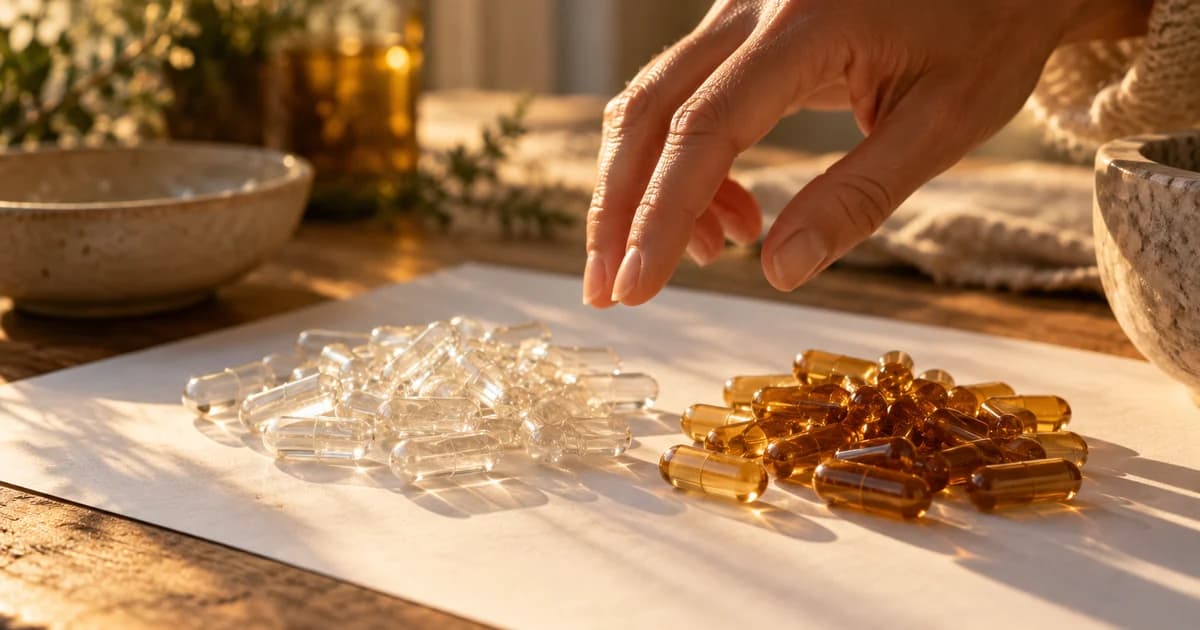
Vegan vs Gelatin Capsules: A Sourcing Guide for Brands
Vegan capsules use HPMC or pullulan; gelatin capsules use bovine or porcine collagen. The choice affects MOQ, lead time, halal certification, shelf life and fill weight tolerance. This guide covers what buyers need before committing to a format.
Overview
Capsule shell material is one of the first decisions in supplement manufacturing. It determines which certifications your product can carry, how the capsule performs in different climates, and what minimum order quantities apply. Gelatin remains the lower-cost option for two-piece hard capsules, while HPMC and pullulan dominate vegan and vegetarian SKUs. This overview compares both formats across sourcing, formulation and compliance so you can align the shell with your target market and retail channel.
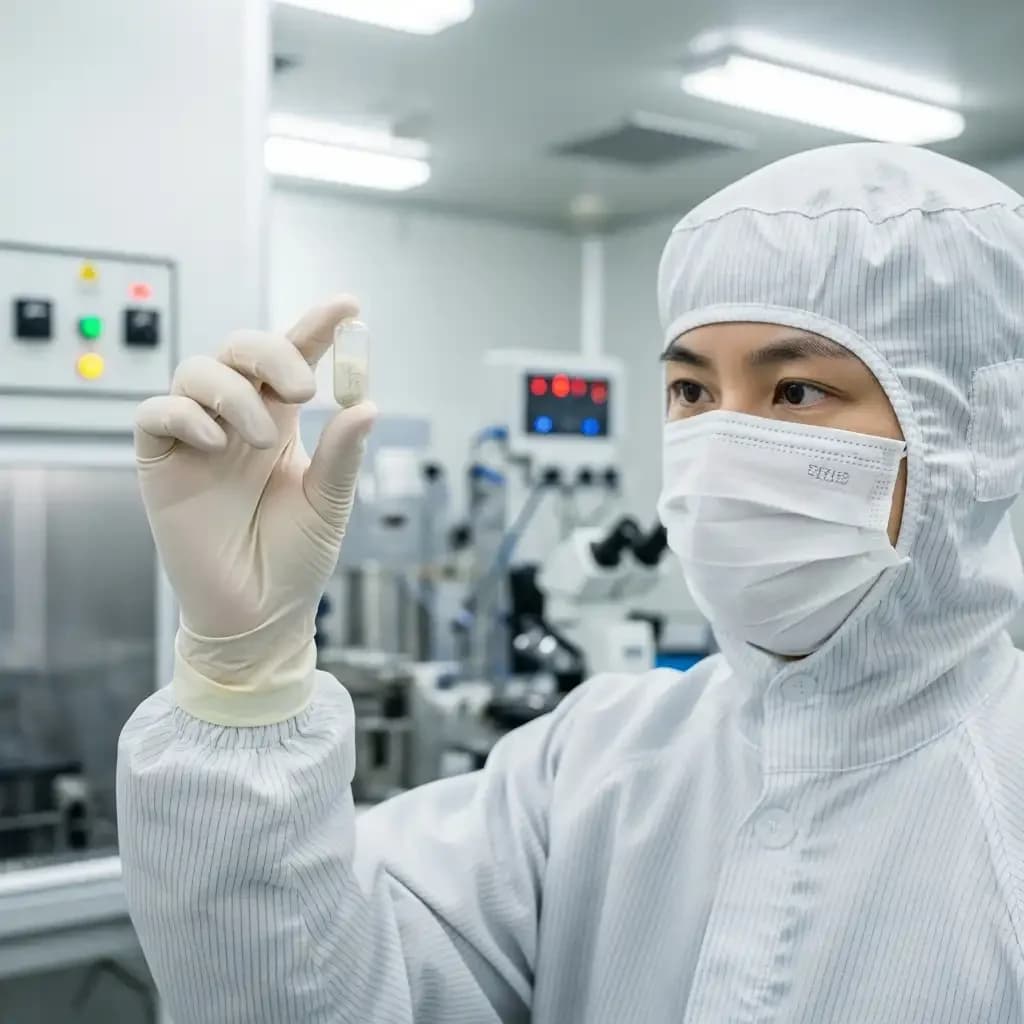
Capsule Manufacturing Capability
EUPHM runs two-piece hard capsule filling on automated lines with a capacity of 1.2 million capsules per shift. We handle gelatin, HPMC and pullulan shells in sizes 000 to 4, with fill weights from 150 mg to 1,200 mg depending on powder density. Changeover between shell materials follows a documented cleaning protocol to prevent cross-contact. For pilot runs, we can supply as few as 1,000 units so you can test market response before scaling to a 1,000 unit retail MOQ. Tooling is compatible with both capsule types, which keeps switching costs low.
Lead times are consistent across materials: 7–10 working days for samples, then 20–35 working days for mass production after artwork and deposit confirmation. If you are comparing formats, request samples of each shell with your own formula. We will return filled capsules so you can assess mouthfeel, disintegration and appearance. For brands moving from gelatin to vegan, we can run a side-by-side stability check at 40°C/75% RH for 4 weeks to flag any moisture-related issues before you commit to a full batch.
Formulation and Ingredient Considerations
Gelatin capsules are made from bovine or porcine collagen. They have a long history in nutraceuticals, offer good oxygen barrier properties and cost less per unit than vegan alternatives. However, they are not suitable for vegetarian, vegan, halal claims unless the gelatin source is certified. They also absorb moisture in humid conditions, which can soften the shell. HPMC (hydroxypropyl methylcellulose) capsules are plant-derived, stable at a wider humidity range and carry no animal content. Pullulan capsules are tapioca-derived, have lower oxygen permeability than HPMC and suit probiotic or oxygen-sensitive formulas.
Your fill material drives the choice as much as your marketing claim. Hygroscopic powders, such as certain herbal extracts, perform better in HPMC or pullulan because the shell does not absorb ambient moisture as readily. Oil-based fills are typically not suited to two-piece hard capsules; they require softgels. For powders with a high moisture content, add a desiccant or choose a shell with a low moisture vapour transmission rate. We can run a compatibility trial at 25°C/60% RH and 40°C/75% RH for 3 months to compare shell performance with your specific blend.
Quality, Compliance and Logistics
Gelatin capsules require documentation for animal-derived content. If you target the Middle East or Southeast Asia, halal certification is often mandatory certification is required for Jewish markets. HPMC and pullulan capsules are inherently free from animal derivatives, so they simplify halal audits. They also support vegan and vegetarian labelling. EUPHM holds GMP, ISO 22000 and HACCP certifications, and can source halal and vegan certified shells from approved suppliers. Every incoming lot is tested for identity, microbial limits and heavy metals before release to production.
Logistics planning differs by shell type. Gelatin capsules are more sensitive to temperature and humidity during shipping; we recommend climate-controlled containers for long-haul routes to the US, EU and Middle East. HPMC and pullulan are more forgiving but still require stable conditions. We pack capsules in food-grade, moisture-barrier liners inside fibre drums. Standard export documentation includes certificate of analysis, certificate of origin and, where applicable, halal certificates. For retail bottling, we can fill, cap, label and shrink-wrap on the same line, reducing handling and lead time.
Quality Control and Batch Documentation
Every capsule batch is tested against a written specification before release. Incoming shell material is checked for identity by FTIR and for moisture content, which affects brittleness and shelf life. Finished capsules are tested for disintegration time in purified water at 37°C: gelatin shells typically disintegrate within 5 to 10 minutes, while HPMC and pullulan shells generally fall within 10 to 20 minutes depending on grade and fill weight. Microbial limits follow ISO 22000 and HACCP plans, with total aerobic count, yeast and mould, E. coli and Salmonella screened on each lot.
Heavy metals testing covers lead, cadmium, arsenic and mercury by ICP-MS, with results reported against the specification agreed at the quotation stage. For vegan capsules, no animal-derived processing aids are permitted, so lubricants and release agents are documented as plant or synthetic origin. Potency testing applies to the fill, not the shell, but capsule fill weight uniformity is checked across the run to confirm dose consistency. Retention samples of each batch are held for at least two years, or one year beyond the labelled shelf life, whichever is longer.
A certificate of analysis (COA) is issued per batch and includes the product name, batch number, manufacturing date, expiry date, tests performed, specification limits, results and the signature of the QC manager. Where a customer needs a specific format for retail or marketplace compliance, the COA can be issued on the buyer's template. Stability protocols follow ICH climatic zone II conditions at 25°C and 60% relative humidity, with accelerated data at 40°C and 75% relative humidity for three and six months. Real-time data is generated on request for products with a 24-month shelf life claim.
Packaging, Labelling and Retail Readiness
Capsules can be packed in HDPE bottles with induction seals and child-resistant or standard caps, in blister packs, or in stick packs and sachets for single-serve formats. Bottle sizes commonly run from 30 to 180 capsules, with 60, 90 and 120 count the most requested for Amazon and health retail. Labels must carry the FDA dietary supplement panel elements: statement of identity, net quantity, supplement facts with serving size and percent daily value, other ingredients, and the mandatory disclaimer. The principal display panel must also carry the lot code and best-by date, printed or laser-coded at filling.
Lot and expiry coding follows a format agreed with the buyer, typically a Julian date plus line identifier. Cartons are specified by dimensions, board grade and print method, with case counts matched to the pallet configuration. A standard pallet is 1,200 by 1,000 mm, and carton stacking is planned so that the pallet height stays within 1.6 to 1.8 m for container loading. Shrink wrap and corner boards are used for sea freight, while air shipments may use lighter cartons to reduce chargeable weight.
For Amazon FNSKU and retail compliance, the factory can apply FNSKU labels, poly-bag the bottle, and print the carton mark with the required barcode and handling information. Where the buyer supplies artwork, a pre-press proof is issued for sign-off before printing. Labels are checked against the approved artwork at the start of each filling run, and a first-article inspection is retained with the batch record. The buyer remains responsible for the accuracy of claims and certifications printed on the label; the factory verifies that the wording matches the agreed specification.
MOQ, Lead Times and Delivery
Sampling starts with a 7 to 10 working day turnaround once the formula and shell choice are confirmed. Samples are supplied with a draft COA and a specification sheet so the buyer can review disintegration, fill weight and appearance before committing to a production order. Pilot runs start from 1,000 units, and retail bottling MOQ is 1,000 units per SKU. Mass production runs 20 to 35 working days from artwork and deposit confirmation, depending on capsule size, fill complexity and packaging format.
Shipping is arranged by air or sea. Air freight suits pilot and launch quantities and typically moves in 5 to 10 days door to door, while sea freight is used for pallet quantities and takes 25 to 40 days depending on destination port. Incoterms offered are EXW, FOB and DDP; FOB is the most common for first orders because it keeps freight control with the buyer, while DDP is used where the buyer wants a landed-cost figure and door delivery. Carton dimensions and gross weight are confirmed before booking.
Documents provided with each shipment include the commercial invoice, packing list, COA per batch, MSDS where the fill requires it, and a free-sale certificate for markets that request one. Phytosanitary certificates apply only where plant-derived ingredients or packaging require them under destination rules. The factory confirms document requirements at order stage so that missing paperwork does not delay customs clearance. Buyers should confirm labelling and import requirements for their destination before production begins.
Manufacturing Options to Compare
Gelatin (bovine/porcine)
Lowest cost per unit. Good oxygen barrier. Not suitable for vegan, halal claims unless certified. Moisture-sensitive in humid conditions.
HPMC (plant cellulose)
Vegan-friendly. Stable across a wide humidity range. Suitable for most powder blends. Widely accepted in EU and US markets.
Pullulan (tapioca)
Vegan. Lower oxygen permeability than HPMC. Ideal for probiotic and oxygen-sensitive formulas. Higher cost per unit.
Certified organic shells
Available in HPMC or gelatin. Requires organic certification for the shell and the fill. Traceable supply chain documentation provided.
How a Project Runs
- 01
Define market claims
Confirm whether you need vegan, vegetarian, halal certification. This determines which shell materials are eligible.
- 02
Request samples
Ask for empty capsules and filled samples in your target size. Evaluate appearance, mouthfeel and disintegration.
- 03
Run compatibility trial
Test your formula in both shell types under accelerated conditions. Check for moisture migration, brittleness or delayed disintegration.
- 04
Confirm MOQ and pricing
Retail bottling MOQ is 1,000 units per SKU. Pilot runs start at 1,000 units. Pricing depends on shell type and fill weight.
- 05
Approve artwork and deposit
Submit final label artwork for regulatory review. Production slot is booked after deposit and artwork sign-off.
- 06
Production and dispatch
Mass production takes 20–35 working days. We provide certificate of analysis, certificate of origin and certification documents.
Why EUPHM
Dual-format capability
One facility for gelatin, HPMC and pullulan. No need to split production across two suppliers when you expand your range.
Certification support
GMP, ISO 9001, ISO 22000, HACCP, NSF/ANSI 455-2 and halal certification; FDA facility registration for US-bound shipments.
Flexible moqs
Pilot runs from 1,000 units. Retail bottling from 1,000 units per SKU. Scale as your brand grows.
Questions buyers ask.
Are vegan capsules more expensive than gelatin capsules?+
Yes, typically 15–30% more per unit for HPMC and 30–50% more for pullulan, depending on order volume. The gap narrows at higher quantities. Certification costs for halal gelatin can offset some of the difference, so compare total landed cost rather than shell price alone.
Can I switch from gelatin to vegan capsules without reformulating?+
In most cases, yes. HPMC and pullulan capsules are compatible with the same powder blends used in gelatin. However, you should run a stability trial because moisture behaviour differs. We test both shell types at 25°C/60% RH and 40°C/75% RH for 3 months before recommending a switch.
What is the MOQ for vegan capsules?+
For retail bottling, the MOQ is 1,000 units per SKU. For pilot runs, we can produce from 1,000 units. The MOQ applies to the finished, labelled bottle, not the empty capsule order. Larger runs reduce per-unit cost.
Do vegan capsules meet halal requirements?+
HPMC and pullulan capsules contain no animal derivatives, so they are inherently suitable for halal markets. Certification depends on the full supply chain, including the fill ingredients. We source shells from suppliers that hold valid halal certificates and provide the documentation with each batch.
How long do vegan capsules take to produce?+
Sample lead time is 7–10 working days. Mass production runs 20–35 working days after artwork approval and deposit. This timeline applies to both vegan and gelatin capsules. Bottling, labelling and shrink-wrapping add 3–5 working days if done on the same line.
What is the difference between HPMC and pullulan capsules?+
Both are plant-derived, but they behave differently. HPMC is the more common vegan shell, with good mechanical strength and a wide supply base. Pullulan has lower oxygen permeability, which can suit oxygen-sensitive fills, but it is typically more expensive and has fewer suppliers. The choice depends on fill sensitivity, target shelf life and cost target; both can be run on standard filling equipment with minor setting changes.
Can you supply capsules with a custom colour or print?+
Yes. Capsule shells can be supplied in opaque, translucent or two-tone colours, and printing is available for brand identification or dosage differentiation. Custom colour and print carry a minimum quantity per shell size, usually in the range of 100,000 to 300,000 capsules, because shell suppliers set up dedicated runs. For smaller orders, standard colours are used and branding is carried on the bottle label and carton instead.
How do you handle capsule stability when shipping to hot or humid markets?+
Shell grade and packaging are selected for the destination climate. HPMC is generally more tolerant of heat and humidity than gelatin, which can soften or stick at high humidity. For hot markets, we recommend HPMC or pullulan, induction-sealed HDPE bottles with desiccant where appropriate, and stability data generated at 30°C and 65% relative humidity to support the shelf-life claim in those conditions.
Xu Wei writes the manufacturing, quality and regulatory guides on EUPHM. He works directly with the plant's production and QA teams to document how each dosage form is made, tested and released, so every claim on the site can be traced back to a batch record or a certificate on file.
More guides in this category.
See all →
How to Choose a Supplement Manufacturer: A 2026 Buyer's Guide
A practical checklist for vetting supplement manufacturers in 2026: certificate scope, dosage-form fit, true landed cost, sample validation, batch records and the red flags to walk away from.
Read the guide →
How to Audit a Supplement Factory Remotely
You do not need a plane ticket to disqualify a bad factory. You need a document pack, a 45-minute live walkthrough with a fixed shot list, one complete batch record, and the discipline to check certificate numbers against the issuing body's own registry.
Read the guide →
From Sample to Mass Production: A Buyer's Guide
Moving from a sample to mass production involves clear steps: sample approval, deposit, raw material sourcing, production scheduling, quality checks, and shipping. Each stage has defined timelines and costs. This guide covers the process for dietary supplements.
Read the guide →Have a product in mind?
Send us the brief and we will come back with a formulation direction, indicative price and a realistic lead time — usually within one working day.