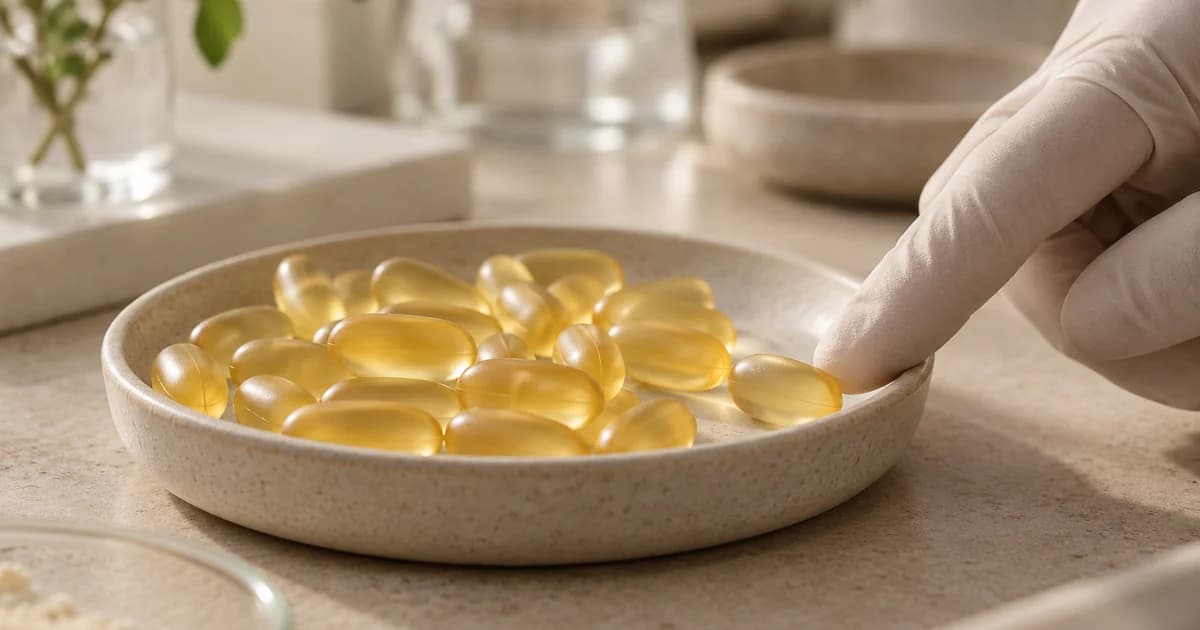
Enteric-Coated Softgels Explained for Brand Owners
Enteric-coated softgels delay release until the intestine, protecting acid-sensitive actives and reducing gastric irritation. This guide covers polymer options, fill weights, and manufacturing parameters for brands sourcing a contract partner.
Overview
Enteric coating is a functional barrier applied to a softgel shell. It resists dissolution in gastric acid (pH 1–3) and breaks down in the small intestine (pH 5.5–7). Brands use it for probiotics, enzymes, omega-3, and peptide actives that degrade in the stomach. This article explains the coating chemistries, capsule specifications, and production tolerances you should confirm before committing to a formula. For broader softgel context, see our /resources/softgels library.
| MOQ | 1,000 units per SKU for retail bottling; pilot runs from 500 units |
|---|---|
| Fill weights | 150 mg to 1,500 mg per softgel, depending on active density |
| Softgel sizes | 5 oval to 24 oblong; custom tooling available at 10,000+ units |
| Sample lead time | 7–10 working days for coated prototype samples |
| Mass production | 20–35 working days after sample approval and deposit |
| Certifications | GMP, ISO 9001, ISO 22000, HACCP, NSF/ANSI 455-2, halal, FDA-registered |
Coating Capability and Line Parameters
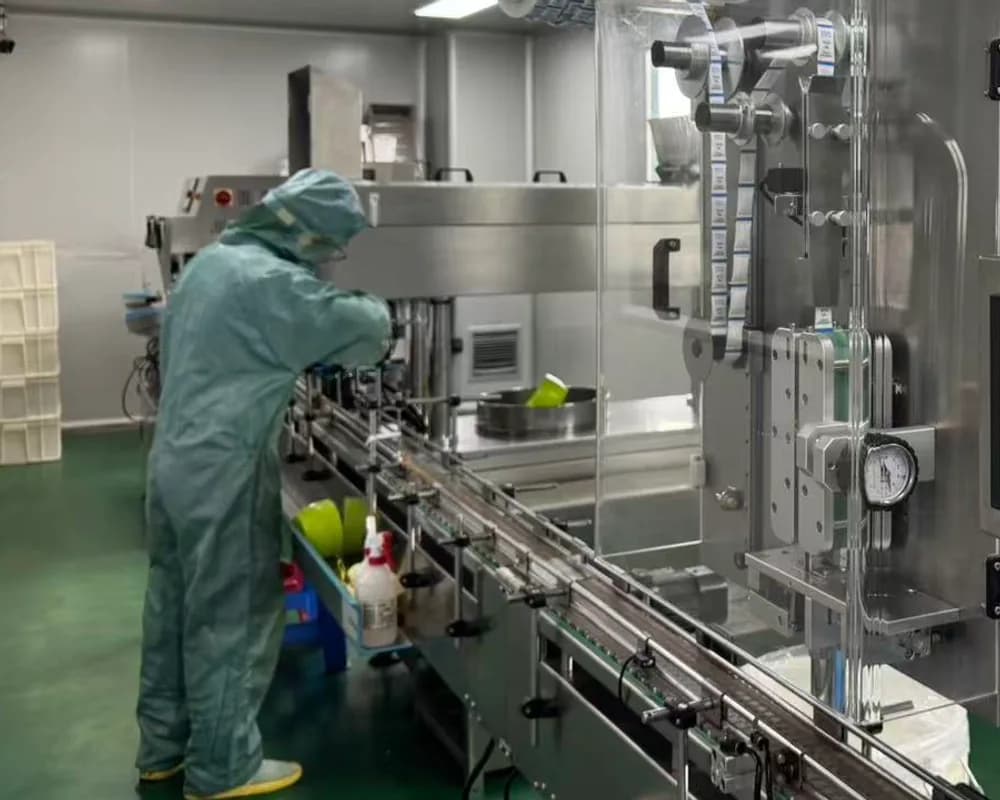
EUPHM operates a dedicated softgel line with in-line enteric coating. The coater handles batch sizes from 50,000 to 400,000 softgels. Coating thickness is controlled between 30 and 80 microns, which determines the lag time before release. We validate gastric resistance using USP <711> dissolution testing at pH 1.2 for 2 hours, followed by pH 6.8 buffer. Typical acid resistance exceeds 90% of active remaining intact after the acid stage.
Line capacity runs at 1.2 million softgels per day for standard fills. Enteric coating adds 4 to 6 hours per batch, which is reflected in the 20–35 working day production window. We run pilot batches as low as 500 units for stability and dissolution testing before you commit to a full run. Tooling for custom shapes is available when volumes exceed 10,000 units.
Polymer Choice and Formulation Detail
Three enteric polymers are common: cellulose acetate phthalate (CAP), polyvinyl acetate phthalate (PVAP), and methacrylic acid copolymers (Eudragit L100 or S100). CAP dissolves above pH 6.0 and suits general use. PVAP offers better moisture resistance for hygroscopic fills. Methacrylic copolymers give the tightest release profile and are preferred for probiotics and enzymes where you need delivery past pH 5.5.
The fill matrix matters as much as the coating. Oil-based fills are straightforward. Suspension fills with probiotics require low-temperature processing to protect viability. We test each formulation for 3 months accelerated stability at 40°C/75% RH and 6 months at 25°C/60% RH. Enteric coatings can add 10–15% to unit cost over a standard softgel, depending on polymer and batch size.
Quality, Compliance and Documentation
Every enteric-coated batch ships with a certificate of analysis covering appearance, fill weight, disintegration, and dissolution. We hold GMP, ISO 22000, and HACCP certifications. Halal, and vegan certifications are available when the formulation and coating polymer meet the relevant standards. Note that standard CAP is not vegan; vegan brands should specify a plant-derived polymer such as PVAP or a cellulose-based alternative.
We are an FDA-registered facility, which allows us to manufacture for the US market. Documentation for EU and Middle East buyers includes heavy metals testing, microbial limits, and allergen statements. Lead times for coated softgels are 20–35 working days for mass production, with 7–10 working days for samples. We recommend budgeting 2–3 weeks for label review and artwork approval alongside production.
Quality Control and Batch Documentation
Every enteric-coated softgel batch is tested at three stages: incoming raw materials, in-process coated shells, and finished goods. Identity and potency testing by HPLC or GC confirms active content within 90–110% of label claim. Microbial testing covers total aerobic count, yeast and mould, E. coli and Salmonella. Heavy metals (lead, cadmium, arsenic, mercury) are screened by ICP-MS against USP <232> limits. Disintegration testing follows USP <701> for enteric-coated articles: no breakdown in simulated gastric fluid for 2 hours, then complete disintegration in simulated intestinal fluid within 60 minutes.
A certificate of analysis (COA) is issued per batch and includes lot number, manufacture and expiry dates, specification limits, test methods, results and a pass/fail statement. Additional data such as coating weight gain (typically 3–8% of shell weight) and seam integrity are recorded. Retention samples of each batch are held for the full shelf life plus 12 months at controlled conditions. Stability protocols follow ICH Q1A(R2): 25°C/60% RH long-term, 30°C/65% RH intermediate, and 40°C/75% RH accelerated for 6 months, with disintegration and potency checked at 0, 3 and 6 months.
Documentation packages are available in English and can be tailored for EU or US audits. Batch records, equipment logs and deviation reports are retained for at least five years. If you require third-party testing at an external laboratory, we can arrange it at cost and include the report in the batch file. For enteric softgels, the coating polymer supplier's certificate of origin and food-grade declaration are also kept on file.
Packaging, Labelling and Retail Readiness
Enteric-coated softgels are hygroscopic and sensitive to moisture and heat, so packaging must provide a good moisture barrier. Common options include HDPE bottles with induction seals and desiccant sachets (30, 60, 90 or 120 count), blister packs with aluminium foil (PVC/PVDC or cold-form), stick packs for single-dose formats, and sachets for powder blends. Bottle sizes range from 50 mL to 500 mL. We can supply child-resistant closures and tamper-evident bands where required by market.
For US retail, labels must include the statement of identity, net quantity of contents, nutrition or supplement facts panel, ingredient list, allergen declarations, and the manufacturer or distributor address. Lot number and expiry date are inkjet-printed on the bottle and outer carton; we can also apply QR codes or DataMatrix codes for traceability. Amazon FNSKU labels, poly-bagged units and carton labelling to your specification are available. Cartons are typically 5-ply corrugated, with pallet configurations of 48–60 cartons per layer and up to 1,200 kg per pallet, stretch-wrapped and edge-protected.
We do not provide regulatory review of your label artwork, but we check that the lot and expiry fields are correctly placed and legible. For EU markets, the label must include the food business operator address and a best-before date. For halal certification, the certifying body's logo must be approved before printing. Retail-ready packaging, including shelf-ready trays and display cartons, can be quoted separately.
MOQ, Lead Times and Delivery
Sampling starts with a technical review of your formula and target dosage. Coated prototype samples are typically ready in 7–10 working days after receipt of actives and shell materials. If custom tooling is needed, add 10–15 working days for tooling fabrication and first-article approval. Sample costs are credited against the first mass-production order. Mass production runs 20–35 working days after sample approval and receipt of deposit, depending on coating complexity and packaging format.
Shipping options include air freight (5–10 days door-to-door) and sea freight (25–40 days port-to-port). We quote EXW, FOB Shenzhen or Hong Kong, and DDP for most destinations. For DDP, we handle export clearance, freight, import clearance and final delivery; duties and taxes are billed at cost. Air shipments are typically palletised and shrink-wrapped; sea shipments use fumigated or heat-treated pallets where required by the destination country.
Documents provided with each shipment include the commercial invoice, packing list, bill of lading or airway bill, certificate of analysis, material safety data sheet (MSDS) where applicable, and a free-sale certificate. For plant-based actives, a phytosanitary certificate can be arranged on request. We recommend confirming the import requirements of your destination country before production, as some markets require additional health certificates or prior registration.
What We Can Build
CAP (cellulose acetate phthalate)
Dissolves above pH 6.0. Cost-effective for general acid protection. Not suitable for vegan claims. Common for omega-3 and standard nutraceuticals.
PVAP (polyvinyl acetate phthalate)
Better moisture barrier than CAP. Works with hygroscopic fills. Can be formulated for vegan and halal claims depending on plasticiser.
Methacrylic acid copolymer
Tightest release control. Dissolves at pH 5.5–7.0. Preferred for probiotics, enzymes, and peptides needing intestinal delivery.
Double-layer or seal coating
Adds a sub-coat between fill and enteric layer. Reduces interaction risk. Adds 2–3 days to production and 8–12% to unit cost.
Production in Six Steps
- 01
Formulation review
Share active, dosage, and target release site. We confirm polymer compatibility and flag any stability risks within 3 working days.
- 02
Sample production
We produce coated prototype softgels at 500–1,000 units. Lead time is 7–10 working days including dissolution testing.
- 03
Dissolution and stability
Samples undergo USP <711> acid and buffer stages plus accelerated stability. Results guide any coating thickness adjustment.
- 04
Quotation and MOQ
We issue a firm quote with MOQ (1,000 units for retail), unit cost, and 20–35 day production window.
- 05
Mass production
After deposit and artwork approval, we schedule the batch. In-process checks run every 30 minutes on fill weight and coating uniformity.
- 06
QC release and shipping
Final batch testing, certificate of analysis, and export documentation. We ship FOB Guangdong or arrange air freight.
Why EUPHM
Protects acid-sensitive actives
Probiotics, enzymes, and peptides survive stomach acid. Typical acid resistance exceeds 90% in USP testing.
Reduces gastric irritation
Actives release in the intestine, not the stomach. Useful for high-dose NSAIDs, iron, and certain botanicals.
Enables targeted release claims
Supports structure/function claims around intestinal delivery. Requires dissolution data to substantiate.
Questions buyers ask.
What is the minimum order for enteric-coated softgels?+
Retail bottling runs start at 1,000 units per SKU. Pilot runs for stability and dissolution testing start at 500 units. Custom tooling requires 10,000 units or more. Coating adds 4–6 hours per batch, so smaller runs carry a higher per-unit cost.
How long does production take?+
Samples ship in 7–10 working days. Mass production runs 20–35 working days after sample approval and deposit. Enteric coating adds 4–6 hours per batch compared to standard softgels. Allow 2–3 weeks for label and artwork review alongside production.
Are enteric-coated softgels vegan?+
Not automatically. Standard CAP is not vegan. Vegan brands should specify PVAP or a cellulose-based polymer. Gelatin shells are animal-derived; vegan shells use modified starch or carrageenan. Confirm both shell and coating meet your certification requirements before sampling.
Do you provide dissolution testing data?+
Yes. Every enteric batch is tested using USP <711> at pH 1.2 for 2 hours, then pH 6.8 buffer. We report the percentage of active released in each stage. Certificates of analysis include disintegration, fill weight, and appearance. Custom release profiles can be developed for specific actives.
What certifications apply to enteric softgels?+
The facility holds GMP, ISO 22000, and HACCP. Halal, and vegan certifications are available when the fill and coating meet the standard. We are an FDA-registered facility for US market manufacturing. Documentation for EU and Middle East buyers includes heavy metals and microbial testing.
What is the shelf life of enteric-coated softgels and how is it validated?+
Shelf life is typically 24 months when stored below 25°C and 60% relative humidity in the original sealed container. We validate it through ICH Q1A(R2) stability studies: 6 months accelerated at 40°C/75% RH, 12 months intermediate at 30°C/65% RH, and ongoing long-term data at 25°C/60% RH. Disintegration, potency, microbial limits and appearance are tested at each interval.
Can you produce enteric-coated softgels with a custom colour or print on the shell?+
Yes. Shell colour can be matched to a Pantone reference using food-grade pigments, and opacifiers such as titanium dioxide are available. Printing on the shell is possible with edible inks for logos or dosage marks, subject to a minimum order of 10,000 units per SKU. Print approval requires a pre-production sample and adds 5–7 working days to the timeline.
How do you handle deviations or out-of-specification results during production?+
Any out-of-specification result triggers a documented investigation under our quality system. The batch is placed on hold, root cause is identified, and corrective actions are agreed with you before release. If rework is possible, we issue a deviation report and a revised COA. If the batch cannot be brought within specification, it is rejected and replaced at our cost, subject to the agreed quality agreement.
Xu Wei writes the manufacturing, quality and regulatory guides on EUPHM. He works directly with the plant's production and QA teams to document how each dosage form is made, tested and released, so every claim on the site can be traced back to a batch record or a certificate on file.
More guides in this category.
See all →
Omega-3 Softgels Buyer's Guide: Sourcing, Specs, and Compliance
This guide covers the commercial and technical details of sourcing omega-3 softgels: fill weights, EPA/DHA ratios, oxidation control, and lead times from a GMP-certified plant in Guangdong.
Read the guide →
How Softgels Are Made: A Sourcing Guide for Brands
Softgels are one-piece capsules formed, filled and sealed in a single rotary die process. This guide covers the gelatin shell, fill formulation, encapsulation tolerances, quality checks and the MOQs and lead times buyers should plan for.
Read the guide →Have a product in mind?
Send us the brief and we will come back with a formulation direction, indicative price and a realistic lead time — usually within one working day.