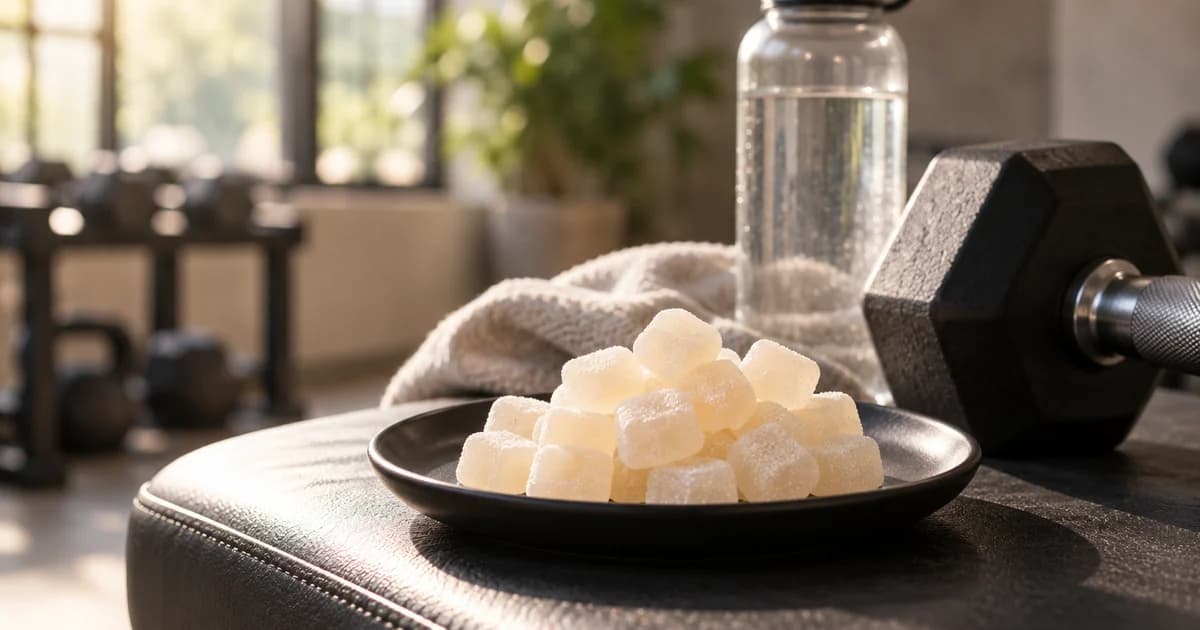
Creatine Gummies Guide for Brand Owners and Procurement Teams
Creatine gummies are a fast-growing format in sports nutrition. This guide covers formulation, stability, dosing, MOQs, lead times and certifications so you can brief a contract manufacturer with confidence.
Overview
Creatine monohydrate is the most studied sports ingredient, but turning it into a shelf-stable gummy is not straightforward. Heat, moisture and pH all affect degradation. This guide explains how a GMP-certified plant approaches pectin-based chews, what fill weights and doses are realistic, and how to plan a pilot run before committing to retail volumes.
- MOQ (retail bottling)
- 1,000 units per SKU
- MOQ (pilot run)
- 1,000 units
- Sample lead time
- 7–10 working days
- Mass production
- 20–35 working days
- Typical fill weight
- 3.5 g–4.5 g per gummy
- Certifications
- GMP, ISO 9001, ISO 22000, HACCP, NSF/ANSI 455-2, halal, FDA-registered
Gummy Manufacturing Capability
Creatine gummies require a pectin or gelatin base with controlled cooking temperatures. At EUPHM, starch mogul and depositing lines run at 85–95°C for the syrup, then cool in conditioned tunnels at 18–22°C and 35–45% relative humidity. This prevents syneresis and keeps texture consistent. Lines can produce 1.2–1.8 tonnes per shift, depending on gummy size and mould count.
For pilot runs, we recommend 1,000 units to validate flavour, texture and stability. Retail bottling starts at 1,000 units per SKU. Standard bottles are 60, 90 or 120 count, with desiccant sachets and induction seals. We can also run stick packs or pouches if your channel requires single-serve formats.
Formulation and Ingredient Detail
Creatine monohydrate is hygroscopic and degrades in the presence of moisture and heat. A typical gummy formula uses 1.5–2.5 g creatine per gummy, with pectin, citric acid, natural flavours and a sugar or sugar-free syrup base. Sugar-free versions use maltitol or allulose, but these can affect texture and require additional stability testing. We test 3-month accelerated stability at 40°C/75% RH.
Dosing depends on your label claim. If you want 5 g creatine per serving, you need two or three gummies. Common serving sizes are 2–3 gummies. We can add electrolytes, BCAAs or caffeine, but each active requires compatibility checks. Vegan options use pectin; halal require certified gelatin or pectin. Organic certification is possible for the base, but creatine itself is synthetic and cannot be.
Quality, Compliance and Logistics
Every batch is tested for creatine assay, microbial safety, heavy metals and water activity. We operate under GMP, ISO 22000 and HACCP. Halal and vegan certificates are available on request. Our facility is FDA-registered for dietary supplements. We do not claim FDA approval. Certificates of analysis are issued per batch, and retain samples are kept for 24 months.
For logistics, we ship FOB Shenzhen or Hong Kong. Lead time for mass production is 20–35 working days after sample approval and deposit. We handle labelling compliance for US, EU, UK and Middle East markets, including allergen and nutrition panels. MOQ for retail bottling is 1,000 units per SKU. Air freight samples take 3–5 days; sea freight for full orders takes 18–30 days depending on destination.
Quality Control and Batch Documentation
Every production batch of creatine gummies is sampled at three points: incoming raw material, in-process gummy mass, and finished packed goods. Creatine monohydrate identity is confirmed by FTIR against a reference spectrum, and potency is assayed by HPLC with a specification of 95.0–105.0% of label claim. Microbial testing covers total aerobic count, yeast and mould, E. coli, Salmonella and Staphylococcus aureus, with limits aligned to ISO 22000 and HACCP requirements. Heavy metals (lead, arsenic, cadmium, mercury) are tested per batch against EU and US pharmacopoeial limits. Disintegration testing follows the USP <2040> method for gelatin and pectin chews, with a target of complete disintegration within 30 minutes at 37°C.
A Certificate of Analysis (COA) is issued for each batch and includes the product name, batch number, manufacturing date, expiry date, creatine assay result, microbial results, heavy metals results, disintegration time, moisture content and organoleptic assessment. The COA also references the specification version and the analytical methods used. Where a customer requires it, third-party laboratory reports from an accredited external lab can be arranged at additional cost and lead time. Retention samples of at least two finished retail units per batch are held for the full shelf life plus six months, stored under the same conditions as the stability programme.
The stability protocol for creatine gummies typically covers 0, 3, 6, 12, 18 and 24 months at 25°C/60% RH, with accelerated conditions at 40°C/75% RH for 6 months. At each pull point, potency, moisture, texture, colour and microbial status are checked. Creatine is prone to degradation in the presence of moisture and heat, so the pectin matrix and low water activity are critical control points. Results are compiled into a stability report that supports the shelf-life claim on the label. Brand owners can request interim stability data at the time of the pilot run to support early retail listings.
Packaging, Labelling and Retail Readiness
Creatine gummies are typically packed in HDPE bottles with induction seals and child-resistant caps, or in blisters and stick packs for single-serve formats. Bottle sizes range from 60 cc to 500 cc, with standard fills of 30, 60 or 90 gummies. Stick packs and sachets are available in 5 g to 10 g formats, often used for sample or travel packs. Carton specifications follow ISTA 1A or 3A testing depending on the destination market, and pallet configurations are designed to maximise container fill: a standard 40 ft HC container holds approximately 1,200 to 1,400 cartons of 12 bottles per carton, depending on bottle size.
For the US market, the label must include the statement of identity, net quantity of contents, nutrition or supplement facts panel, ingredient list, allergen declaration where applicable, and the name and place of business of the manufacturer or distributor. The FDA does not pre-approve labels, but the format must comply with 21 CFR 101. For the EU, Regulation (EU) No 1169/2011 applies, with additional requirements for nutrition and health claims under Regulation (EC) No 1924/2006. Lot codes and expiry dates are printed by inkjet or laser on the bottle base or label, with formats agreed at artwork approval. Amazon FNSKU labels can be applied in-house, and retail compliance checks for Walmart and Costco can be supported on request.
Artwork approval is a formal step: the customer supplies final print-ready files, and the factory returns a proof for sign-off before printing. Typical artwork turnaround is 3 to 5 working days, with printing of labels and cartons taking 7 to 10 working days. Packaging materials are inspected on receipt for print quality, dimensions and barcode scannability. The factory can hold packaging components in a bonded area for repeat orders, but brand owners should plan for a minimum order quantity of 1,000 units per SKU to justify dedicated print runs.
MOQ, Lead Times and Delivery
The sample timeline starts with a brief and formulation review, typically 2 to 3 working days, followed by sample production and dispatch within 7 to 10 working days. Samples are sent by courier with tracking, and the customer is responsible for courier costs unless otherwise agreed. Sample quantities are usually 10 to 20 gummies per flavour, packed in labelled pouches. If a new flavour or colour is required, an additional 5 working days may be needed for matching and stability pre-checks.
Mass production begins after sample approval, artwork sign-off and receipt of the deposit. The standard production window is 20 to 35 working days, depending on whether packaging components are customer-supplied or factory-sourced. For repeat orders with existing artwork and packaging, the lower end of the range is typical. Production capacity for gummies is shared across multiple SKUs, so booking a production slot in advance is recommended for launch timelines. A pre-production meeting is held to confirm quantities, packaging configuration and shipping documents.
Shipping options include air freight for urgent launches (5 to 10 days door-to-door) and sea freight for full container loads (25 to 35 days port-to-port). Incoterms offered are EXW, FOB Shenzhen or Hong Kong, and DDP for select destinations where the factory has a reliable customs broker. Documents provided with each shipment include the commercial invoice, packing list, Certificate of Analysis, MSDS where required, free-sale certificate, and phytosanitary certificate for plant-derived ingredients where the destination country requires it. The factory can also arrange fumigation certificates for wooden pallets if needed.
Options for Your Format
Pectin or gelatin base
Pectin for vegan, gelatin for traditional chew. Both work with creatine, but pectin requires tighter moisture control.
Sugar or sugar-free
Sugar-free uses maltitol or allulose. Expect 5–10% higher cost and longer stability testing.
Bottle or stick pack
Bottles suit retail. Stick packs suit gyms and sample boxes. MOQs differ by format.
Flavour systems
Natural or artificial. Common profiles: berry, citrus, tropical. Masking agents reduce creatine bitterness.
How We Work
- 01
Submit your brief
Share target dose, format, flavour, packaging and certifications. We confirm feasibility within 2 working days.
- 02
Sample development
We produce 1–2 kg lab samples. Lead time 7–10 working days. You approve texture, taste and label claim.
- 03
Quotation and MOQ
We quote per unit at 1,000 MOQ. Pilot runs of 1,000 units are available at higher per-unit cost.
- 04
Stability and compliance
Accelerated stability runs 3 months. We check assay, water activity and microbials. Labels are reviewed for your market.
- 05
Mass production
After deposit and sample approval, production takes 20–35 working days. In-process checks every 2 hours.
- 06
QC and shipping
Final batch testing, COA issued, then FOB Shenzhen or Hong Kong. Air or sea freight arranged.
Why EUPHM
Higher compliance
Gummies are easier to take than powders. Users report better adherence, which supports repeat purchase.
On-the-go convenience
No shaker or water needed. This fits gym bags, travel and office use.
Differentiation
Most creatine is powder. A gummy SKU stands out on shelf and online.
Questions buyers ask.
What is the MOQ for creatine gummies?+
Retail bottling starts at 1,000 units per SKU. pilot volumes are discussed case by case for market testing, but the per-unit cost is higher. MOQ depends on bottle size, gummy weight and flavour.
How long do samples take?+
Sample lead time is 7–10 working days after we receive your brief and confirm feasibility. Samples are shipped by air, typically 3–5 days to the US or EU. You approve texture, taste and label claim before mass production.
Can you make sugar-free creatine gummies?+
Yes. We use maltitol or allulose. Sugar-free formulas require additional stability testing because sugar alcohols can affect texture and moisture migration. Expect 5–10% higher cost and 1–2 weeks added to development.
What certifications do you hold?+
Our facility is GMP, ISO 22000 and HACCP certified. Halal and vegan certificates are available. We are FDA-registered for dietary supplements. We do not claim FDA approval. Certificates of analysis are issued per batch.
What is the shelf life of creatine gummies?+
Typically 18–24 months when stored below 25°C and 60% relative humidity. We test 3-month accelerated stability at 40°C/75% RH. Real-time stability is ongoing. Packaging with desiccant helps maintain texture and potency.
Can you provide a sample of creatine gummies before I place a bulk order?+
Yes. Samples are available after a brief formulation review. Standard samples are dispatched within 7 to 10 working days and typically include 10 to 20 gummies per flavour in labelled pouches. Courier costs are borne by the customer unless otherwise agreed. Custom flavours or colours may add 5 working days for matching and pre-checks. Sample fees are usually credited against the first bulk order.
How do you handle label artwork and regulatory review for my market?+
You supply print-ready artwork, and the factory returns a proof for sign-off before printing. The team can review labels against US FDA 21 CFR 101 and EU Regulation 1169/2011 requirements, flagging missing elements such as supplement facts, allergen declarations or lot code placement. Artwork turnaround is 3 to 5 working days. Final regulatory responsibility remains with the brand owner, and local legal review is recommended.
What shipping terms and documents do you provide for international orders?+
Incoterms offered are EXW, FOB Shenzhen or Hong Kong, and DDP for select destinations. Each shipment includes commercial invoice, packing list, Certificate of Analysis, MSDS where applicable, free-sale certificate, and phytosanitary certificate for plant-derived ingredients when required. Air freight takes 5 to 10 days door-to-door; sea freight takes 25 to 35 days port-to-port. Fumigation certificates for wooden pallets can be arranged on request.
Xu Wei writes the manufacturing, quality and regulatory guides on EUPHM. He works directly with the plant's production and QA teams to document how each dosage form is made, tested and released, so every claim on the site can be traced back to a batch record or a certificate on file.
More guides in this category.
See all →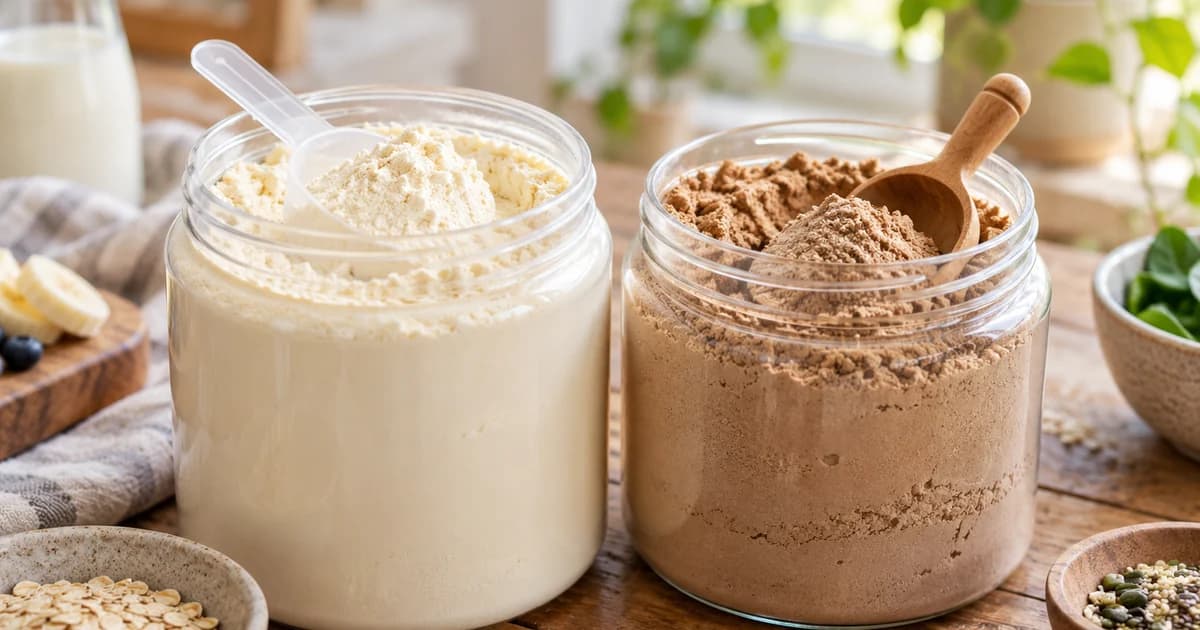
Whey vs Plant Protein: A Sourcing Guide for Brands
Choosing between whey and plant protein affects formulation, cost, and compliance. This guide compares both for brands sourcing a contract manufacturing partner in the US, EU, UK and Middle East.
Read the guide →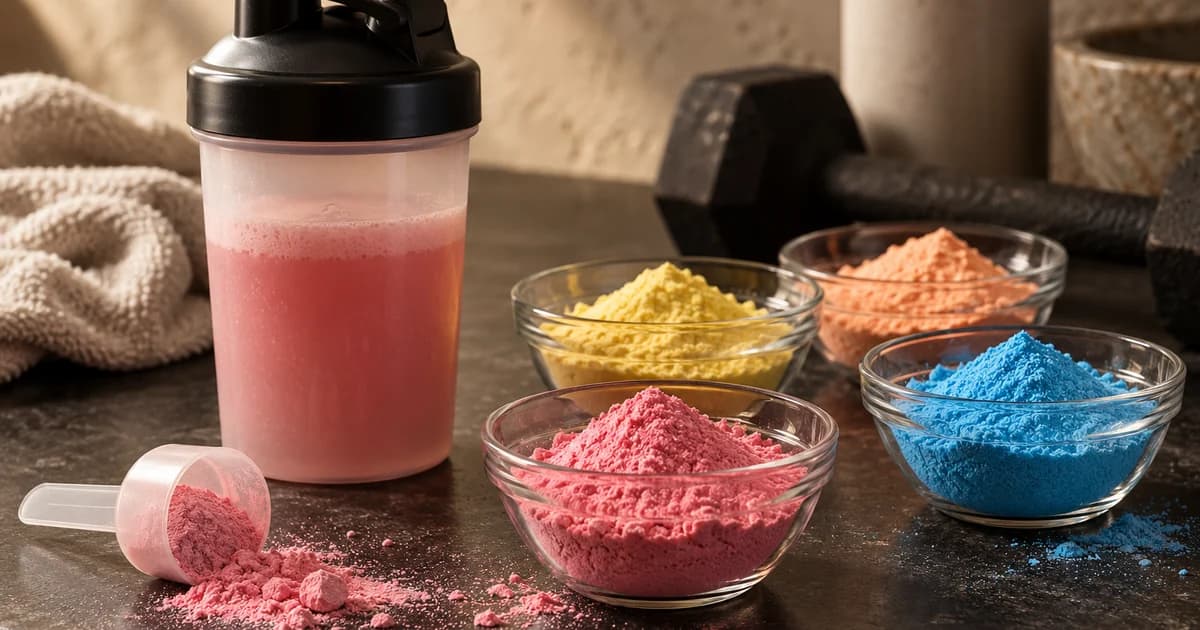
Pre-Workout Formulation Guide for Brand Owners
A practical guide to developing pre-workout powders that meet label claims, taste right and scale from pilot batches to retail. Covers actives, flavours, MOQ and lead times.
Read the guide →Have a product in mind?
Send us the brief and we will come back with a formulation direction, indicative price and a realistic lead time — usually within one working day.