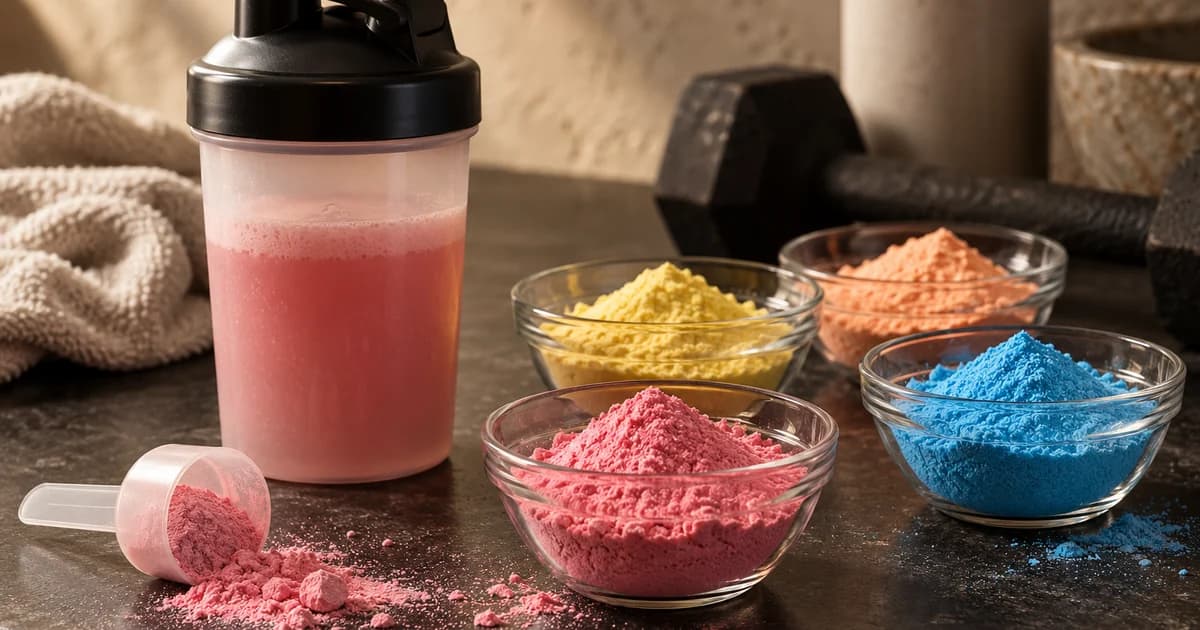
Pre-Workout Formulation Guide for Brand Owners
A practical guide to developing pre-workout powders that meet label claims, taste right and scale from pilot batches to retail. Covers actives, flavours, MOQ and lead times.
Overview
Pre-workout is one of the most formulation-sensitive categories in sports nutrition. Caffeine, beta-alanine, citrulline and electrolytes interact with flavour systems, flow agents and packaging. Get the ratios wrong and you get clumping, bitterness or a label that fails audit. This guide walks through the decisions brand owners face when briefing a contract manufacturer, from active dosing and sweetener selection to pilot runs and mass production timelines.
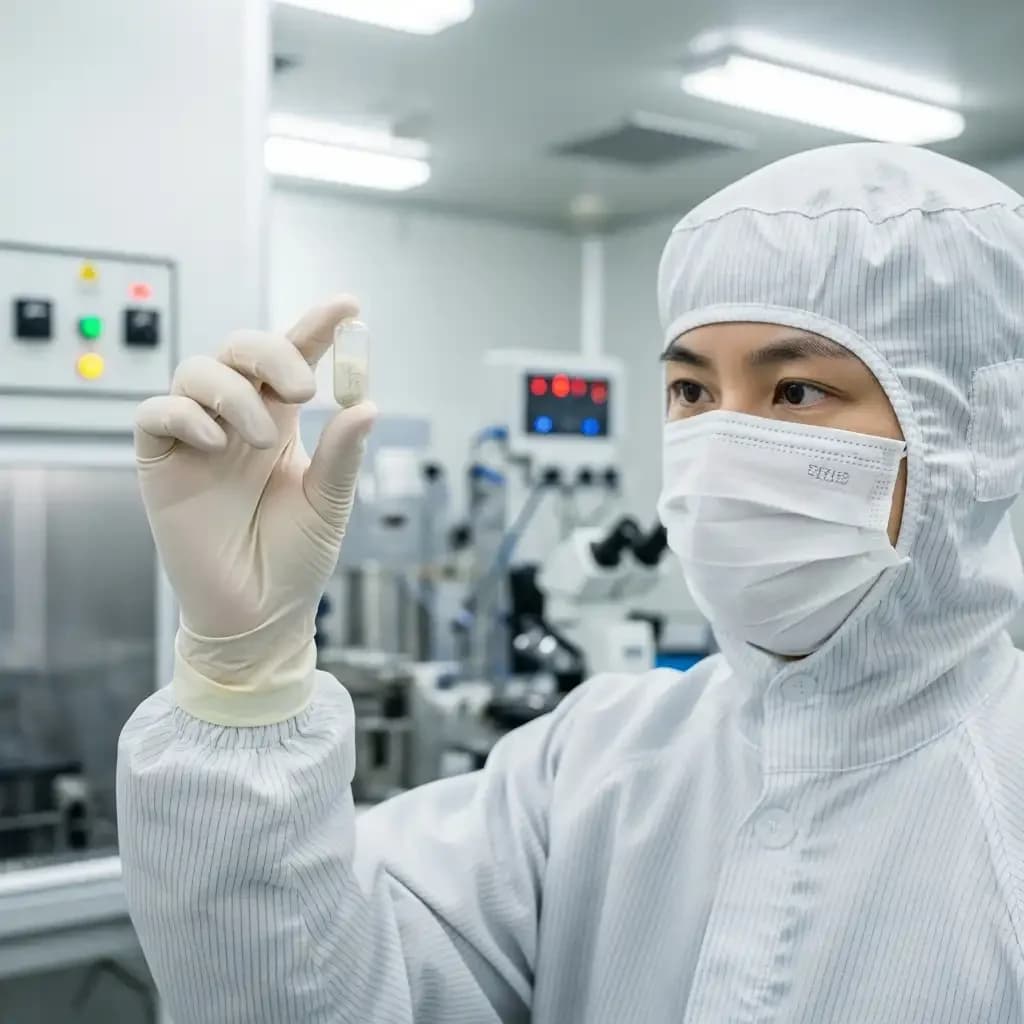
Manufacturing Capability for Pre-Workout
Pre-workout powders are typically blended in ribbon or V-blenders, then filled into tubs, sachets or stick packs. Particle size matters: actives like citrulline malate and beta-alanine are hygroscopic and can bind if humidity exceeds 40% RH on the line. A GMP-certified plant controls temperature and humidity in the blending suite and validates uniformity across each batch. For a 500 kg blend, expect 8–12 minutes of dry mixing after sieving actives through a 20–30 mesh screen.
Line capacity determines whether you can run 1,000 units or 30,000 units without changeover penalties. Tub filling speeds of 40–60 units per minute are common for 300 g–600 g formats. Stick packs run faster but require different auger tooling. If your SKU mix includes both tubs and sachets, confirm the manufacturer can handle both without cross-contamination. Cleaning validation between allergen-containing and allergen-free runs adds 4–8 hours of downtime.
Formulation: Actives, Flavours and Texture
Start with the active matrix. Caffeine anhydrous at 150–300 mg per serving is standard; beta-alanine at 1.6–3.2 g often causes paraesthesia, so split dosing or sustained-release grades help. Citrulline malate at 6–8 g is common but bulky. L-theanine at 100–200 mg balances caffeine. Electrolytes (sodium, potassium, magnesium) add mouthfeel but can accelerate moisture uptake. Each active has a pH and solubility profile that affects the final scoop.
Flavour systems carry the product. Fruit punches and sour berries mask bitterness better than vanilla or chocolate in pre-workouts. Natural flavours at 1.5–3% of fill weight usually suffice; intense sweeteners such as sucralose, stevia or monk fruit need 0.05–0.15%. Add 0.5–1% citric acid for tartness and 0.2–0.5% silicon dioxide or calcium silicate as an anticaking agent. Test at 25°C and 40°C for 12 weeks to confirm no clumping or colour shift.
Quality, Compliance and Logistics
Every batch needs a certificate of analysis covering identity, potency, heavy metals, microbiology and moisture. For US retail, an FDA-registered facility is expected; for EU, compliance with EC 1925/2006 and novel food rules applies. Halal certifications require segregated lines or validated cleaning. If you claim organic, the entire supply chain from flavouring to packaging must hold or EU organic certification. Vegan claims need no animal-derived carriers such as gelatin or shellac.
Lead times are driven by ingredient procurement, not blending. Stock actives ship in 5–7 days; custom flavour blends take 2–3 weeks. After sample approval, mass production runs 20–35 working days. Air freight from Guangdong to Los Angeles or Rotterdam adds 3–7 days; sea freight adds 18–30 days. Plan a 4–6 week buffer for regulatory review if you sell into the Middle East, where halal and product registration can add 2–4 weeks.
Quality Control and Batch Documentation
Every pre-workout batch is tested against a written specification before release. Identity and potency testing confirms that caffeine, beta-alanine, citrulline and electrolytes match the declared label claim. Microbial testing covers total plate count, yeast and mould, E. coli and Salmonella. Heavy metals testing screens for lead, arsenic, cadmium and mercury. Where a tub claims a specific actives dose, the finished product is assayed rather than relying on input weights alone.
Testing happens at three points: raw material receipt, in-process blending checks, and finished product release. In-process checks cover uniformity and moisture content, which directly affect clumping risk. Finished product testing is performed on the packaged lot, not a bulk sample, so the result reflects the retail unit. A certificate of analysis (COA) is issued per batch and includes the lot number, test parameters, specification limits, results and the analytical method used.
Retention samples are held for the shelf life of the product plus six months, stored under labelled conditions. Stability protocol typically runs at 25°C/60% RH and 40°C/75% RH, with testing at 0, 3, 6, 12 and 24 months for powders. Accelerated data supports the initial shelf-life claim; real-time data confirms it. Any out-of-specification result triggers a documented investigation before the lot is released or reworked.
Documentation is audit-ready. Batch manufacturing records, cleaning records, deviation reports and COAs are retained and can be supplied to your quality team or a third-party auditor. If you sell into markets requiring a free-sale certificate or specific declarations, the underlying test data is traceable to the lot. This matters when a retailer or distributor requests verification months after delivery.
Packaging, Labelling and Retail Readiness
Pre-workout formats include retail tubs, stick packs, sachets and blister packs. Tubs typically range from 150 g to 1,200 g with a screw-cap and induction seal. Stick packs suit single-serve dosing at 5 g to 20 g. Sachets work for sample programmes. Bottle and blister options apply where the product is sold as capsules rather than powder. Packaging choice affects fill weight tolerance, moisture barrier and the label area available for mandatory text.
For US retail, the label must carry a Supplement Facts panel with serving size, amounts per serving, percent daily values where applicable, and a complete ingredient list in descending order of weight. Allergen declarations, the manufacturer or distributor address, net quantity and a lot code are required. Lot and expiry coding is applied by inkjet or laser on the base or neck of the tub, and must remain legible through the shelf life. Carton and pallet specifications are agreed before production: units per carton, carton dimensions, pallet pattern and shrink-wrap requirements.
Amazon and retail compliance adds a layer. FNSKU labels must be applied without covering mandatory label text. Some retailers require a carton-level GS1 barcode in addition to the unit barcode. We confirm label proofs against your artwork before printing, and retain a signed proof with the batch record. Where a marketplace requires a specific label format, the proof approval step is where that is verified rather than after goods are packed.
Packaging materials are checked on receipt for seal integrity and print accuracy. Induction seals are tested for leakage on a sampling basis. For hygroscopic pre-workout powders, the tub and seal combination is the primary defence against moisture ingress, so the packaging specification is treated as part of the formulation brief rather than an afterthought.
MOQ, Lead Times and Delivery
The sample timeline starts with a formulation brief and target dose profile. A bench sample is typically prepared within 7 to 10 working days, subject to raw material availability. If the brief requires a new flavour system or a novel active, add one to two weeks for flavour matching and stability screening. Sample approval is the trigger for production scheduling, so any change to actives, sweetener or packaging after approval restarts part of the timeline.
Mass production runs 20 to 35 working days after sample approval and receipt of packaging materials. The window depends on whether the tub, label and carton are supplied by you or sourced through us. Pilot runs from 500 units are possible where ingredient minimums allow; retail bottling MOQs are 1,000 units per SKU. Production capacity is booked against the approved sample, so a signed approval and a purchase order are both required before the line is scheduled.
Delivery terms are agreed per order. EXW means you collect from the factory; FOB covers export clearance and loading at the named port; DDP places the goods at your nominated address with duties paid. Air freight suits pilot and launch volumes at 5 to 10 days transit; sea freight suits full-container orders at 25 to 40 days depending on destination. We provide a COA per batch, an MSDS for the finished product, and a free-sale certificate where the destination market requires one.
Shipping documents are issued with the commercial invoice and packing list. Where a destination requires phytosanitary certification for plant-derived ingredients, that is arranged before shipment. We confirm the document set against your customs broker's checklist before the container is sealed, because missing paperwork at destination is more expensive than a day's delay at origin.
What We Can Build
Tub with scoop
300 g–600 g HDPE tubs with desiccant. Standard for retail. Filling speed 40–60 units per minute. Minimum 1,000 units per SKU.
Stick packs
5 g–15 g single-serve sticks. Higher unit cost but strong for sampling and travel. Runs on separate auger line. MOQ from 5,000 units.
Sachets
10 g–30 g foil sachets. Lower barrier than tubs; best for non-hygroscopic formulas. Suitable for pilot runs from 1,000 units.
Bulk powder
1 kg–25 kg bags for private label or rebranding. No retail packaging. Fastest lead time at 15–20 working days after approval.
From Enquiry to Delivery
- 01
Submit brief
Share target actives, serving size, flavour direction and packaging format. Include target markets for compliance screening.
- 02
Sample development
Receive 2–3 flavour prototypes and a draft specification within 7–10 working days. Adjust caffeine, sweetness or texture as needed.
- 03
Approve formula
Sign off on the final bill of materials, COA requirements and label copy. Confirm MOQ and packaging components.
- 04
Pilot run
Produce 500–1,000 units to validate uniformity, fill weight and stability. Review 12-week accelerated data if time allows.
- 05
Mass production
Full batch runs 20–35 working days. In-process checks every 30 minutes for weight, seal integrity and metal detection.
- 06
QC and ship
Batch COA, retain samples and release. Air or sea freight from Guangdong with full export documentation.
Why EUPHM
Low pilot MOQ
Start from 500 units to test market fit before committing to 5,000-unit retail runs. Scales without reformulation.
Certified facility
GMP, ISO 9001, ISO 22000, HACCP, NSF/ANSI 455-2 and halal certification; FDA facility registration for US-bound shipments.
Predictable lead times
Samples in 7–10 days, mass production in 20–35 working days. Transparent scheduling from purchase order to shipment.
Questions buyers ask.
What is the minimum order quantity for a pre-workout powder?+
For retail bottling, MOQ is 1,000 units per SKU. Pilot runs start from 500 units, though ingredient minimums may apply. Bulk powder in 25 kg bags can go lower. Confirm with your account manager before finalising packaging.
How long does it take to get a pre-workout sample?+
Sample lead time is 7–10 working days after brief approval. This includes 2–3 flavour prototypes and a draft specification. Complex actives or custom flavour blends may add 3–5 days if raw materials are not in stock.
Can you match a competitor's pre-workout formula?+
We can reverse-engineer based on label claims and sensory targets, but exact duplication is not possible without the original bill of materials. We develop a functionally equivalent formula that meets your label and taste requirements while avoiding patent or trademark issues.
What certifications do you hold for sports nutrition?+
The facility holds GMP, ISO 22000 and HACCP. Halal and vegan certifications are available on request, subject to ingredient sourcing and line segregation. Certificates are provided per batch.
How do you prevent clumping in pre-workout powders?+
We control blending suite humidity below 40% RH, use anticaking agents such as silicon dioxide at 0.2–0.5%, and select packaging with adequate moisture barrier. Accelerated stability testing at 40°C and 75% RH for 12 weeks confirms performance before retail release.
What does a certificate of analysis for a pre-workout batch include?+
A COA lists the product name, lot number, manufacturing date, expiry date and the specification against which the batch was tested. It reports identity and potency of declared actives, microbial results, heavy metals, moisture content and appearance. Each result is shown against its limit, with the analytical method referenced. The COA is issued per batch, not per product, so it can be matched to the lot code on your tubs.
Can you produce pre-workout under our own label and ship directly to Amazon FBA?+
Yes, where the destination and marketplace requirements are confirmed before production. We apply FNSKU labels without covering mandatory label text, pack to your carton and pallet specification, and provide the document set your freight forwarder needs. DDP terms can place goods at the FBA warehouse. We recommend approving a label proof and a carton spec before the run, since relabelling after packing adds cost and delay.
How do you handle shelf-life and stability testing for a new pre-workout formula?+
Stability testing starts once the formula and packaging are fixed. Samples are stored at 25°C/60% RH and 40°C/75% RH and tested at 0, 3, 6, 12 and 24 months for powders. Accelerated results support the initial shelf-life claim, while real-time data confirms it. Moisture, appearance, flavour and actives potency are monitored. If a result drifts outside specification, the shelf life is adjusted before the label is printed.
Xu Wei writes the manufacturing, quality and regulatory guides on EUPHM. He works directly with the plant's production and QA teams to document how each dosage form is made, tested and released, so every claim on the site can be traced back to a batch record or a certificate on file.
More guides in this category.
See all →
Creatine Gummies Guide for Brand Owners and Procurement Teams
Creatine gummies are a fast-growing format in sports nutrition. This guide covers formulation, stability, dosing, MOQs, lead times and certifications so you can brief a contract manufacturer with confidence.
Read the guide →
Whey vs Plant Protein: A Sourcing Guide for Brands
Choosing between whey and plant protein affects formulation, cost, and compliance. This guide compares both for brands sourcing a contract manufacturing partner in the US, EU, UK and Middle East.
Read the guide →Have a product in mind?
Send us the brief and we will come back with a formulation direction, indicative price and a realistic lead time — usually within one working day.