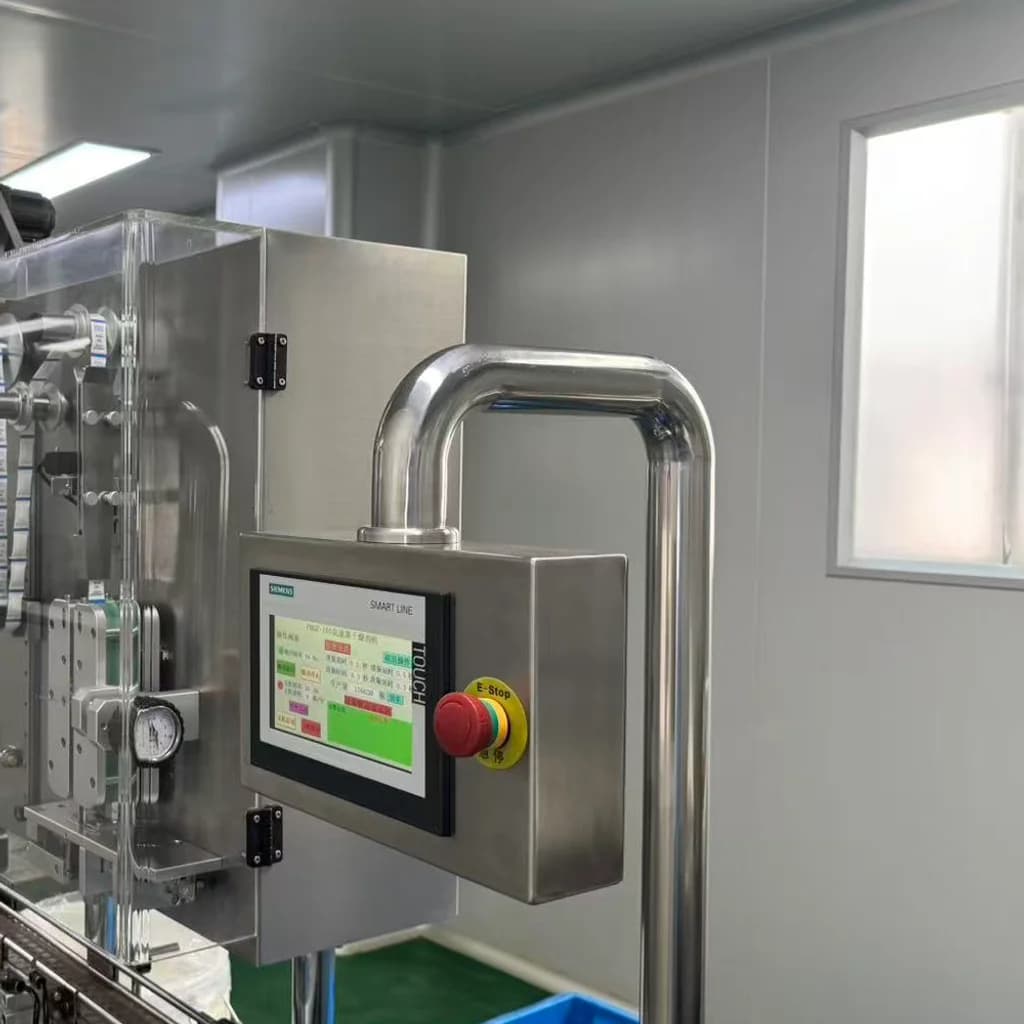
Gelatin-Free Gummy Manufacturer for Vegan and Halal Brands
EUPHM produces gelatin-free gummies on dedicated pectin and modified-starch lines in Guangdong. MOQ starts at 1,000 units per SKU, samples ship in 7-10 working days, and mass production runs 20-35 working days.
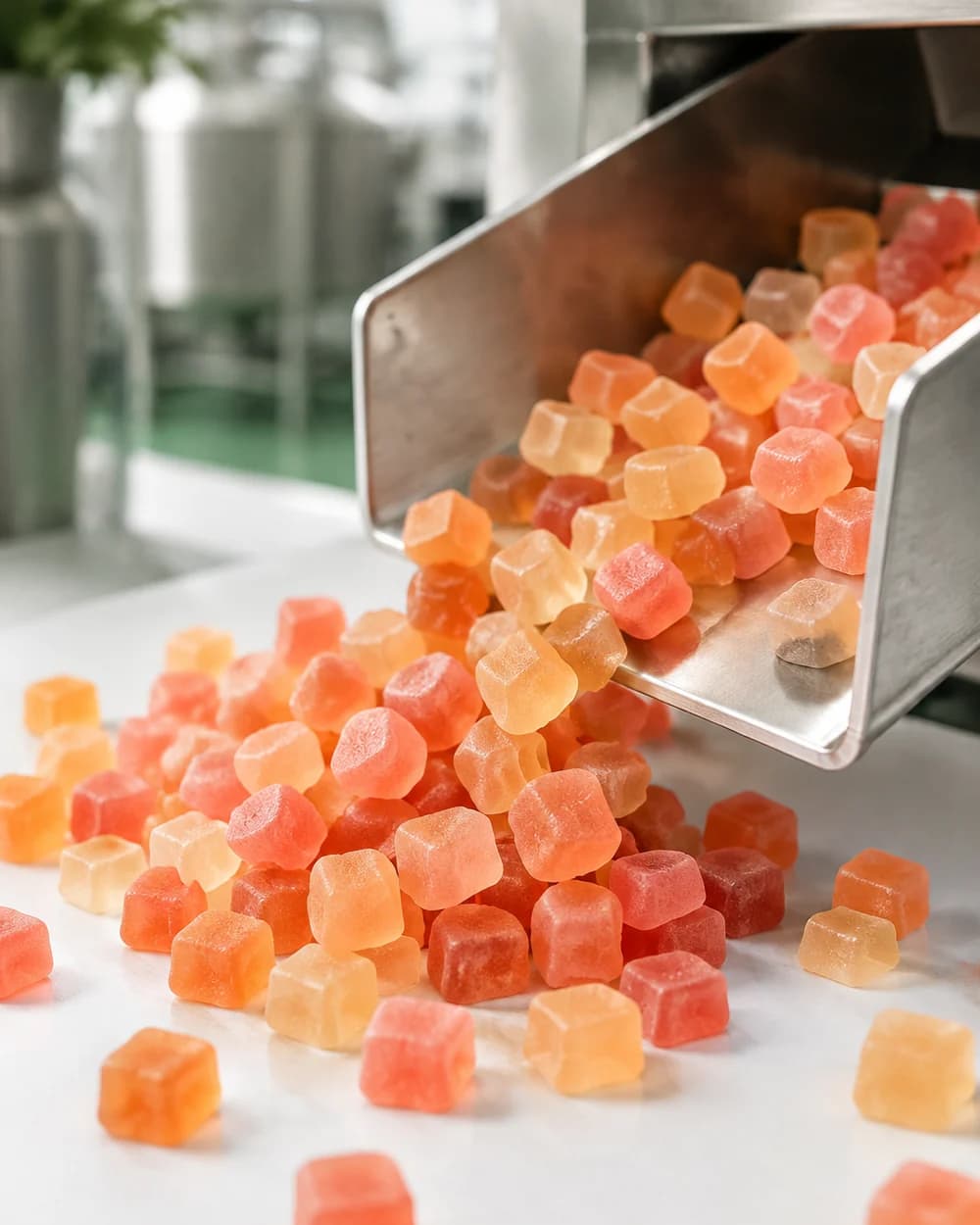
Overview
Gelatin-free gummies are not a single formulation. Pectin, modified starch, agar and carrageenan each behave differently in the depositor, the drying tunnel and the finished bottle. A manufacturer that runs only gelatin lines cannot simply swap the base. EUPHM operates separate gelatin-free lines with their own starch moulding and pectin depositing equipment, so texture, water activity and shelf life are controlled from the first pilot batch. Certifications cover GMP, ISO 22000, HACCP, halal and vegan.
| MOQ | 1,000 units per SKU for retail bottling; lower for pilot runs |
|---|---|
| Gelatin-free bases | Pectin, modified starch, agar, carrageenan, or blends |
| Fill weight range | 2.0 g to 5.5 g per gummy |
| Sample lead time | 7-10 working days |
| Mass production | 20-35 working days after sample approval |
| Certifications | GMP, ISO 9001, ISO 22000, HACCP, NSF/ANSI 455-2, halal, FDA-registered |
Dedicated Gelatin-Free Lines and Capacity
EUPHM runs gelatin-free gummies on separate depositing and starch-moulding lines. That separation matters: gelatin sets by gelation as it cools, while pectin and starch set through a controlled drying cycle. Running both on one line risks cross-contact and inconsistent texture. Our gelatin-free lines handle 2.0 g to 5.5 g fill weights and support bottle sizes from 30 to 120 count. Changeovers are scheduled weekly, so a 1,000-unit pilot and a 500,000-unit retail run use the same equipment and the same process parameters.
For brands scaling from sample to shelf, the practical constraint is usually drying capacity, not depositing speed. Pectin gummies need 24-48 hours in the drying room depending on fill weight and water activity target. We book drying-room time at the sample approval stage, which is why the 20-35 working day production window holds even in peak season. If your launch date is fixed, share it before the pilot run so we can reserve capacity.
Pectin, Starch or Agar: Choosing the Base
Pectin gummies give a soft, slightly chewy bite and a clean label. They need a controlled pH and a calcium source to set, and they are sensitive to over-mixing. Modified starch produces a firmer, more uniform texture at lower cost, which suits high-count bottles and children's formats. Agar gives a short, brittle bite that works for some confectionery-style supplements but cracks under low humidity. Carrageenan sits between pectin and starch in texture and is often blended for cost control.
The base also affects flavour release and masking. Bitter actives such as iron or certain botanicals are easier to mask in starch bases than in pectin, because the firmer matrix slows release in the mouth. We run a masking trial with your active at the sample stage, not after. Typical actives we handle in gelatin-free bases include vitamin C, vitamin D3, B-complex, zinc, elderberry, melatonin at low dose, and probiotic blends where the base is compatible.
Compliance, Testing and Documentation
Every gelatin-free batch is tested for water activity, texture, fill weight, microbial limits and heavy metals. Water activity is the key shelf-life parameter for pectin and starch gummies; we target below 0.65 Aw unless your specification says otherwise. Certificates of analysis are issued per batch, and retention samples are held for the shelf life stated on the label. The facility is GMP-certified, ISO 22000 and HACCP compliant, and registered for halal production.
For US and EU buyers, we supply the documentation pack your importer or notified body expects: certificate of analysis, allergen statement, GMO statement, vegan statement, halal certificate as applicable, and a stability summary. We do not claim FDA approval. The facility is FDA-registered, which supports US import clearance. Label review is available if you need a second check on ingredient declarations before artwork goes to print.
Quality Control and Batch Documentation on Gelatin-Free Gummy Lines
Every gelatin-free gummy batch is sampled at three points: raw material receipt, post-depositing before drying, and finished product after curing. Identity testing confirms the pectin or starch grade and the active ingredient against the supplier certificate. Potency is assayed by HPLC for vitamins, minerals and botanical markers, with results compared to the label claim at 100 to 110 percent overage where the formula requires it. Microbial testing covers total aerobic count, yeast and mould, E. coli and Salmonella, with limits set to the destination market.
Heavy metals testing covers lead, arsenic, cadmium and mercury by ICP-MS. Disintegration testing follows the USP method for gelatin-free gums, typically requiring complete breakdown within 30 to 60 minutes depending on the base. Water activity is measured on every batch and must sit between 0.55 and 0.65 for pectin and starch gummies to prevent mould growth without over-drying. Texture is checked by a calibrated texture analyser, with firmness and elasticity recorded against the approved sample.
A certificate of analysis is issued for each batch and includes the product name, lot number, manufacturing date, expiry date, test parameters, specifications, results and the analyst signature. Retention samples of every lot are held for the full shelf life plus six months. Stability testing runs at 25°C/60% RH and 40°C/75% RH for three and six months, with accelerated data used to set the initial expiry and real-time data used to confirm it.
Batch records are retained for five years and are available for audit by the brand owner or a nominated third party. Where the destination market requires it, documentation can be prepared for FDA prior notice, EU food contact compliance and halal verification. The gelatin-free line keeps separate cleaning records and allergen swab results to prevent cross-contact with gelatin or animal-derived ingredients.
Packaging, Labelling and Retail Readiness
Gelatin-free gummies are packed in HDPE bottles from 60 cc to 500 cc, in blisters of 10 to 30 count, in stick packs of 5 g to 10 g, and in single-serve sachets. Bottles can be supplied with induction seals, child-resistant closures or standard screw caps. Desiccant is added where water activity control is critical. Labelling follows the destination market: for the US, the FDA dietary supplement label requires a supplement facts panel, serving size, amount per serving, percent daily value where applicable, other ingredients list, and the mandatory allergen statement.
Lot and expiry coding is applied by inkjet or laser on the bottle, carton and shipper. The format is agreed at artwork approval and typically uses a Julian date plus a two-year expiry. Cartons are specified with dimensions, board grade and print colours, and pallet configurations are calculated to maximise container fill. A standard 40-foot high-cube container holds approximately 1,200 to 1,400 cartons of 24 bottles, depending on bottle size and pallet pattern.
For Amazon sellers, we can apply FNSKU labels, poly-bag units where required, and prepare cartons to Amazon's ISTA-6 or SIOC requirements if the brand has enrolled in those programmes. Retail compliance for US chains often requires a GS1 barcode on the unit and case, and a carton marking that includes the lot, expiry and country of origin. We do not print retailer-specific compliance marks without written confirmation from the brand owner.
MOQ, Lead Times and Delivery
Sampling starts with a formulation brief and a target texture reference. Pilot samples are produced on the gelatin-free line within 7 to 10 working days, including base selection, flavour and colour matching, and a preliminary label mock-up. Sample batches are typically 1 kg to 5 kg and are shipped by courier. If the sample requires adjustment, a second round adds 5 to 7 working days. Sample costs are credited against the first mass-production order.
Mass production runs 20 to 35 working days after sample approval, depending on the base, the number of actives and the packaging format. Pectin and starch gummies need 24 to 48 hours of curing before packing, which is built into the schedule. Orders above 50,000 units per SKU are scheduled across multiple depositing runs to keep drying tunnel loading consistent. A production slot is confirmed only after receipt of the purchase order and deposit.
Delivery terms are EXW, FOB Shenzhen or Hong Kong, and DDP for selected destinations. Air freight is used for samples and urgent launches, typically 5 to 8 days door to door. Sea freight from Yantian or Nansha to Los Angeles takes 18 to 25 days, and to Rotterdam 28 to 35 days. Documents provided with each shipment include the commercial invoice, packing list, certificate of analysis, material safety data sheet where applicable, free-sale certificate, and phytosanitary certificate where the destination requires it for plant-derived ingredients.
What We Can Build
Pectin base
Soft chew, clean label, vegan. Best for fruit flavours and adult daily supplements. Requires controlled pH and calcium. Fill weights from 2.0 g to 4.5 g.
Modified starch base
Firmer, uniform texture at lower cost. Good for high-count bottles and children's formats. Handles bitter actives better than pectin. Fill weights from 2.5 g to 5.5 g.
Agar base
Short, brittle bite. Suitable for confectionery-style supplements. Sensitive to low humidity in storage. Usually specified at 2.0 g to 3.5 g per piece.
Carrageenan or blend
Mid-range texture, often blended with starch for cost control. Works for multi-vitamin and mineral formats where a neutral bite is preferred.
From Spec to Shipment
- 01
Brief and base selection
Share your active ingredients, target fill weight, bottle count and certifications. We recommend a base and flag any compatibility issues within 2 working days.
- 02
Sample development
We produce a pilot batch on the gelatin-free line. Samples ship in 7-10 working days. Two revision rounds are included in the sample fee.
- 03
Sample approval
You approve texture, flavour, colour and fill weight. We lock the specification and reserve drying-room and production capacity against your launch date.
- 04
Documentation pack
Before mass production we issue the specification sheet, allergen statement, vegan or halal certificate as applicable, and label review notes.
- 05
Mass production
Production runs 20-35 working days after approval. In-process checks cover fill weight, water activity and texture at defined intervals.
- 06
Batch release and shipping
Each batch is tested and released with a certificate of analysis. We pack to your bottle and carton specification and coordinate with your freight forwarder.
Why EUPHM
Vegan and halal ready
No gelatin, no bovine or porcine inputs. Certificates for vegan, halal are available per batch, which opens Gulf, Israeli and EU vegan retail listings.
Low MOQ for pilots
Pilot runs below the standard 1,000-unit MOQ let you test a flavour or active before committing to a full retail batch. Scale to 500,000 units on the same line.
Texture you approve first
You sign off texture and water activity at sample stage. The production batch uses the same base, the same depositor and the same drying profile.
Questions buyers ask.
What is the MOQ for gelatin-free gummies?+
Standard MOQ is 1,000 units per SKU for retail bottling, depending on bottle count and fill weight. Pilot runs below that are possible and are quoted separately. The MOQ applies per SKU, so a three-flavour line means three MOQs unless you run a mixed-flavour pack.
How long do samples take?+
Sample lead time is 7-10 working days from receipt of your active ingredients and flavour brief. That covers a pilot batch, texture and water activity testing, and shipping. Two revision rounds are included. If you need a faster turnaround, say so in the brief and we will confirm feasibility.
Are pectin gummies stable at room temperature?+
Yes, when water activity is controlled below 0.65 Aw and the bottle includes a desiccant where needed. Pectin gummies are more humidity-sensitive than gelatin, so packaging choice matters. We test water activity per batch and provide a stability summary covering 24 months at 25°C/60% RH for standard formulations.
Can you match a competitor's texture?+
In most cases, yes. Send a physical sample or a detailed description of the bite, chew and dissolve profile. We will identify whether pectin, starch, agar or a blend gets closest, then run a pilot. Exact matches are not always possible because base suppliers differ, but we can get within a narrow texture range.
What certifications apply to gelatin-free lines?+
The facility holds GMP, ISO 22000 and HACCP certification. Halal and vegan certificates are available for gelatin-free production. Organic certification is possible where the active and base suppliers hold valid organic certificates. The facility is FDA-registered for US import purposes; we do not claim FDA approval of any product.
Can you produce gelatin-free gummies with a sugar-free claim?+
Yes, using maltitol, erythritol, allulose or stevia blends. Sugar-free pectin and starch gummies require careful control of water activity and crystallisation, and we run a pre-production trial to confirm texture and shelf life. The label must meet the destination market's definition of sugar-free, typically less than 0.5 g sugars per serving in the US and EU.
Do you provide stability data before we commit to a shelf life?+
We provide accelerated stability data at 40°C/75% RH for three months before launch, which supports an initial 18 to 24-month expiry depending on the base and actives. Real-time data at 25°C/60% RH is collected over the full shelf life and shared with the brand owner as it becomes available. We do not assign a shelf life beyond the data.
What is the process if a batch fails a specification?+
The batch is placed on hold and a deviation report is issued within 48 hours, including the failed parameter, root cause and proposed disposition. Options are rework within the approved formula, rejection and replacement, or release under a brand-approved concession where the deviation is not safety-related. Retained samples and batch records are kept for five years for traceability.
Other versions built in this dosage form.
- Gummy Manufacturer
- Chewable Manufacturer
- Vegan Gummy Manufacturer
- Sugar-Free Gummy Manufacturer
- Pectin Gummy Manufacturer
- Kids Gummy Manufacturer
- Adult Gummy Manufacturer
- Custom-Shaped Gummy Manufacturer
- 3D Gummy Manufacturer
- Multi-Layer Gummy Manufacturer
- Halal Gummy Manufacturer
- Organic Gummy Manufacturer
- Low-Sugar Gummy Manufacturer
- Soft Chew Manufacturer
- Kids Chewable Manufacturer
- Sugar-Free Chewable Manufacturer
- Sugar-Coated Chewable Manufacturer
- Vitamin C Gummy Manufacturer
- Vitamin D3 Gummy Manufacturer
- Vitamin B12 Gummy Manufacturer
- Vitamin B Complex Gummy Manufacturer
- Multivitamin Gummy Manufacturer
- Folic Acid Gummy Manufacturer
- CoQ10 Gummy Manufacturer
- Probiotics Gummy Manufacturer
- Collagen Gummy Manufacturer
- Biotin Gummy Manufacturer
- Hyaluronic Acid Gummy Manufacturer
- Lutein Gummy Manufacturer
- Astaxanthin Gummy Manufacturer
- Melatonin Gummy Manufacturer
- Magnesium Gummy Manufacturer
- Zinc Gummy Manufacturer
- Iron Gummy Manufacturer
- Calcium Gummy Manufacturer
- Ashwagandha Gummy Manufacturer
- Turmeric Gummy Manufacturer
- Elderberry Gummy Manufacturer
- Apple Cider Vinegar Gummy Manufacturer
- Creatine Gummy Manufacturer
- Berberine Gummy Manufacturer
- Milk Thistle Gummy Manufacturer
- Ginger Gummy Manufacturer
- Sea Moss Gummy Manufacturer
- Mushroom Extract Gummy Manufacturer
- Maca Gummy Manufacturer
- Ginseng Gummy Manufacturer
- Psyllium Fiber Gummy Manufacturer
- L-Theanine Gummy Manufacturer
- GABA Gummy Manufacturer
- 5-HTP Gummy Manufacturer
- Hair Skin & Nails Gummy Manufacturer
- Sleep Support Gummy Manufacturer
- Immune Support Gummy Manufacturer
- Energy Gummy Manufacturer
- Weight Management Gummy Manufacturer
- Menopause Gummy Manufacturer
Have a product in mind?
Send us the brief and we will come back with a formulation direction, indicative price and a realistic lead time — usually within one working day.