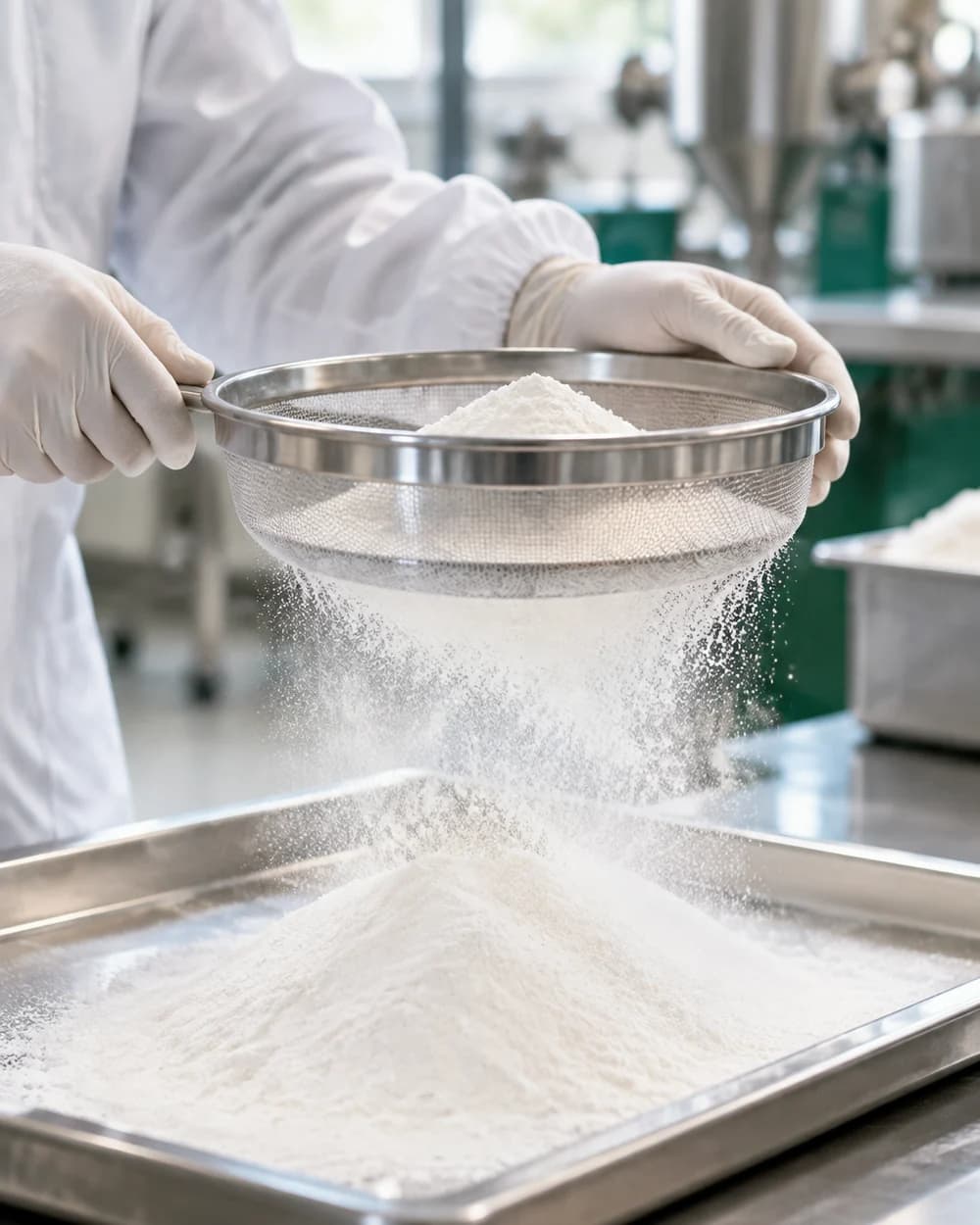
Juice Powder Manufacturer for Your Brand
Source juice powder from a GMP-certified plant in Guangdong. We handle spray drying, blending, and retail packaging for MOQs from 1,000 units. Sample lead time is 7-10 working days.
Overview
As a contract manufacturer, we produce fruit and vegetable juice powders for drink mixes, capsules, and sachets. Our facility runs spray drying, agglomeration, and low-temperature drum drying to protect heat-sensitive nutrients. We work with brand owners and procurement teams across the US, EU, UK, and Middle East. Every batch is tested for moisture, solubility, and microbiological limits before release. See our parent page for full powder manufacturing capabilities.
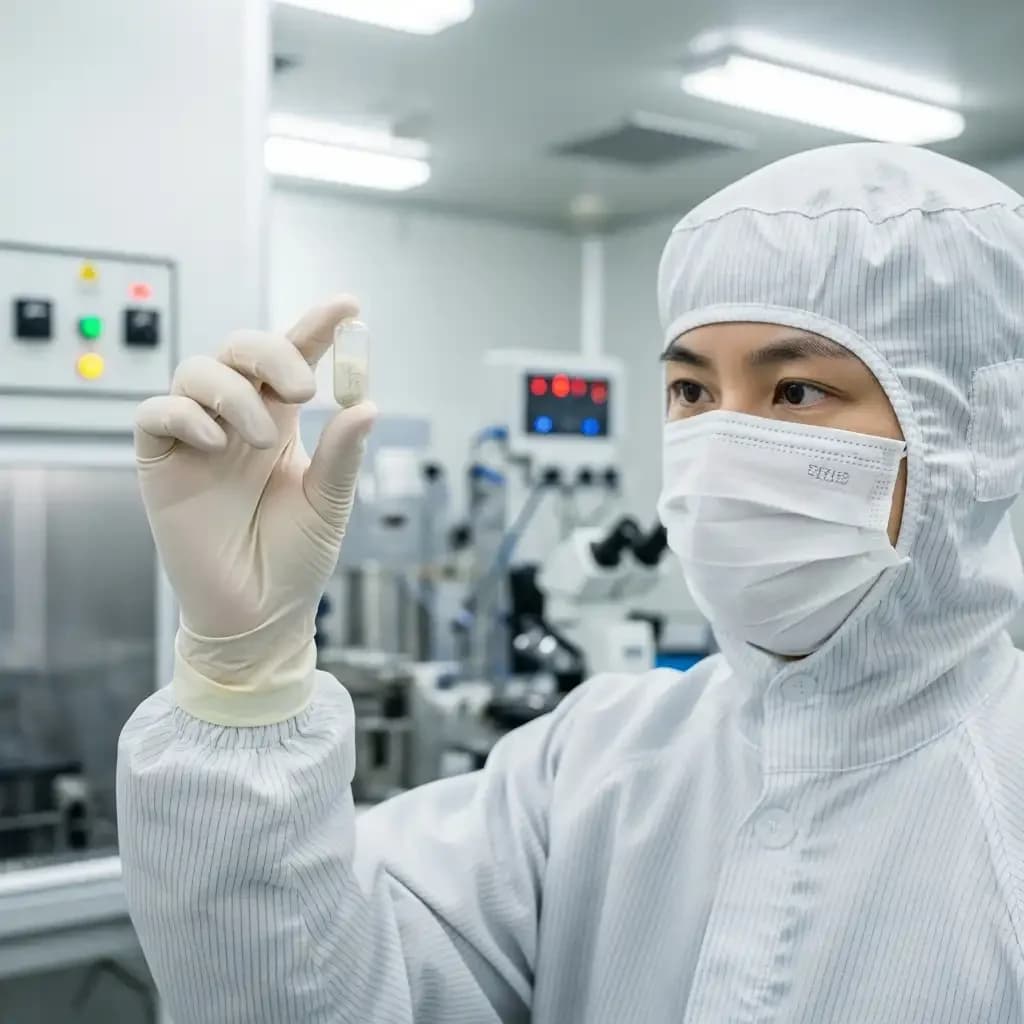
Spray Drying and Blending Capability
Our spray dryers process up to 1,200 kg of juice concentrate per hour. Inlet temperatures range from 160°C to 200°C, with outlet temperatures held below 95°C to minimise nutrient loss. We use maltodextrin or acacia fibre as carriers, depending on your label requirements. For agglomerated powders, we run a fluid bed dryer that improves solubility and reduces dust.
Blending lines handle 500 kg to 2,000 kg batches with ribbon and paddle mixers. We can incorporate vitamins, minerals, probiotics, or sweeteners in the same run. Homogeneity is verified by sampling at three points per batch. If you need organic certification, we schedule dedicated runs to avoid cross-contact with conventional materials.
Formulation and Ingredient Sourcing
We source juice concentrates from approved suppliers in China, Chile, and Turkey. Common inputs include apple, orange, pomegranate, acai, and cranberry. Each lot arrives with a certificate of analysis and is tested for pesticides, heavy metals, and microbial counts. For organic claims, we require USDA or EU organic certificates at intake.
Formulation support covers flavour masking, acidity adjustment, and flow agent selection. We can match a target pH, Brix, or solubility profile within two sample rounds. Typical juice powder specifications range from 5% to 70% fruit solids. If your formula includes probiotics, we use freeze-dried strains and keep water activity below 0.3.
Quality Control and Export Logistics
Every batch is tested in-house for moisture, water activity, solubility, and total plate count. We also send samples to third-party labs for heavy metals, pesticide residues, and allergen screening. Documentation includes COA, MSDS, and certificate of origin. Our facility is GMP-certified and follows ISO 22000 and HACCP protocols.
For export, we pack in food-grade PE-lined drums or aluminium foil bags. We handle FOB Shenzhen or Yantian, with air freight for urgent orders. Lead time from purchase order to port is 20-35 working days after sample approval. We provide halal, and organic certificates where applicable. EU and UK clients receive full traceability records.
Quality Control and Batch Documentation
Every juice powder batch is sampled at three points: incoming raw fruit or vegetable concentrate, in-process spray-dried or drum-dried powder, and finished packed goods. Identity testing uses HPLC or UV-Vis against a retained reference standard, with potency expressed as a percentage of the declared marker compound such as vitamin C, anthocyanins or total polyphenols. Microbial testing covers total plate count, yeast and mould, E. coli, Salmonella and Staphylococcus aureus, with limits set to the destination market's requirements. Heavy metals are screened by ICP-MS for lead, arsenic, cadmium and mercury. Moisture, water activity, solubility and bulk density are measured on every lot.
A certificate of analysis accompanies each shipment and states the product name, lot number, manufacturing date, expiry date, tests performed, specification limits, results and a pass or fail conclusion. Where a customer requires it, we add a statement of allergen status, a non-GMO declaration and a country-of-origin declaration for the fruit or vegetable input. Retained samples of 200 g to 500 g per lot are stored under controlled conditions for the full shelf life plus six months, so any later query can be checked against the original material.
Stability follows an accelerated protocol at 40 degrees Celsius and 75 per cent relative humidity for three and six months, with real-time data generated at 25 degrees Celsius and 60 per cent relative humidity. Parameters tracked include marker potency, moisture, colour (measured as delta E), solubility and microbial counts. If a customer needs a specific shelf life claim, we can run a dedicated stability study on the finished packaged format, including sachets or jars, and issue a report suitable for inclusion in the product's technical file.
Batch documentation is retained for five years and is available in English. For buyers preparing a dietary supplement notification or a food safety plan, we can supply the process flow diagram, critical control points, verification records and the supplier approval documents for each raw material. We do not issue certificates we do not hold; the certification scope and issuing body are stated on every certificate we provide.
Packaging, Labelling and Retail Readiness
Juice powder can be filled into stick packs from 2 g to 10 g, sachets from 5 g to 30 g, PET or HDPE jars from 100 g to 500 g, and bulk drums of 20 kg to 25 kg with double polyethylene liners. Stick and sachet formats run on vertical form-fill-seal lines with nitrogen flushing where the formula is sensitive to oxidation. Jars are induction-sealed and can include a desiccant canister or oxygen absorber. For retail buyers, we can also supply blister-style single-serve cartons or composite cans, subject to tooling lead time.
Label content follows the US FDA dietary supplement labelling rules: statement of identity, net quantity, supplement facts panel with serving size and per-serving amounts, other ingredients list, directions, and the name and place of business of the distributor. We print lot number and expiry date by inkjet or laser on the primary pack and the carton, in a format agreed at artwork approval. Expiry is calculated from the stability data for the specific formula and pack, not from a generic default.
Cartons are specified with dimensions, board grade and gross weight, and pallets are built to a customer's preferred pattern, typically 1,000 mm by 1,200 mm or 48 in by 40 in, with a maximum height of 1,800 mm including the pallet. We can apply Amazon FNSKU labels, poly-bag the cartons and print suffocation warnings where required. Retail compliance checks include barcode verification to GS1 standards at 100 per cent first-read rate, country-of-origin marking and, for the EU, the name and address of the food business operator.
Artwork is checked against a pre-press checklist before plates are made. This covers mandatory statements, nutrition or supplement facts rounding, allergen highlighting, font sizes for net quantity, and the position of the lot and expiry code. We keep approved artwork and plate files for three years so repeat orders can be run without re-approval. Where a customer supplies print-ready files, we return a proof for sign-off and do not proceed to print until written approval is received.
MOQ, Lead Times and Delivery
Sampling starts with a technical brief covering the fruit or vegetable source, marker compound, carrier (maltodextrin, gum arabic or none), solubility target and intended pack format. We issue a sample of 100 g to 500 g within 7 to 10 working days, together with a draft specification and a preliminary COA. If the sample needs adjustment, one revision round is included at no charge. Sample courier costs are borne by the customer and can be credited against the first production order.
Mass production runs 20 to 35 working days after written sample approval and receipt of the deposit. This window covers raw material release, blending, drying where required, filling, labelling, QC release and export packing. Orders above 5,000 units per SKU or involving new tooling may extend the window, and we confirm the schedule in writing before the deposit is invoiced. Pilot runs from 500 units are available for market testing and typically add 5 working days.
We ship under EXW, FOB Shenzhen or Hong Kong, and DDP for selected destinations. Air freight suits orders under 500 kg and delivers in 5 to 10 days door to door. Sea freight is more economical above 1,000 kg, with transit of 25 to 40 days to the US or EU depending on port. We provide the commercial invoice, packing list, bill of lading or airway bill, COA, MSDS where applicable, free-sale certificate, and phytosanitary certificate for plant-derived inputs where the destination requires it.
For DDP shipments, the importer of record is agreed in advance and the landed cost is quoted with duties and taxes included. We do not arrange import licences or product notifications on the customer's behalf, but we supply the technical documents needed to support them. Every shipment is photographed at pallet build and container loading, and those images are sent with the shipping documents so the buyer can verify condition before arrival.
Packaging and Format Choices
Bulk drums
25 kg or 50 kg fibre drums with double PE liners. Ideal for further processing or repackaging. MOQ 1,000 units equivalent.
Sachets and stick packs
2 g to 30 g single-serve sachets. Up to 12,000 units per shift. Suitable for drink mixes and sample kits.
Retail jars
100 g to 500 g PET or glass jars with induction seals. Label application and shrink banding included.
Vegan lines
Dedicated runs for EU organic, and vegan certified powders. Separate scheduling prevents cross-contact.
From Spec to Shipment
- 01
Inquiry and quote
Send your specification, target MOQ, and packaging format. We reply within 24 hours with pricing and lead time.
- 02
Sample development
We produce 7-10 working day samples using your formula or a stock base. Two revision rounds included.
- 03
Sample approval
You test solubility, taste, and appearance. We adjust moisture or carrier if needed. Written approval triggers production.
- 04
Raw material intake
Concentrates and excipients arrive with COAs. We quarantine and test each lot before release to blending.
- 05
Production and QC
Spray drying, blending, and packaging run in sequence. In-process checks every 30 minutes. Batch records kept for 3 years.
- 06
Shipping and documents
We palletise, label, and arrange FOB or air freight. COA, MSDS, and certificates sent before dispatch.
Why EUPHM
Low MOQ for pilots
Start with 500 units for pilot runs, then scale to 1,000 units for retail. No tooling fees for standard sachets.
Certified for export
GMP, ISO 9001, ISO 22000, HACCP, NSF/ANSI 455-2 and halal certification; FDA facility registration for US-bound shipments.
Nutrient retention
Low outlet temperatures and agglomeration protect vitamin C and polyphenols. Typical retention is 85-95% versus raw concentrate.
Questions buyers ask.
What is the MOQ for juice powder manufacturing?+
MOQ is 1,000 units per SKU for retail bottling or sachets. Pilot runs start at 500 units. Bulk drum orders have a lower MOQ of 500 kg. We confirm exact MOQ once we review your packaging format and formula.
How long does sampling take?+
Sample lead time is 7-10 working days after we receive your specification and raw materials. This includes formulation, spray drying, and QC testing. We ship samples by courier with a COA. Two revision rounds are included at no extra cost.
Can you match my existing juice powder specification?+
Yes. Send your current COA, ingredient list, and target solubility or Brix. We reverse-engineer the formula and produce a matching sample. Typical match rate is within two rounds. We can also improve flowability or reduce sugar without changing the label claim.
What certifications do you hold for juice powder?+
Our facility is GMP-certified and holds ISO 22000 and HACCP. We also carry halal, EU organic, and vegan certifications. Certificates are available on request. We are FDA-registered for US exports. Organic runs require 5-7 extra days for scheduling.
How do you ship juice powder internationally?+
We ship FOB Shenzhen or Yantian, or by air freight for urgent orders. Powder is packed in food-grade PE-lined drums or foil bags. We provide COA, MSDS, certificate of origin, and commercial invoice. Lead time from PO to port is 20-35 working days after sample approval.
Do you provide a free-sale certificate for juice powder exports?+
Yes. We issue a free-sale certificate for each product and destination on request, confirming that the juice powder is manufactured in a facility operating under GMP and ISO 22000 and is freely sold in China. The certificate states the product name, lot or specification reference and the issuing company details. Some destination markets require legalisation or consular approval, which we can arrange at the buyer's cost.
Can you produce juice powder with no added carrier or maltodextrin?+
Yes, subject to the fruit or vegetable input. Spray drying some high-acid or high-sugar juices without a carrier can cause stickiness and low yield, so we may recommend a small percentage of gum arabic or a higher inlet temperature. For 100 per cent juice powder claims, we confirm the carrier level in the specification and label it accordingly. Drum-dried or freeze-dried options are available where the marker compound is heat-sensitive.
What is your policy on retention samples and re-testing after delivery?+
We retain 200 g to 500 g per lot for the shelf life plus six months under controlled storage. If a buyer reports a discrepancy, we re-test the retained sample against the original COA and share the results within 10 working days. Where the retained sample confirms the original result, we can support a joint investigation with the buyer's laboratory. Re-testing at a third-party laboratory is arranged at cost.
Other versions built in this dosage form.
- Powder Manufacturer
- Stick Pack Powder Manufacturer
- Bulk Powder Manufacturer
- Flavored Powder Manufacturer
- Unflavored Powder Manufacturer
- Single-Serve Powder Manufacturer
- Instant Powder Manufacturer
- Organic Powder Manufacturer
- Sugar-Free Powder Manufacturer
- Drink Mix Powder Manufacturer
- Effervescent Powder Manufacturer
- Multivitamin Powder Manufacturer
- MCT Oil Powder Manufacturer
- Prebiotics Powder Manufacturer
- Collagen Powder Manufacturer
- Magnesium Powder Manufacturer
- Calcium Powder Manufacturer
- Ashwagandha Powder Manufacturer
- Turmeric Powder Manufacturer
- Creatine Powder Manufacturer
- Whey Protein Powder Manufacturer
- Plant Protein Powder Manufacturer
- Pre-Workout Powder Manufacturer
- Electrolytes Powder Manufacturer
- BCAA Powder Manufacturer
- NMN Powder Manufacturer
- Ginger Powder Manufacturer
- Mushroom Extract Powder Manufacturer
- Maca Powder Manufacturer
- Glucosamine Powder Manufacturer
- MSM Powder Manufacturer
- Psyllium Fiber Powder Manufacturer
- Taurine Powder Manufacturer
- GABA Powder Manufacturer
- Energy Powder Manufacturer
- Weight Management Powder Manufacturer
- Joint Health Powder Manufacturer
- Detox Powder Manufacturer
Have a product in mind?
Send us the brief and we will come back with a formulation direction, indicative price and a realistic lead time — usually within one working day.